Is Holding Baby in Standing Position Bad? What Pediatricians Really Say

Baby Standing Readiness Checker
Check Your Baby's Standing Readiness
Based on guidelines from the American Academy of Pediatrics and pediatric orthopedic experts
Many new parents wonder if it’s okay to hold their baby in a standing position-especially when the little one seems eager to bounce or push up with their legs. You’ve probably seen grandparents lift a 4-month-old under the arms, letting them stand on their tiptoes while cooing, "Look at you, big kid!" But is this really safe? Or could it harm your baby’s developing body?
What Happens When You Hold a Baby Standing Too Early?
Babies aren’t born ready to stand. Their muscles, bones, and nervous systems develop gradually over months. At birth, a baby’s hip joints are still made mostly of soft cartilage. Their spine has no natural curves yet-just a C-shape. Their leg muscles are weak, and their bones are still forming. Forcing them into a standing position before they’re ready can put unnecessary stress on these delicate structures.
When you hold a baby upright by the arms and let them bear weight on their legs, they often go into a stiff, straight-legged stance. This isn’t natural. It doesn’t mimic how babies learn to stand on their own. In fact, their legs may tremble, their knees might lock backward, and their hips can be pushed out of alignment. This isn’t practice-it’s strain.
There’s no evidence that early standing makes babies walk sooner. In fact, pediatricians say the opposite: babies who are allowed to develop at their own pace tend to hit milestones more steadily. Rushing them into standing can lead to muscle imbalances, where leg muscles tighten up while core and back muscles stay weak. That imbalance can affect how they later learn to crawl, pull up, and walk.
When Is It Okay to Let a Baby Stand?
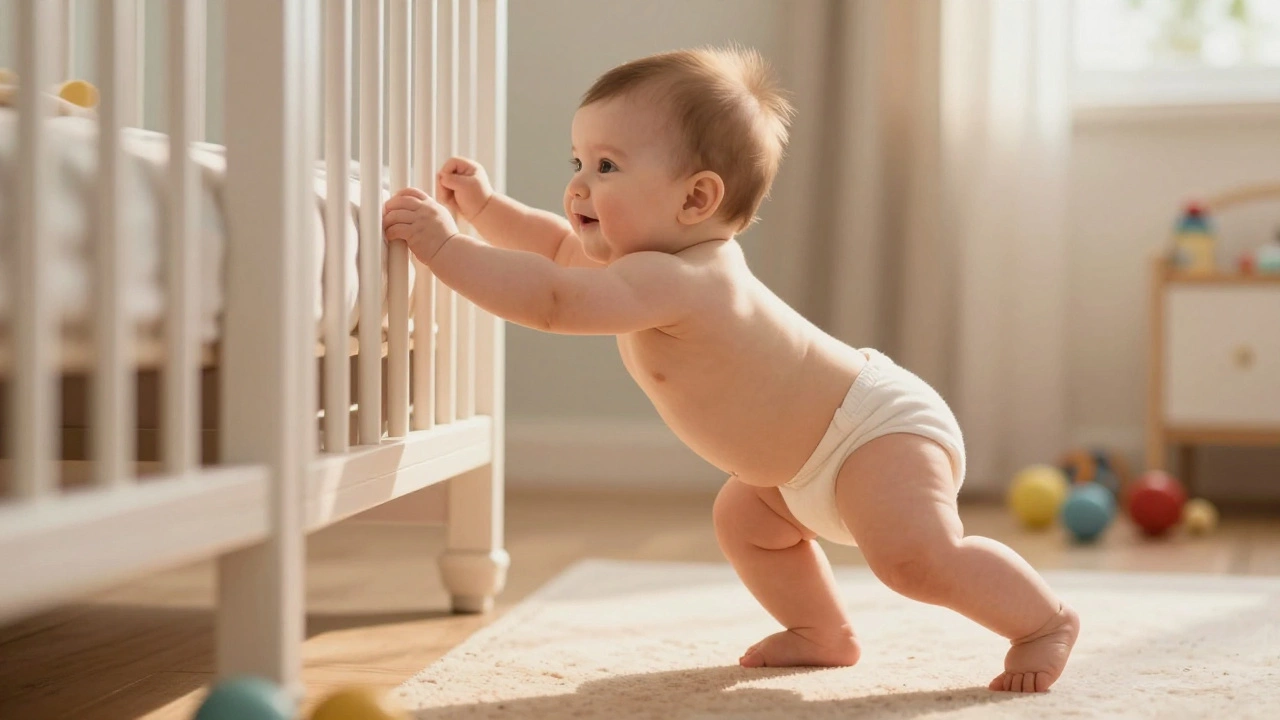
There’s a big difference between holding a baby in a standing position and letting them stand on their own. Around 6 to 9 months, many babies start pulling themselves up using furniture, your legs, or the side of the crib. This is their body’s way of telling you they’re ready. Their muscles are strengthening. Their balance is improving. Their brain is connecting signals to their limbs.
At this stage, it’s perfectly fine to support them gently while they stand. But only if they’re initiating it. Let them hold onto your fingers, or place them near a sturdy surface. Don’t lift them up by the arms or force their legs straight. If they lean forward, let them. If they wobble, let them. That’s how they learn control.
Baby carriers that keep the baby in a seated, frog-legged position-like ergonomic slings or structured carriers-are designed to support natural hip development. These are safe and even beneficial. But carriers that force the legs straight down, or that let the baby dangle in a standing-like position, are not. Always check that your carrier supports the thighs and keeps the hips in an M-shape, not a V-shape.
What About Baby Jumpers and Exersaucers?
Baby jumpers and activity centers are popular because they keep babies entertained. But they also encourage standing and bouncing before the body is ready. In a jumper, the baby’s feet touch the floor, and they push up with their legs. But their core isn’t strong enough to stabilize their spine. Their hips are forced into a position that can increase the risk of hip dysplasia.
A 2023 study published in the Journal of Pediatric Orthopaedics found that infants who spent more than 15 minutes a day in jumpers or similar devices had a higher chance of developing delayed motor skills and hip misalignment. The researchers didn’t say these devices are dangerous-but they did say they’re unnecessary and can interfere with natural development.
Instead of jumpers, try tummy time, floor play, and supported sitting. These activities build the core strength, neck control, and coordination babies need to stand-and eventually walk-on their own.
What Do Pediatricians Really Say?
The American Academy of Pediatrics (AAP) doesn’t outright ban holding babies upright. But they strongly advise against forcing standing positions before 6 months. Their guidelines say: "Allow your baby to develop motor skills naturally. Avoid devices or practices that position your baby in ways they cannot achieve independently."
Most pediatricians agree: occasional, gentle support while your baby is already pulling up on their own isn’t harmful. But regularly lifting them into standing, especially before 5 months, is not recommended. If your baby is 3 months old and you notice them arching their back or crying when you hold them upright, that’s a sign their body isn’t ready. Don’t ignore it.
Some babies are more eager than others. If your baby seems to love being held upright, try this instead: hold them in a seated position on your lap, facing you, with their back supported. Let them kick and wiggle. That gives them the same joy without the risk.
Signs Your Baby Isn’t Ready to Stand
Not every baby develops at the same speed. But there are clear signs your baby isn’t physically prepared for standing:
- Legs go stiff or lock straight when held upright
- Feet turn inward or outward unnaturally
- They cry or pull away when you try to lift them
- They can’t hold their head steady when sitting
- They don’t push down with their legs when on their tummy
If you see any of these signs, skip the standing games. Focus on tummy time, gentle stretches, and letting them move freely on the floor. These are the real building blocks of motor development.

Safe Alternatives to Holding Baby Standing
You don’t need to hold your baby standing to bond or entertain them. Here are safer, developmentally supportive alternatives:
- Tummy time: Start with 5-10 minutes a day, multiple times. This builds neck, shoulder, and core strength.
- Supported sitting: Sit your baby on your lap with back support. Let them reach for toys.
- Carrying in an ergonomic carrier: Choose one that supports the thighs and keeps hips in a natural M-shape.
- Floor play: Lay out soft mats and let your baby roll, wiggle, and explore.
- High chair time: Once they can sit with support, use a high chair for meals and play. Their feet can rest on a footrest, giving them stability.
These activities give your baby the movement they crave-without the risk. And they’re far more effective at helping them learn to walk on their own.
When to Talk to Your Pediatrician
If your baby is 9 months old and still can’t bear weight on their legs, or if you notice one leg seems weaker or stiff, it’s time to check in. Delayed motor milestones can sometimes signal underlying issues like hip dysplasia, low muscle tone, or neurological conditions.
Also, if you’ve been holding your baby upright regularly and now notice they’re walking on their toes, have a limp, or seem unsteady, mention it. Early intervention works best.
Most babies will walk between 9 and 15 months. That’s a wide range-and perfectly normal. You don’t need to rush it. Letting your baby move at their own pace isn’t just safe-it’s the best way to set them up for strong, healthy movement for life.
Is it bad to hold my 3-month-old baby upright?
It’s not recommended to hold a 3-month-old in a standing position. Their muscles and bones aren’t developed enough to support their weight safely. This can strain their hips, spine, and legs. Instead, hold them in a supported seated position or carry them in a carrier that keeps their legs in an M-shape.
Can holding a baby standing cause bow legs?
No, holding a baby standing doesn’t cause bow legs. Bow legs are normal in infants and usually correct themselves by age 2. But forcing standing too early can lead to muscle imbalances or hip stress, which may affect how they move later. It’s not about shape-it’s about healthy development.
Do baby walkers help babies learn to walk?
No. Baby walkers don’t help babies learn to walk-they delay it. Walkers let babies move around without using their core or developing balance. The AAP warns against their use because they’re dangerous and interfere with natural motor development. Skip them entirely.
Is it okay to let my baby stand while holding onto furniture?
Yes, once your baby is around 6-9 months old and starts pulling up on their own, it’s perfectly fine. This is their body telling you they’re ready. Just make sure the furniture is stable, and stay close to catch them if they fall. Let them explore at their own pace.
What’s the best baby carrier for healthy hip development?
Look for carriers that support the baby’s thighs from knee to knee, keeping their hips in a natural "M" shape. Avoid carriers that let the legs dangle straight down. Brands like Ergobaby, BabyBjörn (Model 2024+), and LILLEbaby offer ergonomic designs approved by the International Hip Dysplasia Institute.
Final Thought: Let Them Lead
Babies are born with an incredible drive to move. They’ll crawl, stand, and walk when their body is ready. Your job isn’t to speed it up-it’s to give them space to grow. Skip the standing games. Skip the jumpers. Skip the walkers. Give them floor time, cuddles, and safe support. They’ll get there-and they’ll do it stronger, steadier, and with fewer setbacks.