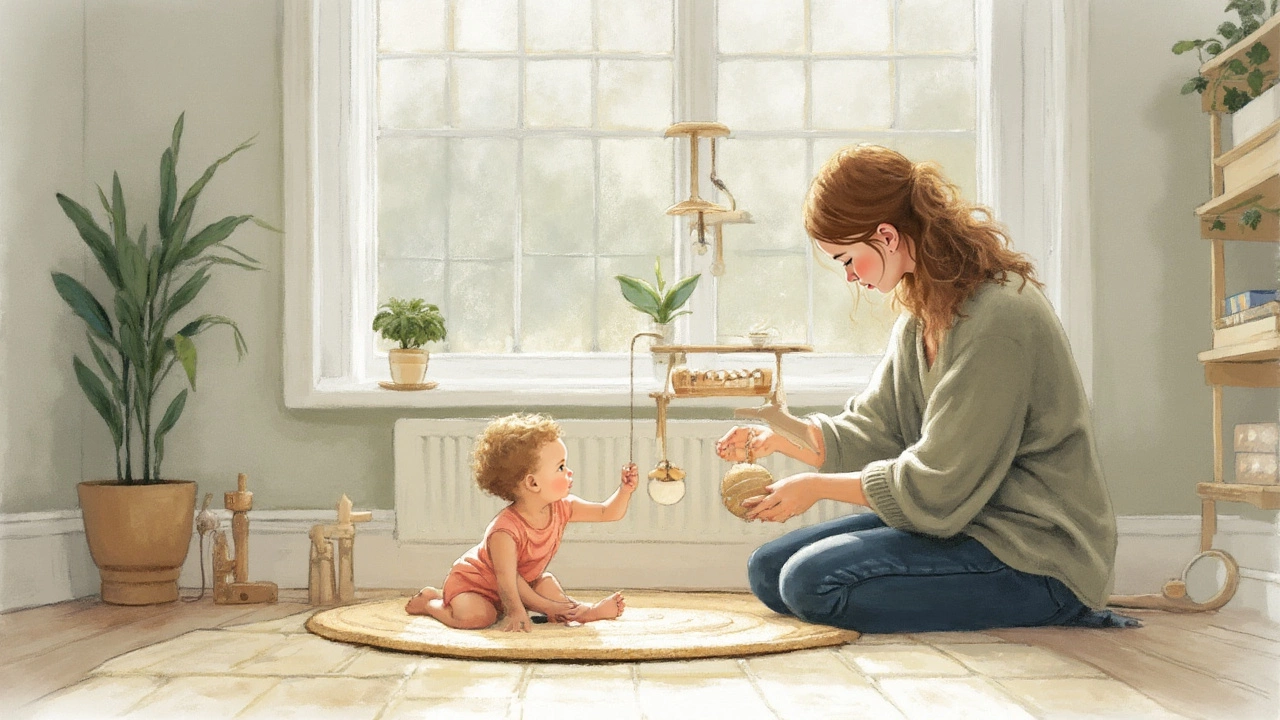
Montessori Toys Age: What’s Right for Your Child?
When we talk about Montessori toys, educational tools designed to encourage independent learning through hands-on exploration using natural, real-world materials. Also known as sensorial toys, they’re not about flashy lights or loud sounds—they’re about helping children build focus, coordination, and problem-solving skills at their own pace. The right Montessori toys age isn’t just a number on a box. It’s about matching the toy to your child’s stage of development: what they can hold, what they can understand, and what they’re curious to figure out on their own.
Montessori education avoids plastic toys because they overstimulate and distract. Instead, it uses wood, glass, metal, and fabric—things that feel real, have weight, and break if dropped. That’s not a flaw; it’s a lesson. A wooden block that falls teaches cause and effect better than a battery-powered robot that beeps no matter what. For babies under 12 months, simple grasping toys like wooden rings or cloth books help develop fine motor skills. Around 12 to 18 months, toddlers start stacking, sorting, and fitting shapes—so a wooden puzzle with large, smooth pieces becomes perfect. By age two or three, kids begin to mimic real life: they want to pour water, button clothes, or sweep floors. That’s when Montessori-style practical life toys—mini brooms, child-sized tongs, or snap-button frames—become essential.
It’s not about buying more toys. It’s about choosing the right ones at the right time. A 6-month-old doesn’t need a 20-piece alphabet puzzle. A 4-year-old doesn’t need a rattle. The magic happens when the toy matches the child’s current abilities and interests. And that’s why parents who follow Montessori principles often rotate toys—not to keep things "new," but to keep them meaningful. This approach doesn’t just build skills. It builds confidence. When a child figures out how to thread beads or open a latch by themselves, they learn they can do hard things. That’s the real goal.
You’ll find posts here that dig into exactly what makes a toy Montessori-approved, why plastic is avoided, and how to spot real educational value in a sea of flashy options. Whether you’re wondering if your 18-month-old is ready for a stacking tower, or if your 3-year-old needs more practical life activities, the articles below give you clear, no-fluff guidance based on what works in real homes—not just in classrooms.