Are 25-Year-Old Cribs Safe? What Parents Need to Know Before Using an Old Crib

Crib Safety Year Checker
Enter your crib's manufacturing year to check if it meets current safety standards
It’s tempting to reuse a crib from your older sibling, your parents’ basement, or a thrift store-especially when baby gear costs so much. But a 25-year-old crib isn’t just outdated. It could be dangerous. If you’re considering using an old crib, here’s what you need to know before putting your baby in it.
Old cribs don’t meet current safety standards
Crib safety rules changed dramatically in 2011, when the U.S. Consumer Product Safety Commission (CPSC) banned drop-side cribs and set stricter requirements for slat spacing, mattress support, and hardware strength. Any crib made before 2011 likely doesn’t meet today’s standards. Even if it looks fine, the design could be unsafe.
Before 2011, many cribs had drop-side rails that could detach. If the mechanism fails, it creates a deadly gap where a baby can get trapped, suffocate, or strangle. Between 2000 and 2010, at least 32 infant deaths were linked to drop-side cribs. That’s why they’re now illegal to sell or manufacture in the U.S. and Canada.
Modern cribs also require slats no more than 2 3/8 inches apart. Older cribs often have wider gaps-big enough for a baby’s head or body to slip through. A 25-year-old crib might have slats spaced 3 inches or more apart. That’s not just a small difference. It’s a serious risk.
Hardware degrades over time
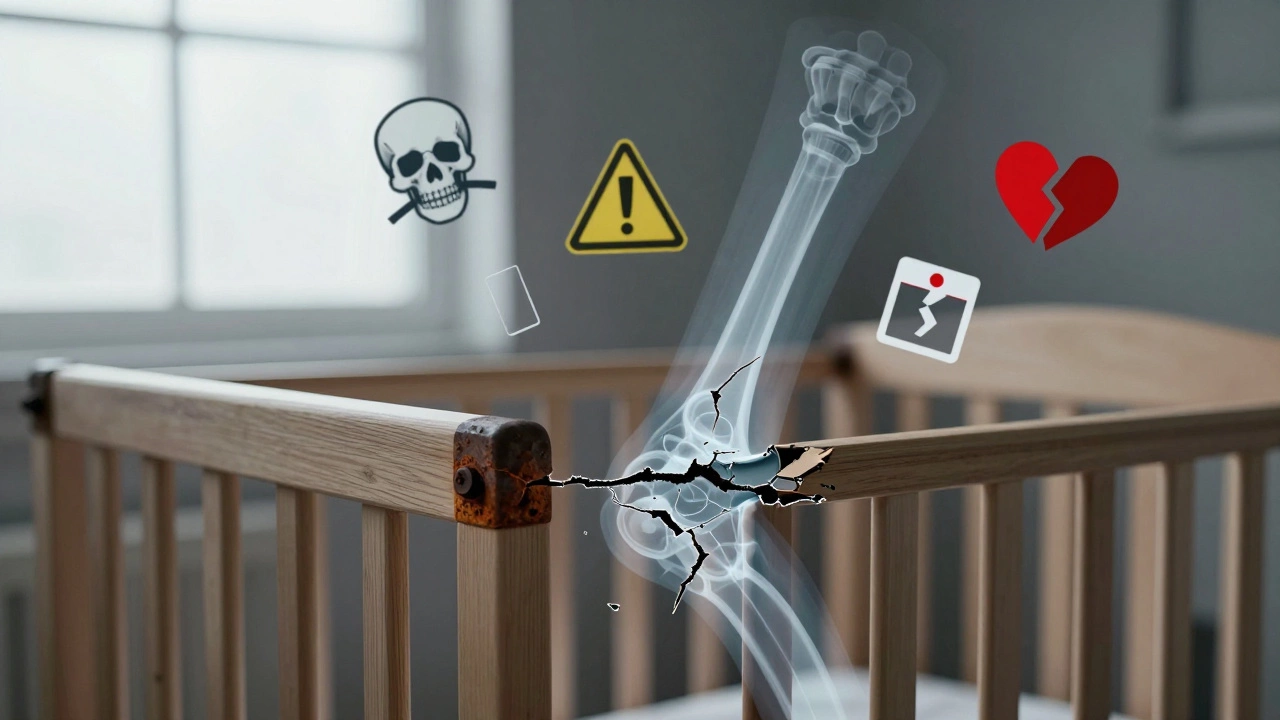
Crib hardware doesn’t last forever. Screws, bolts, and connectors can rust, crack, or loosen after years of use. Even if the crib was never used, exposure to humidity, temperature changes, or poor storage can weaken the metal and wood.
Think about it: a crib from 2000 has been sitting around for 25 years. That’s longer than most people keep their cars. Over time, the wood can dry out and become brittle. Metal parts can corrode. The mattress support might sag or collapse under weight. These aren’t minor issues. A sudden failure while your baby is sleeping can lead to falls, pinched limbs, or worse.
Some parents think, “I’ll just tighten the screws.” But you can’t fix structural wear. If the joints are loose or the frame is warped, no amount of tightening will make it safe. And you can’t see hidden damage-like internal cracks in the wood or weakened welds-without professional tools.
Recalls are common-and often forgotten
Many cribs from the 1990s and early 2000s were recalled. The CPSC has issued over 100 crib-related recalls since 2000. Most of these were for drop-side mechanisms, but others involved broken slats, sharp edges, or unsafe finishes.
If you found a crib at a yard sale or inherited one from a relative, you probably don’t have the model number or recall notice. Even if you do, checking recalls requires digging through old government databases. The CPSC website has a searchable archive, but most people never look. That means you could be using a crib that was pulled from shelves for a reason-and you wouldn’t even know it.
One example: the Graco “Haven” crib, recalled in 2009, had a drop-side that detached and caused two infant deaths. If you have a Graco crib from that era, it’s not safe-even if it looks brand new.
Old finishes can be toxic
Before 2008, cribs were often painted with lead-based paint. Lead poisoning is silent, slow, and devastating. Babies put everything in their mouths-including crib rails. Even tiny amounts of lead dust from chipped paint can affect brain development, lower IQ, and cause behavioral problems.
Lead paint was banned for children’s furniture in the U.S. in 1978, but many cribs made in the 1980s and 1990s still had it. Some manufacturers used lead-based finishes into the early 2000s, especially in imported or non-compliant products. Without a lab test, you can’t know if the paint on your old crib is safe.
Even if the crib was repainted later, the original layers might still be underneath. Sanding or refinishing an old crib can release lead dust into the air. That’s not a DIY project-it’s a health hazard.
Modern cribs are designed for safety, not just looks
Today’s cribs aren’t just prettier. They’re built with safety engineering. Mattress supports are reinforced to hold up under weight. Slats are precisely spaced. Hardware is tested for durability over thousands of cycles. Many now include warning labels, assembly instructions, and safety certifications like JPMA (Juvenile Products Manufacturers Association).
A new crib that meets current standards costs between $150 and $400. That’s less than a month’s worth of diapers. And unlike an old crib, you know exactly what you’re getting: no hidden recalls, no lead paint, no broken parts. Plus, most new cribs convert into toddler beds, giving you years of use.
Some parents worry about waste. But safety isn’t a luxury. It’s non-negotiable. If you’re concerned about the environment, look for cribs made from sustainable wood or certified by Greenguard for low chemical emissions. You can still be eco-conscious without risking your child’s life.
What to do if you already have an old crib
If you’ve already set up an old crib, don’t panic-but don’t ignore the risks either. Here’s what to do:
- Check the CPSC crib recall list. Search by brand and model number. If it’s listed, stop using it immediately.
- Measure the slat spacing. Use a ruler. If it’s more than 2 3/8 inches, replace the crib.
- Look for drop-side rails. If the crib has one, even if it’s locked, don’t use it.
- Test the hardware. Shake the crib. If it wobbles or makes noise, it’s not safe.
- Smell the paint. If it smells strong or looks chipped, assume it contains lead. Get a lead test kit from a hardware store.
If any of these checks raise red flags, stop using the crib. Donate it to a charity that won’t use it for infants, or break it down and recycle the wood. Don’t pass it on to someone else.
Safe alternatives to old cribs
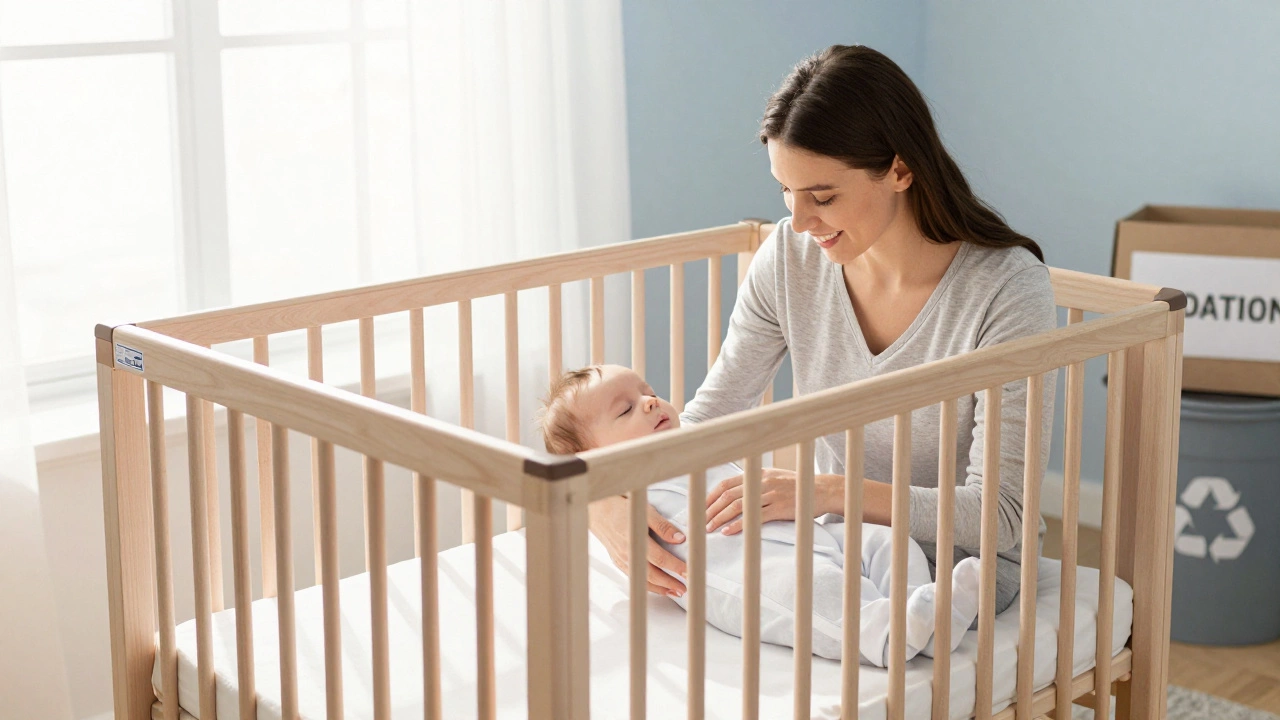
You don’t need to buy a brand-new crib from a big-box store. There are affordable, safe options:
- Buy a used crib from a trusted source-like a friend or family member-who can confirm it was made after 2011 and never recalled.
- Look for certified secondhand cribs on platforms like Babylist or local buy-nothing groups. Ask for the model number and recall history.
- Consider a bassinet or co-sleeper for the first few months. They’re cheaper, easier to move, and meet current safety standards.
- Check with local parenting groups or hospitals. Some offer crib loan programs for families in need.
Never buy a crib from a flea market, online auction, or stranger without full documentation. If they can’t tell you the make, model, or year, walk away.
Bottom line: When in doubt, replace it
A 25-year-old crib might look sturdy. It might even be clean and well-loved. But safety isn’t about appearance. It’s about standards, materials, and engineering that have changed because lives were lost.
The safest crib for your baby is one that meets today’s regulations. It’s not about spending more-it’s about avoiding preventable risks. Your child deserves a sleep space that’s been tested, certified, and designed with their safety as the top priority.
If you’re unsure, err on the side of caution. Buy a new crib. Rent one. Borrow one from someone you trust who has a post-2011 model. Your peace of mind-and your baby’s safety-is worth it.
Can I make an old crib safe by tightening the screws and repainting it?
No. Tightening screws won’t fix worn-out wood, weakened joints, or hidden structural damage. Repainting doesn’t remove lead paint underneath, and sanding can release toxic dust. Even if it looks fine, an old crib doesn’t meet current safety standards and can’t be made safe through repairs.
Are all cribs made before 2011 unsafe?
Yes, in practical terms. While not every pre-2011 crib failed, they all lack the safety features required today-like fixed sides, tighter slat spacing, and stronger hardware. The CPSC banned drop-side cribs in 2011 because they were dangerous. Any crib made before that date doesn’t meet modern safety benchmarks, even if it hasn’t been recalled.
How do I check if my crib was recalled?
Go to the CPSC website and search their recall database using the crib’s brand and model number. If you don’t have that info, look for a label on the crib’s frame or headboard. If you still can’t find it, assume it’s recalled and stop using it. You can also call the manufacturer or check with local child safety organizations.
Is it okay to use a crib from a relative if it looks fine?
Only if you can confirm it was made after 2011 and has never been recalled. Appearance doesn’t guarantee safety. Even if it looks new, the materials may be degraded, the hardware may be weak, or it may have been damaged in storage. Ask for the model number and check the recall list before use.
What’s the safest type of crib to buy today?
Look for a crib certified by JPMA (Juvenile Products Manufacturers Association) and labeled as meeting current CPSC standards. Choose a fixed-side crib with slats no more than 2 3/8 inches apart, a sturdy mattress support, and no decorative cutouts or hardware that could catch clothing. Many affordable models now convert into toddler beds, offering long-term value.
Next steps for worried parents
If you’re still unsure, talk to your pediatrician or visit a local child safety clinic. Many hospitals and community centers offer free crib safety checks. Bring your crib-or photos of it-and get expert advice.
Don’t let guilt or pressure from family make you use something risky. Your baby’s sleep space should be simple, safe, and free of surprises. A new crib isn’t a luxury-it’s the baseline for safe parenting.