Are Pressure-Mounted Baby Gates Safe? What Parents Need to Know
Baby Gate Safety Checker
Safety Assessment Tool
Answer these questions to determine if your baby gate setup meets safety standards for child protection.
Safety Assessment Results
Please select your gate type, location, and child age to get your safety assessment.
Every parent wants to keep their crawling or cruising baby safe from stairs, kitchens, and other hazards. Pressure-mounted baby gates are popular because they’re easy to install, don’t require drilling, and fit most doorways without damaging walls. But here’s the hard truth: pressure-mounted baby gates are not safe for the top of stairs-and many parents don’t realize how dangerous they can be in high-risk areas.
How pressure-mounted gates work-and where they fail
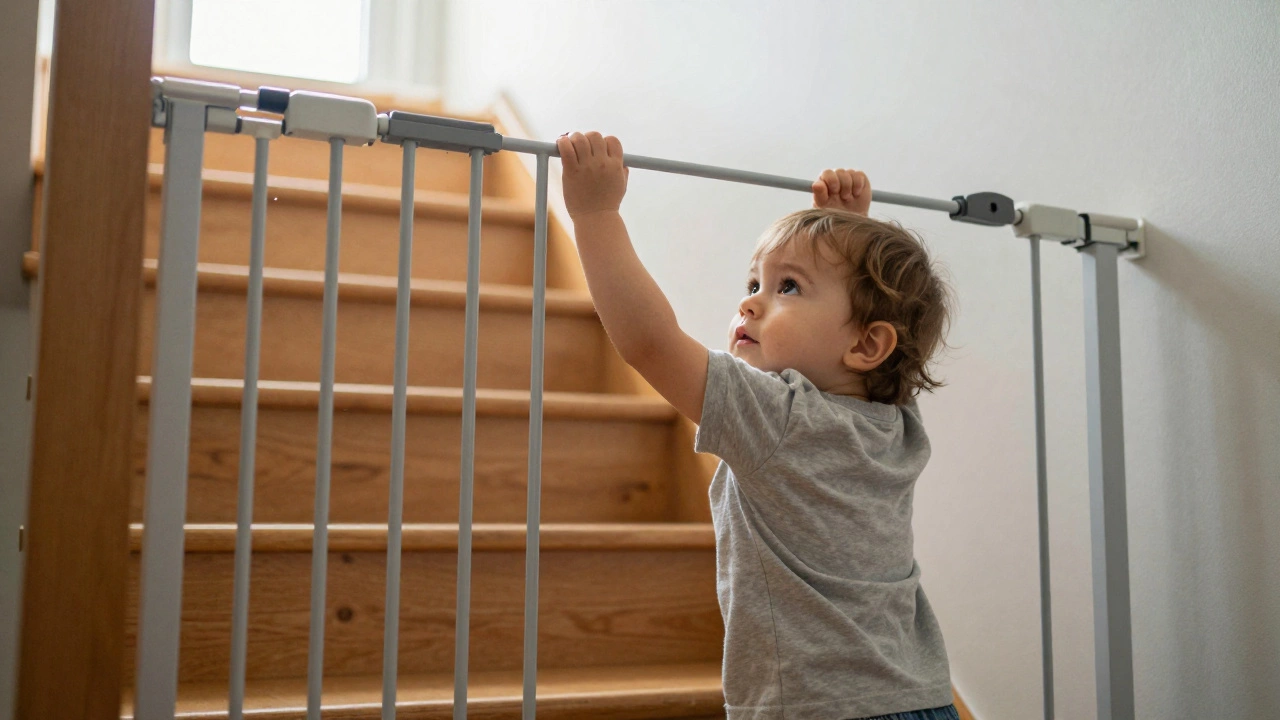
Pressure-mounted gates rely on adjustable rods that push against both sides of a doorway or opening. The friction holds them in place. No screws. No holes. No tools. That sounds convenient, right? But friction isn’t enough when a child leans, climbs, or pushes hard against the gate. A 2023 study from the Consumer Product Safety Commission found that over 1,200 emergency room visits each year in the U.S. are linked to falls from baby gates, and nearly 40% of those involved pressure-mounted models used near stairs.These gates are designed for low-risk zones like between the living room and dining area. But when placed at the top of stairs, even a small slip or a toddler’s sudden push can cause the gate to pop open or collapse. One parent in Ohio reported her 14-month-old climbed the gate while she was in the kitchen. The gate gave way, and the child tumbled down six steps. She broke her collarbone. The gate had been installed according to the instructions.
What safety standards say about pressure-mounted gates
The American Society for Testing and Materials (ASTM) sets voluntary safety standards for baby gates. Their F1004-21 standard requires gates at the top of stairs to be hardware-mounted-meaning they’re screwed into wall studs. Pressure-mounted gates are explicitly excluded from being recommended for stairways. The same goes for the Juvenile Products Manufacturers Association (JPMA), which certifies products for safety. Only hardware-mounted gates earn their stairway safety seal.Manufacturers know this. Most pressure-mounted gate boxes have small print warnings: “Not for use at top of stairs.” But many parents never read them. The marketing makes these gates look like a universal solution. They’re marketed as “easy,” “quick,” and “rental-friendly.” That’s fine-if you’re blocking off a basement door or a pet area. Not fine if you’re trusting your child’s life to a spring-loaded rod.
When pressure-mounted gates are okay to use
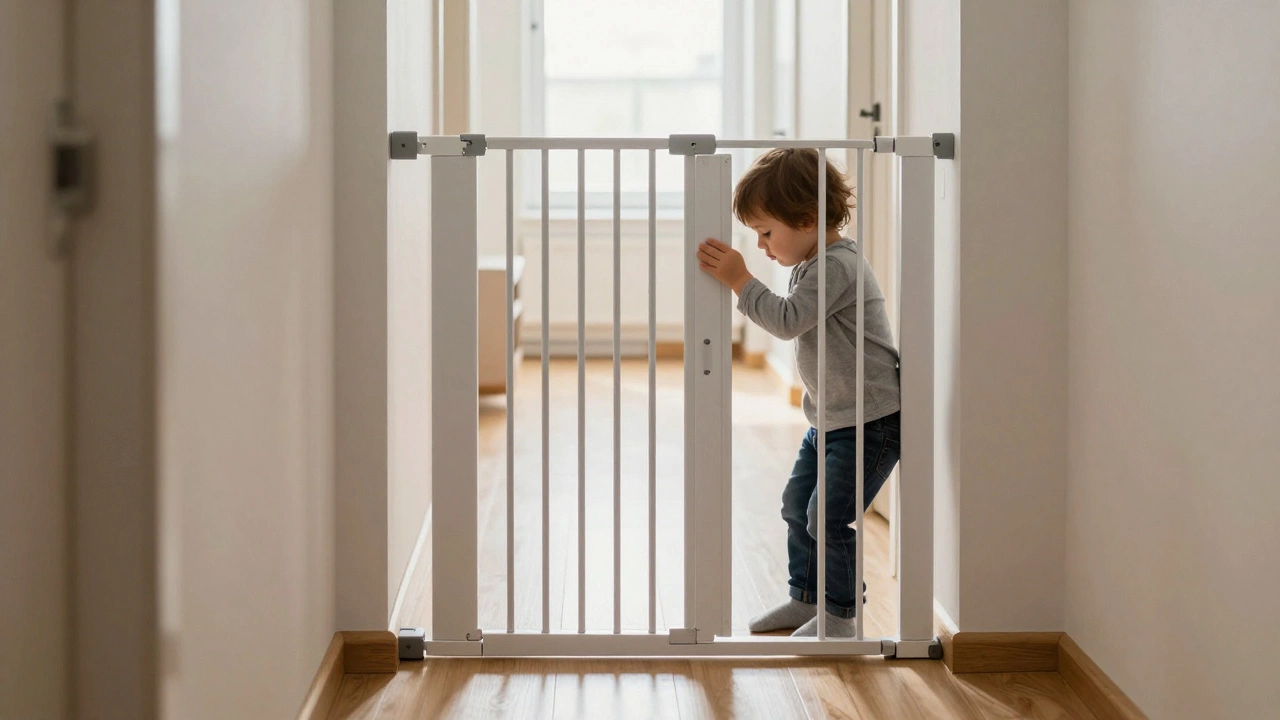
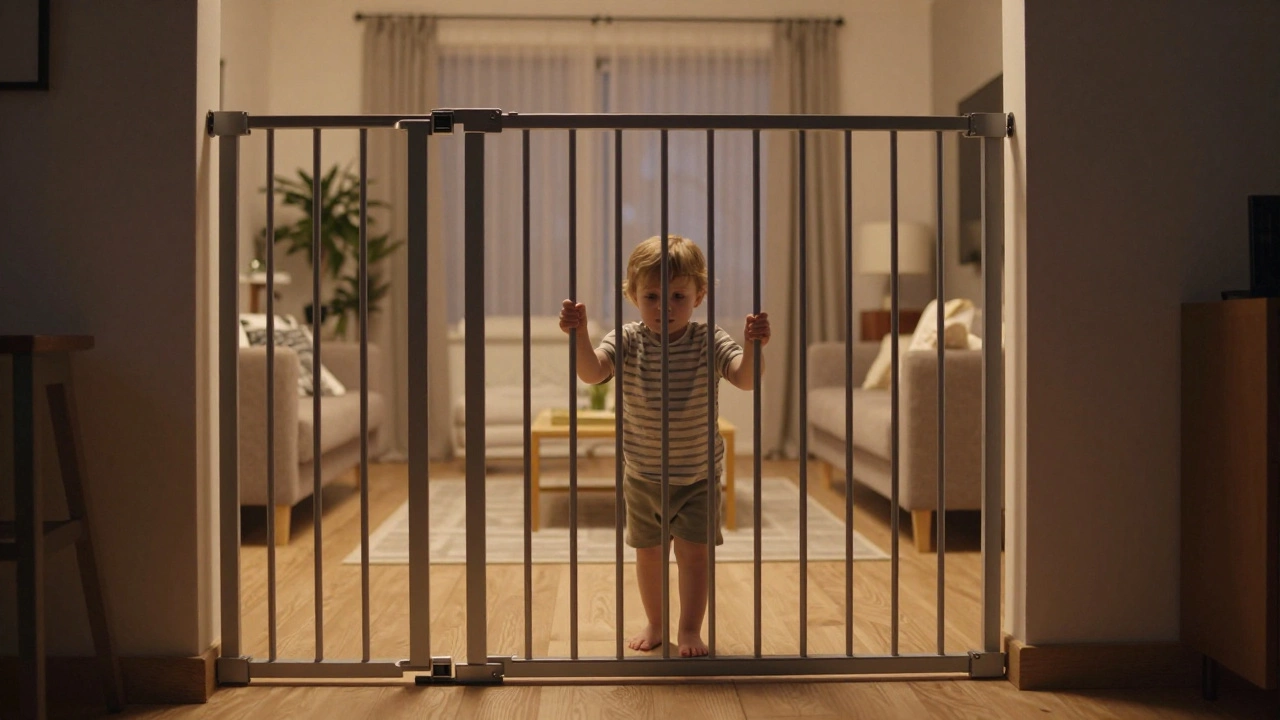
There are safe uses for pressure-mounted gates. They work well in wide, flat openings where climbing isn’t possible. Examples:- Between the kitchen and family room (no steps, no furniture to climb)
- At the entrance to a laundry room or storage closet
- Across wide hallways where the child can’t reach the top of the gate
Even then, you need to check the fit. The gate should be tight enough that you can’t wiggle it side to side. If your toddler can get their fingers or toes under the bottom bar, they can lift it. Some models have a latch that’s too easy for curious hands to open. Always test it yourself. Put a stuffed animal on the other side and see if your child can push it open with their shoulder.
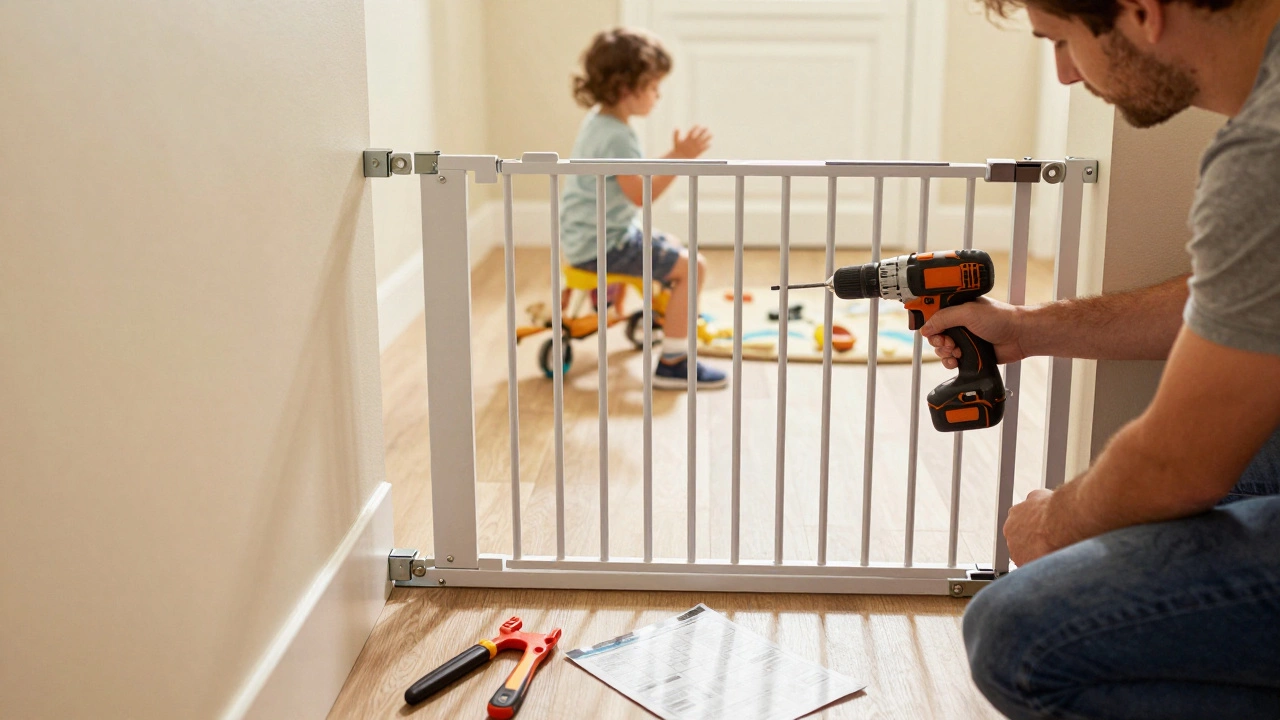
Hardware-mounted gates: The only safe choice for stairs
If you need a gate at the top of stairs, hardware-mounted is the only option. These gates screw into wall studs using metal brackets. They don’t budge. They can’t be pushed open by a child’s weight. They’re designed to withstand forces up to 200 pounds-far more than any toddler can generate.Installation takes 20 minutes. You need a drill, a stud finder, and maybe a level. But here’s the thing: you don’t need to be a handyman. Most hardware-mounted gates come with detailed instructions and pre-drilled holes. Brands like Summer Infant, Regalo, and Evenflo offer models that fit standard stairway widths (26 to 42 inches). Some even have swing-open features so you can walk through without removing the gate.
Walls matter too. Drywall alone won’t hold a hardware gate. You need to anchor into wood studs. If you’re in an apartment with concrete walls, look for gates with tension rods that attach to the wall with heavy-duty adhesive anchors-like the Safety 1st SureFit. But even those are only approved for bottom-of-stairs use, never the top.
What to do if you already have a pressure gate at the top of your stairs
If you’re reading this because you already have a pressure-mounted gate at the top of your stairs, stop. Right now. Don’t wait for an accident. Take it down today.Here’s what to do next:
- Remove the pressure gate immediately.
- Install a hardware-mounted gate certified by ASTM F1004-21 and JPMA.
- Test it: Push it hard from both sides. Try to lift it from below. If it moves, it’s not installed right.
- Keep the gate closed and latched at all times-even when you’re right there.
Some parents think, “My child isn’t a climber.” But toddlers surprise you. They copy older siblings. They get a burst of energy. They see the gate as a challenge. One mother in Texas said her 11-month-old had never tried to climb until her 3-year-old started using the gate as a pull-up bar. Within a week, the baby was scaling it. The pressure gate gave way.
Alternatives to gates for very young babies
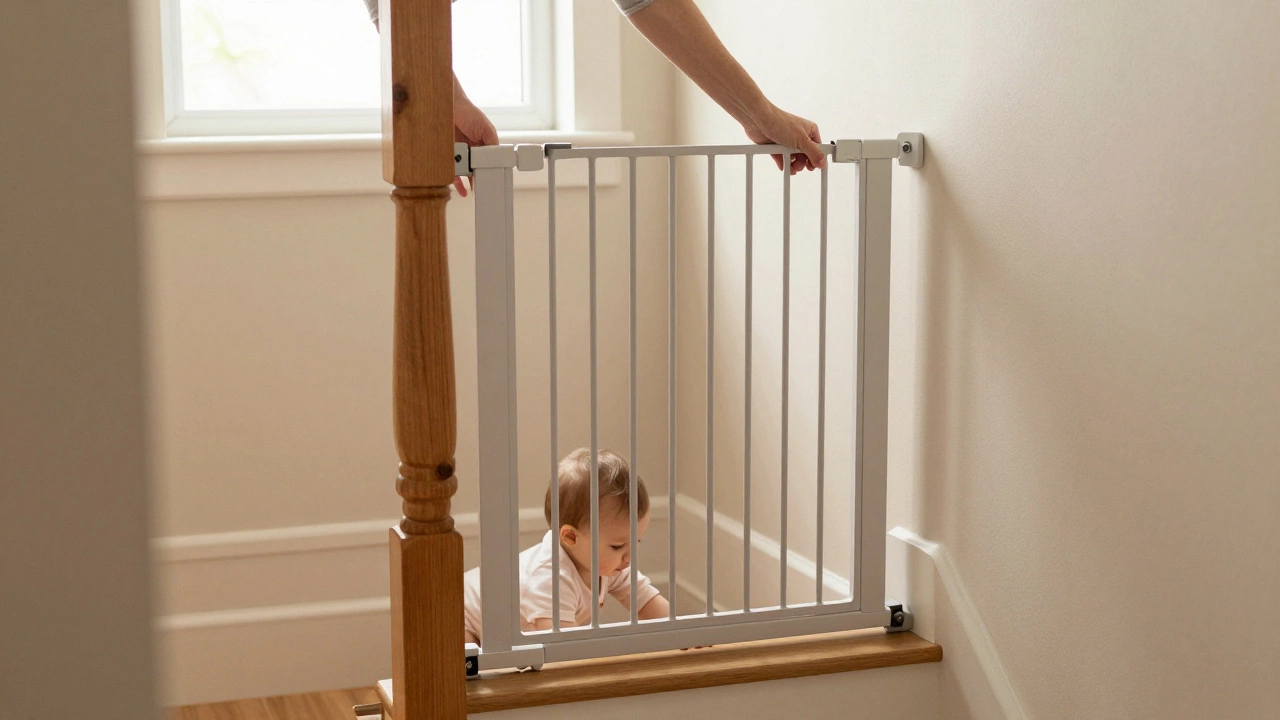
If your child is under 12 months and you’re worried about stairs, consider alternatives:- Use a baby gate at the bottom of the stairs and keep the child in a playpen or gated play area on the upper floor.
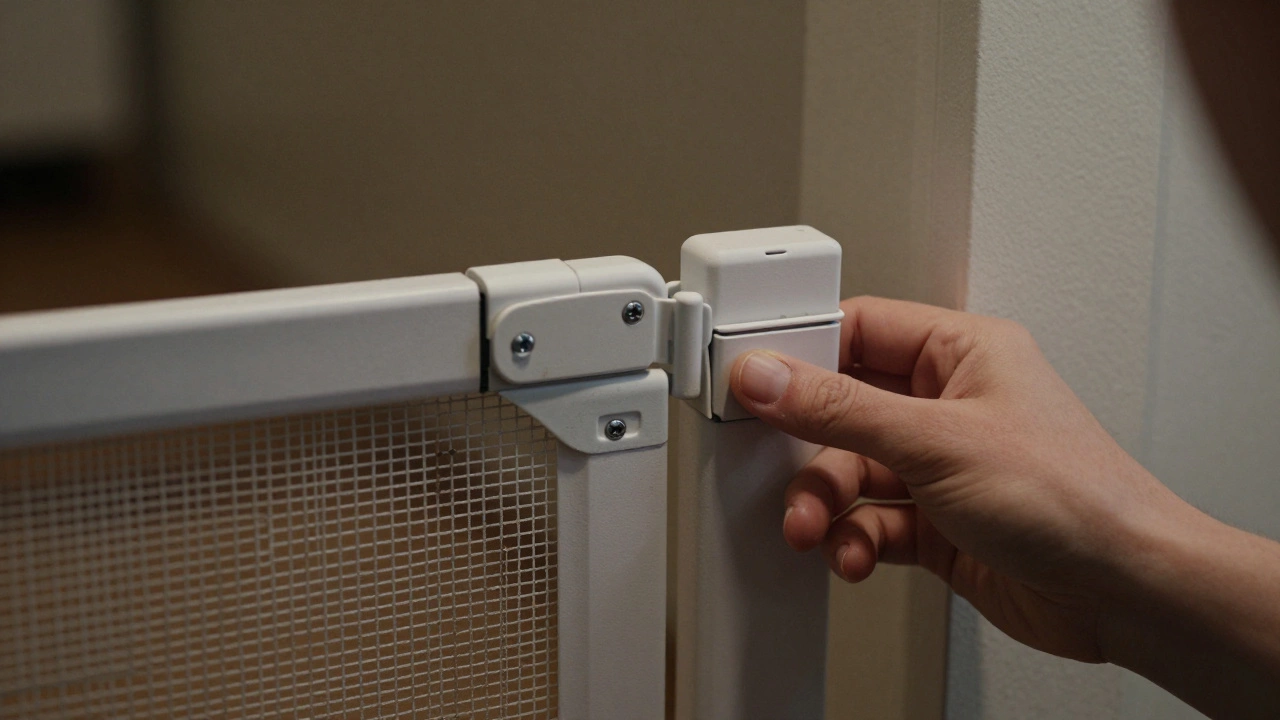
- Install a stairway barrier with mesh panels or clear acrylic panels that attach to the handrail.
- Use a baby monitor with motion detection on the stairs (like the Nanit Pro) to alert you if your baby approaches.
These aren’t perfect, but they’re safer than a pressure gate at the top of the stairs. And once your child is old enough to walk confidently (around 18-24 months), you can start teaching them to use stairs safely with supervision.
Signs your baby gate is unsafe
Even hardware-mounted gates can fail if they’re old, damaged, or poorly installed. Check yours every month:- Are the screws loose or rusted?
- Is the mesh or slats cracked or bent?
- Can your child squeeze through the gaps? (Gaps should be less than 2.5 inches.)
- Does the latch open with one hand? (It shouldn’t. Toddlers can learn to flip latches.)
- Is there a gap between the gate and the wall where a foot or head could get stuck?
If you answer yes to any of these, replace the gate. Don’t wait.
Final advice: Don’t gamble with safety
A pressure-mounted gate might save you time and money. But it’s not worth the risk. One fall can change your family forever. The cost of a hardware-mounted gate? Around $50 to $80. The cost of a broken bone, a concussion, or worse? Priceless.Choose safety over convenience. Install a gate that’s built to hold. Test it. Check it monthly. And never assume your child won’t try to climb. They will. And when they do, your gate should be the one thing that doesn’t fail them.
Can pressure-mounted baby gates be used on the top of stairs?
No. Pressure-mounted gates are not safe for the top of stairs. They rely on friction, not structural anchoring, and can easily pop open or collapse when a child pushes or climbs on them. Safety standards from ASTM and JPMA require hardware-mounted gates for stairways. Never use a pressure gate at the top of stairs.
What’s the difference between pressure-mounted and hardware-mounted baby gates?
Pressure-mounted gates use expandable rods to press against walls and stay in place without screws. Hardware-mounted gates are screwed directly into wall studs using metal brackets. Hardware-mounted gates are far stronger, can handle more force, and are the only type approved for use at the top of stairs.
Are pressure-mounted gates safe for toddlers?
Only in low-risk areas like between rooms on the same level, where there are no stairs, furniture to climb, or hard surfaces nearby. Never use them where a child could fall if the gate fails. Toddlers are strong, curious, and unpredictable-they will test the gate. If it’s not securely anchored, it won’t hold.
How do I know if my baby gate is certified safe?
Look for certification labels from ASTM (F1004-21 standard) and JPMA (Juvenile Products Manufacturers Association). These marks are usually printed on the packaging or the gate itself. If you don’t see them, assume it’s not certified for safety. Don’t rely on marketing claims like “heavy-duty” or “extra strong.”
What should I do if my child has already fallen from a baby gate?
Seek medical attention immediately, even if there are no visible injuries. Internal injuries or head trauma can be delayed. Afterward, remove the gate that caused the fall and replace it with a certified hardware-mounted gate. Report the incident to the Consumer Product Safety Commission (CPSC) at saferproducts.gov. This helps others avoid the same danger.