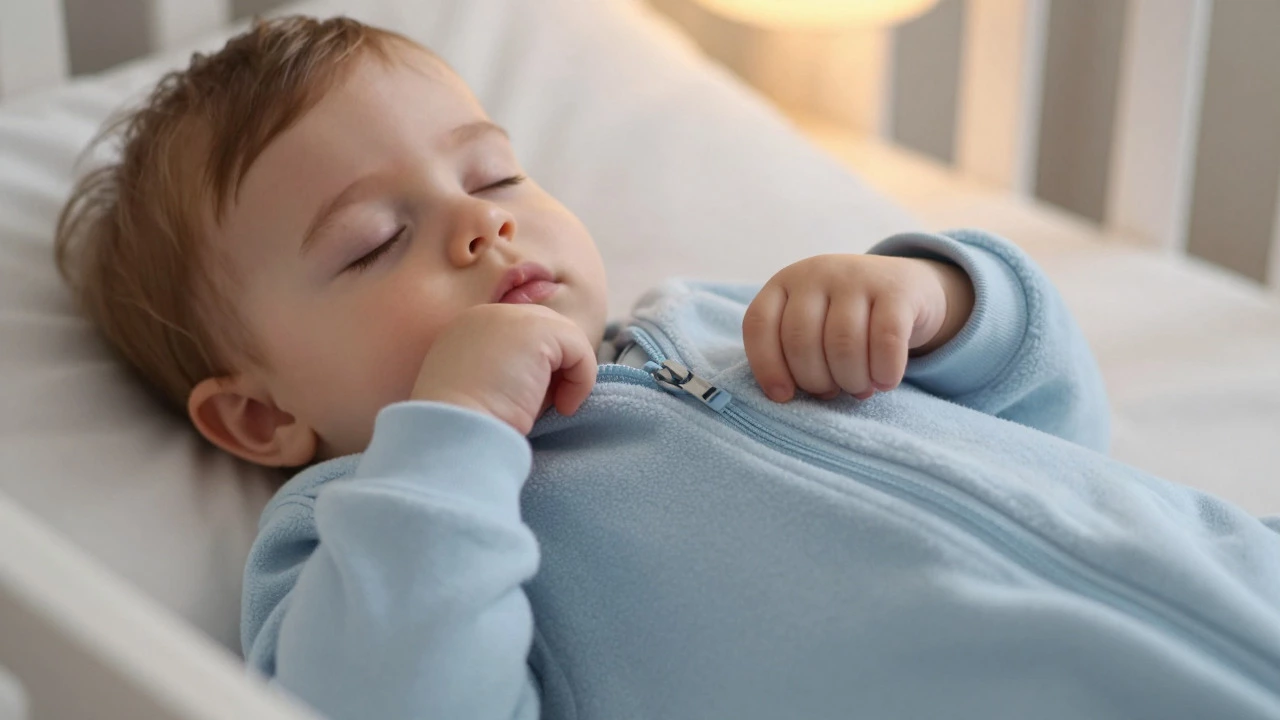
Can a 2-Year-Old Still Wear a Sleep Sack? Safety, Comfort, and When to Switch
Sleep Sack TOG Calculator
Safety Tips
Always check for overheating—signs include sweating, flushed cheeks, or rapid breathing. Sleep sacks should allow free movement while keeping your child safe.
Important:
The American Academy of Pediatrics recommends avoiding loose blankets until at least 18 months. Sleep sacks provide safer temperature control for toddlers.
Many parents wonder if a 2-year-old can still wear a sleep sack-especially when they’re starting to climb out of the crib and move into a toddler bed. The short answer? Yes, absolutely. But it’s not just about whether they can wear one-it’s about whether they should, and when it’s time to make a change.
Why Sleep Sacks Work for Toddlers
Sleep sacks aren’t just for babies. They’re designed to keep little ones warm without the danger of loose blankets, which is why pediatricians still recommend them past infancy. For a 2-year-old, a sleep sack provides consistent temperature control, reduces nighttime startles, and helps signal bedtime in a predictable way. Many toddlers who’ve used sleep sacks since infancy feel more secure in them, especially during big transitions like moving to a big kid bed.Unlike blankets, sleep sacks stay put. They don’t get kicked off or tangled around the legs. That’s a huge win for parents who spend half the night re-tucking in sheets or worrying about their child getting cold. In fact, a 2023 study from the American Academy of Pediatrics found that toddlers who used sleep sacks had fewer nighttime awakenings due to temperature changes compared to those using loose bedding.
Safety First: No Loose Blankets, No Risk
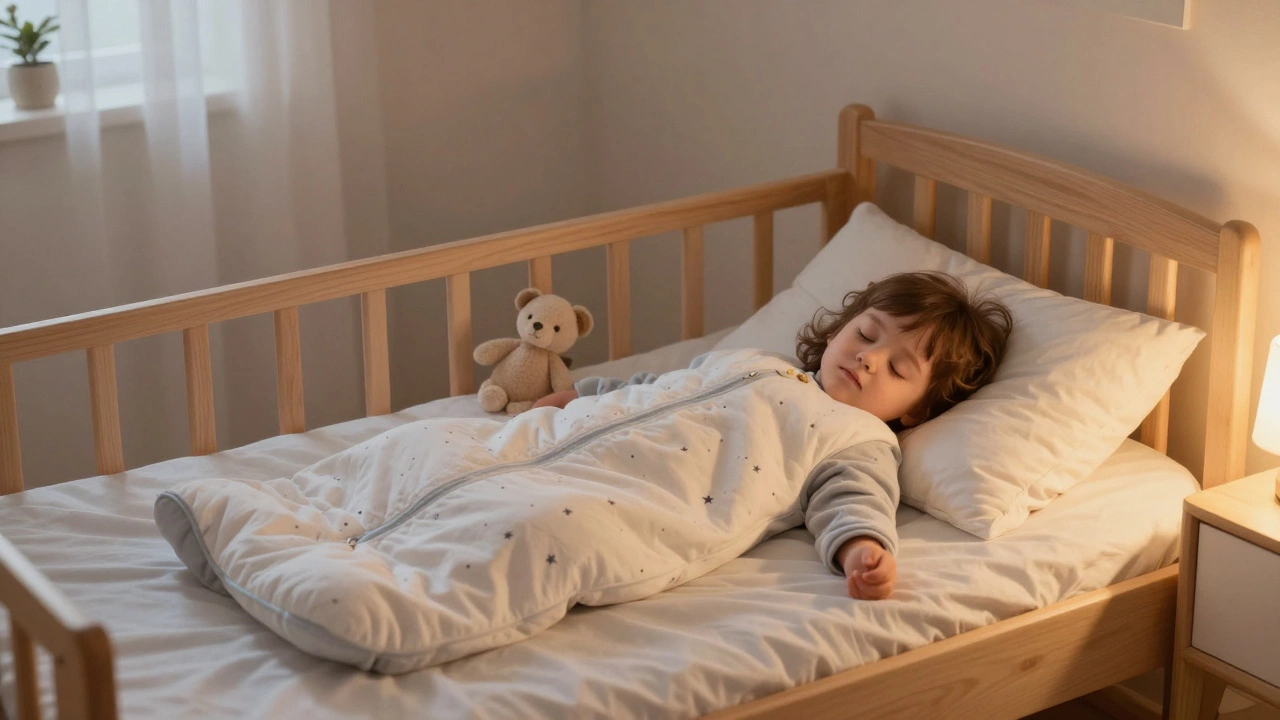
The biggest reason to keep using a sleep sack at age two is safety. The American Academy of Pediatrics (AAP) says loose bedding-including blankets, pillows, and stuffed animals-should be kept out of the sleep space until a child is at least 18 months old. Many experts recommend waiting until age two or even three, especially if your child is still learning to roll over or move around freely in bed.When kids start sleeping in a toddler bed, the temptation to add blankets grows. But a sleep sack eliminates that risk entirely. It’s a one-piece solution that keeps them cozy without the choking, suffocation, or entanglement hazards that come with loose fabric. Even if your child is climbing out of the crib, a well-fitted sleep sack still makes their toddler bed safer.
Choosing the Right Sleep Sack for a 2-Year-Old
Not all sleep sacks are made the same. For a 2-year-old, you need one that fits properly and allows freedom of movement. Look for these features:- Roomy shoulders and arms-so they can move naturally, reach for a lovey, or hug a stuffed animal.
- Leg openings-some sleep sacks are sleeveless with open legs, which give toddlers more mobility as they learn to walk in their sleep or climb out of bed.
- TOG rating-this measures warmth. For most homes, a 1.0 TOG is perfect for room temperatures between 68-72°F. If your house is cooler, go for 2.0 TOG. Avoid anything above 2.5 TOG unless it’s winter and the room is very cold.
- Zipper or snap closure-easy for nighttime diaper changes and doesn’t irritate the neck.
Brands like Love to Dream, Halo, and Grobag make sleep sacks sized specifically for 2-year-olds (typically labeled 12-24 months or 2T). Always check the weight and height guidelines on the tag-size matters more than age.
When to Stop Using a Sleep Sack
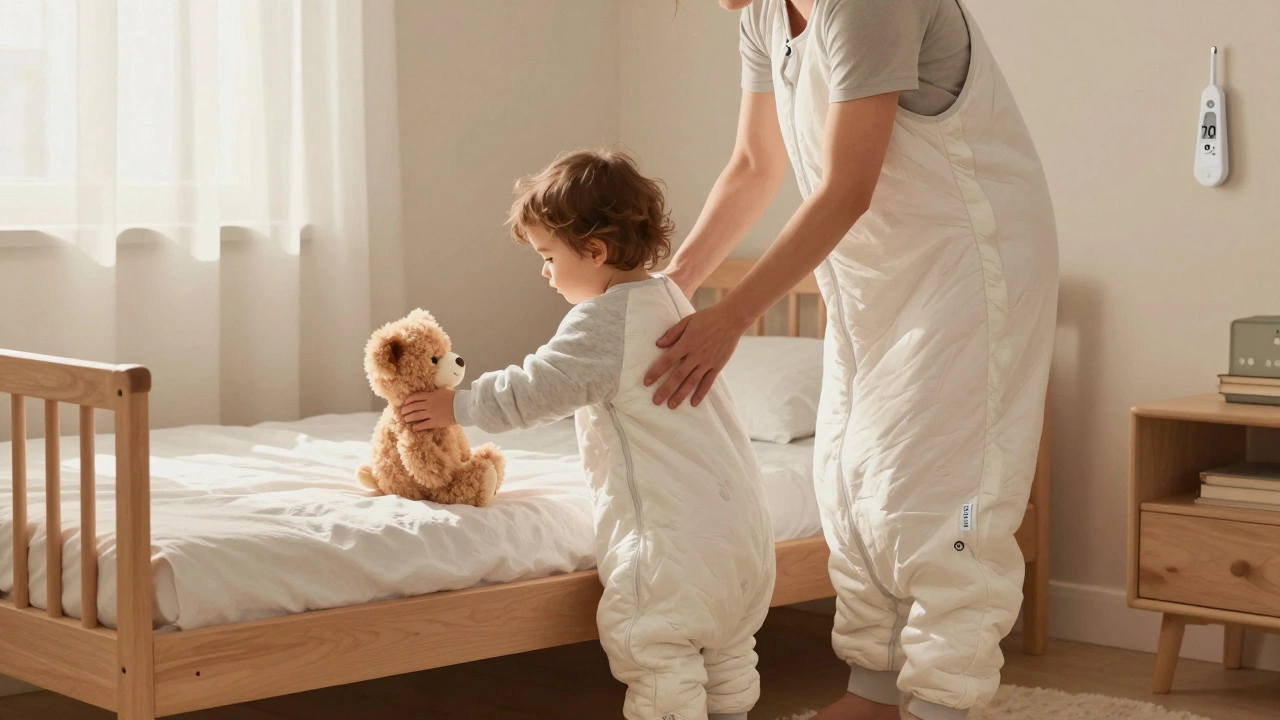
There’s no hard rule that says you must stop at age two. But here are signs it might be time to phase it out:- Your child is consistently pulling the sleep sack off or trying to remove it during the night.
- They’re starting to climb out of bed and the sleep sack restricts their movement enough to cause frustration or safety concerns.
- They’ve started sleeping with a lovey or stuffed animal and the sack doesn’t allow them to hold it comfortably.
- They’re transitioning to a bigger bed and you’re introducing a lightweight blanket.
If your child is happy in their sleep sack and it’s not causing any issues, there’s no rush to stop. Many kids use them until age three or even four. The goal isn’t to stop because of age-it’s to stop when it’s no longer helpful or comfortable.
Transitioning from Sleep Sack to Blanket
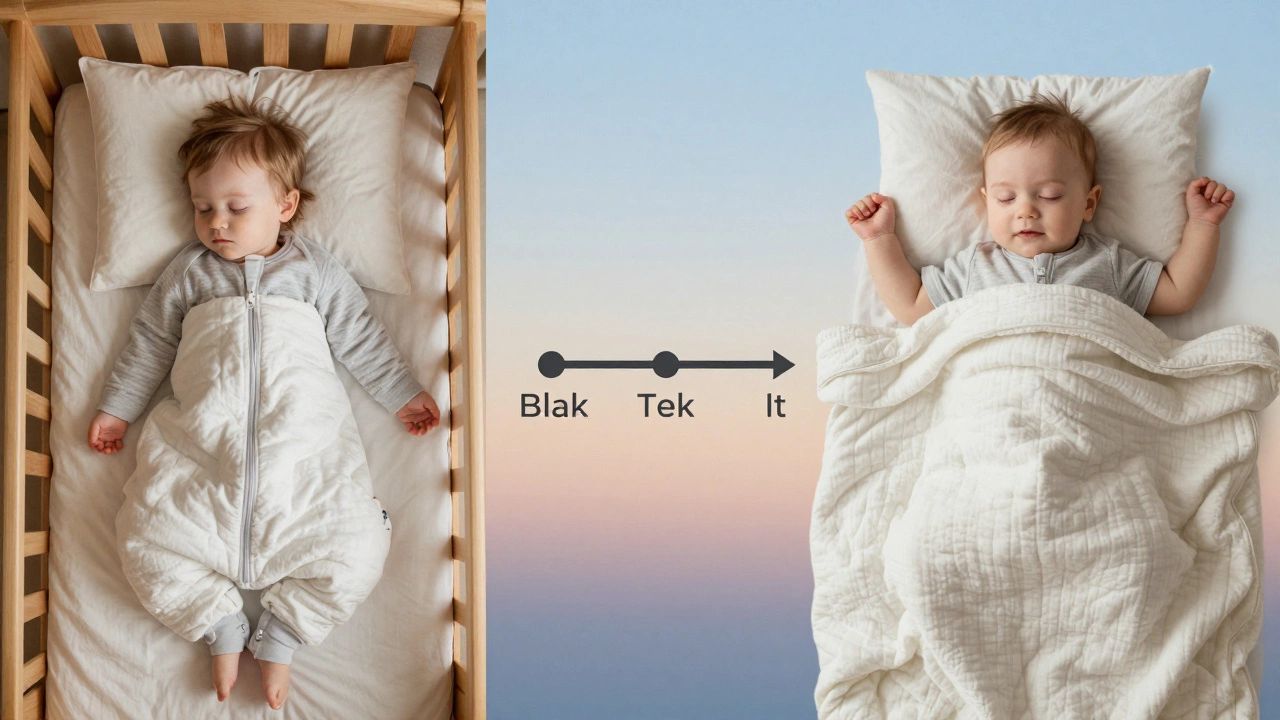
When you’re ready to switch, don’t go cold turkey. Try this gradual approach:- Start by using the sleep sack for the first half of the night, then add a light, breathable blanket over the legs after your child is asleep.
- Use a wearable blanket with arms-this gives the feeling of a sleep sack but allows more freedom.
- Introduce a small, thin, 100% cotton blanket that’s easy to tuck under the mattress on two sides so it doesn’t come loose.
- Practice during naptime first. It’s easier to test new sleep habits when the stakes are lower.
Keep the sleep sack available as a backup. Some kids go back and forth for weeks before fully switching. That’s normal. Don’t pressure them.
What to Watch For
Even if your child is using a sleep sack safely, keep an eye out for:- Overheating-signs include sweating, flushed cheeks, or rapid breathing.
- Restricted movement-if they’re struggling to move their arms or legs, it’s too tight.
- Worn-out fabric-holes or stretched-out zippers can be a safety hazard.
- Resistance or crying at bedtime-this might mean they’re ready for something different.
Every child develops at their own pace. One 2-year-old might outgrow their sleep sack by 22 months. Another might still love it at age three. Listen to your child’s cues, not the clock.
Common Myths About Sleep Sacks and Toddlers
Myth: "Sleep sacks are only for babies under 12 months."
Truth: Sleep sacks are designed for children up to age four. Many are specifically made for toddlers with roomier cuts and foot openings.
Myth: "If they’re walking, they don’t need a sleep sack anymore."
Truth: Walking doesn’t mean they’re ready for loose blankets. Many toddlers still benefit from the security and safety a sleep sack provides.
Myth: "Using a sleep sack too long will delay independence."
Truth: There’s no evidence that sleep sacks delay development. In fact, consistent sleep routines help emotional regulation and cognitive growth.
Real Parent Experiences
I’ve talked to dozens of parents in Vancouver and across Canada who’ve been in your shoes. One mom, Sarah, kept her son in a sleep sack until he was 3.5 years old. "He used to wake up shivering every night before we switched. Once we started using the 2.0 TOG sack, he slept through the night for the first time. We only stopped when he started asking for a blanket like his big sister." Another dad, Mark, switched his daughter to a blanket at age two because she was climbing out of her toddler bed. "We tried a wearable blanket with arms first. It didn’t work. She kept pulling it off. So we went with a small, tucked-in cotton blanket and now she’s fine. But we kept the sleep sack for car rides and camping trips." The takeaway? There’s no one-size-fits-all answer. What works for one family doesn’t work for another-and that’s okay.Final Thoughts
A 2-year-old can absolutely still wear a sleep sack-and many should. They’re safe, effective, and comforting. The decision to stop shouldn’t be based on age, but on your child’s behavior, comfort, and safety needs. If your toddler is sleeping well, staying warm, and not trying to escape the sack, keep using it. If they’re fighting it or becoming unsafe in their bed, it’s time to transition.There’s no rush. Sleep is one of the most important parts of growing up. Give your child the tools they need to get it right-and don’t feel guilty for sticking with what works.
Can a 2-year-old still wear a sleep sack safely?
Yes, a 2-year-old can safely wear a sleep sack. Pediatric guidelines recommend avoiding loose blankets until at least age two, and sleep sacks eliminate the risk of suffocation or entanglement. As long as the sack fits properly-not too tight or too loose-and is made of breathable fabric, it’s a safe and recommended sleep option for toddlers.
When should I stop using a sleep sack?
Stop using a sleep sack when your child shows clear signs they’re ready: they regularly remove it during the night, they’re climbing out of bed and the sack restricts movement, or they’re asking for a blanket. There’s no set age-many kids use them until age three or four. Focus on their behavior, not the calendar.
Is it okay to use a sleep sack with a toddler bed?
Absolutely. Toddler beds are designed for kids who are transitioning out of cribs, and sleep sacks are still the safest option for sleep. They prevent loose bedding hazards and help maintain a consistent sleep routine. Just make sure the sleep sack allows enough mobility for your child to move safely in a lower bed.
What TOG rating is best for a 2-year-old?
For most homes with a bedroom temperature between 68-72°F, a 1.0 TOG sleep sack is ideal. If your house is cooler (below 65°F), choose a 2.0 TOG. Avoid TOG ratings above 2.5 unless you’re in a very cold climate or using it for outdoor sleeping like camping. Always check your child for signs of overheating-sweating or flushed skin means it’s too warm.
Can a sleep sack cause overheating?
Yes, if it’s too thick or the room is too warm. Overheating is a known risk factor for sleep issues and even SIDS in infants, so it’s important to monitor. Choose a TOG rating that matches your room temperature, avoid layers underneath, and check your child’s neck or back for warmth. If it’s damp or hot, they’re too bundled.
Still unsure? Talk to your pediatrician. They can help you assess your child’s sleep habits and recommend the best approach based on their development and environment.