Can You Deliver a 10 Pound Baby Naturally? A Guide to Big Baby Births
Big Baby Birth Delivery Assessment Tool
Enter your details below to estimate the complexity of delivering a large baby naturally. This tool uses general medical guidelines (ACOG) regarding fetal weight and maternal factors.
Delivery Risk Assessment
Disclaimer: This tool is for informational purposes only and does not replace professional medical advice. Ultrasound weight estimates are approximations. Always consult your OB-GYN or midwife for personalized care plans.
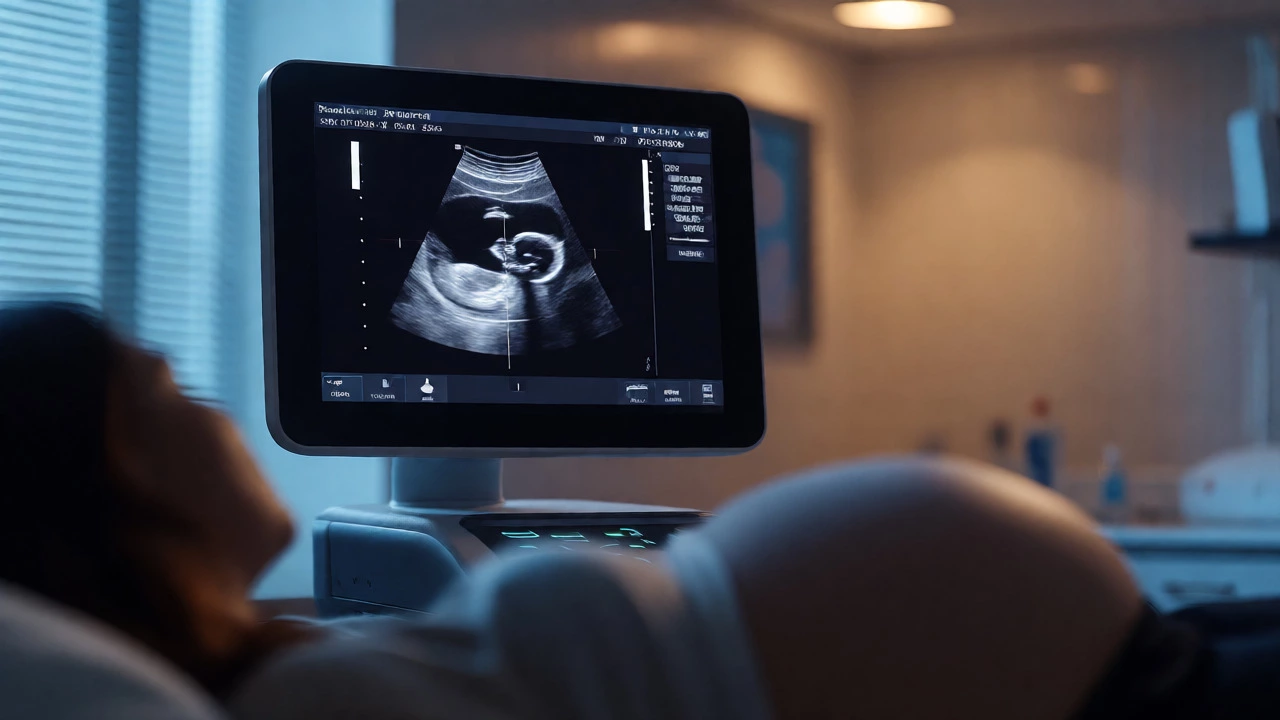
Imagine the ultrasound technician squinting at the screen, measuring your baby’s femur and abdomen, and then dropping the bomb: "This little one is tracking large." Suddenly, every birth story you’ve heard feels like it belongs to someone else. You’re not just preparing for labor; you’re prepping for a potential heavyweight champion. The question on everyone’s mind-and likely yours-is whether a 10-pound baby can still make it through the birth canal naturally.
The short answer is yes. But the real answer is more nuanced. It depends less on the number on the scale and more on how your body handles the journey. Let’s break down what actually happens when you aim for a vaginal delivery with a big baby, without getting lost in medical jargon or fear-mongering statistics.
What Counts as a "Big" Baby?
First, let’s clear up the terminology. In medical terms, a baby weighing more than 8 pounds, 13 ounces (4,000 grams) at birth is classified as having macrosomia. This condition occurs in about 8% of births in the United States and Canada. While 10 pounds sounds massive compared to the average 7.5-pound newborn, it’s not unheard of. Many women deliver babies of this size vaginally without serious complications.
However, context matters. A 10-pound baby born to a mother who is 5’9" and has previously delivered a 9-pounder vaginally faces different odds than a first-time mom who is 5’2". The baby’s size is only one piece of the puzzle. Your pelvic structure, the baby’s position, and your labor progress play equally critical roles.
The Physical Reality: Pelvis vs. Baby
Think of childbirth as a complex logistical operation. You have two main variables: the container (your pelvis) and the cargo (the baby). For a natural delivery to work, these need to fit together reasonably well.
Your pelvis isn’t a static box; it’s a dynamic structure. During labor, hormones like relaxin loosen the ligaments connecting your hip bones, allowing the pelvic outlet to expand slightly. This flexibility is crucial for accommodating larger heads and shoulders. If your pelvis is wide and deep, you might have plenty of room. If it’s narrow, even a smaller baby could struggle.
Then there’s the baby’s head. Babies are surprisingly good at molding their skulls to fit through tight spaces. The fontanelles (soft spots) allow the skull plates to overlap temporarily. This adaptation helps many big babies navigate the birth canal successfully. However, while the head can mold, the shoulders cannot. This leads us to the primary concern doctors worry about: shoulder dystocia.
Understanding Shoulder Dystocia
Shoulder dystocia happens when the baby’s head delivers, but one or both shoulders get stuck behind the mother’s pubic bone. It’s rare, occurring in about 0.6% to 1.4% of vaginal deliveries overall. But the risk jumps significantly when the baby weighs over 9 pounds 15 ounces (4,500 grams).
| Birth Weight Category | Risk Level | Notes |
|---|---|---|
| Under 8 lbs 13 oz | Low | Standard risk profile for most pregnancies. |
| 8 lbs 13 oz - 9 lbs 15 oz | Moderate | Requires careful monitoring during second stage. |
| Over 9 lbs 15 oz | High | C-section often discussed, but vaginal birth still possible. |
If shoulder dystocia occurs, it’s an emergency. The provider needs to maneuver the baby out quickly to prevent nerve damage or oxygen deprivation. Techniques like the McRoberts maneuver (hyperflexing the mother’s legs) or suprapubic pressure usually resolve it. Knowing these options exist can reduce anxiety, but prevention remains key.

Factors That Influence Success
So, can you deliver a 10-pound baby naturally? Yes, if several factors align. Here’s what healthcare providers look for:
- Prior Vaginal Births: If you’ve already delivered a baby vaginally, especially one over 8 pounds, your chances of delivering another big baby naturally increase dramatically. Your body knows the drill.
- Maternal Height and BMI: Taller mothers with a healthy BMI often have wider pelvic outlets. However, higher BMI can sometimes correlate with larger babies due to gestational diabetes risks.
- Baby’s Position: A baby in the occiput anterior position (head down, facing your back) navigates the pelvis best. If the baby is facing forward (occiput posterior), labor may be longer and harder, increasing the chance of intervention.
- Labor Progress: Steady dilation and descent are good signs. If the baby’s head is descending well during contractions, it suggests the pelvis is accommodating the size.
Gestational diabetes is another major factor. High blood sugar levels cause the baby to store extra fat, particularly around the trunk and shoulders. This disproportionate growth makes shoulder dystocia more likely. Managing glucose levels closely during pregnancy can help mitigate this risk.
Preparing Your Body for a Big Baby Delivery
You can’t change your genetics, but you can optimize your body for labor. Movement is your friend. Avoid lying flat on your back, which narrows the pelvic outlet by up to 20%. Instead, try positions that open the hips:
- Squatting: This widens the pelvic diameter significantly. Use a birthing ball or squat bar if available.
- All-Fours: This takes weight off the spine and allows gravity to assist while giving the baby room to rotate.
- Side-Lying: Good for rest and allowing the baby to descend slowly without excessive pressure on the perineum.
Perineal massage in the final weeks of pregnancy can also help. Studies suggest it reduces the likelihood of severe tearing, which is a common concern with larger babies. Start around 34-36 weeks, using oil or water-soluble lubricant, massaging the area between the vagina and anus gently for 5-10 minutes daily.

When a C-Section Becomes the Safer Choice
While vaginal birth is possible, it’s not always the safest route. The American College of Obstetricians and Gynecologists (ACOG) recommends discussing elective cesarean section if the estimated fetal weight exceeds 11 pounds (5,000 grams) for non-diabetic mothers, or 9 pounds 15 ounces (4,500 grams) for diabetic mothers.
Why these cutoffs? Because the risks of shoulder dystocia, prolonged labor, and birth injuries rise sharply beyond these weights. If your provider estimates your baby will hit 10 pounds, they’ll likely support a trial of labor. But if the estimate climbs to 11+ pounds, the conversation shifts toward safety versus preference.
Remember, ultrasounds near term aren’t perfect. They can be off by 10-15%. So, a "10-pound estimate" could mean the baby is actually 9 pounds or 11 pounds. This uncertainty is why shared decision-making with your midwife or OB-GYN is vital. Don’t feel pressured into a C-section solely based on a guess, but don’t ignore the data either.
The Post-Birth Reality Check
Let’s talk about life after the birth. Delivering a big baby naturally often means a longer pushing phase and potentially more perineal trauma. You might experience significant swelling, bruising, or tears requiring stitches. Recovery might take a bit longer than average.
On the flip side, avoiding surgery means no abdominal incision, faster initial recovery time, and immediate skin-to-skin contact. Breastfeeding might start sooner since you’re not recovering from anesthesia. Plus, there’s a profound sense of accomplishment in meeting your child without surgical assistance.
Also, consider the long-term view. Some studies link vaginal birth with better respiratory outcomes for babies and reduced risk of asthma later in childhood. These benefits persist regardless of birth weight, adding another layer to the decision.
Practical Tips for Your Birth Plan
If you’re aiming for a natural delivery with a big baby, communicate clearly with your care team. Include these points in your birth plan:
- Request continuous support from a doula or partner to help with positioning changes.
- Ask about the availability of vacuum extraction or forceps if the baby stalls, though these carry their own risks with large heads.
- Discuss episiotomy policies upfront. Routine episiotomies aren’t recommended, but a targeted cut might be needed to prevent severe tearing.
- Be open to changing plans. If labor stalls or distress signals appear, switching to a C-section isn’t failure-it’s smart parenting.
Ultimately, the goal is a healthy mom and a healthy baby. Whether that happens via vaginal birth or C-section depends on the unique dynamics of your labor day. Trust your instincts, rely on your provider’s expertise, and stay flexible.
Is 10 pounds considered a very large baby?
Yes, 10 pounds is above the average birth weight of approximately 7.5 pounds. Medically, any baby over 8 pounds 13 ounces is classified as macrosomic. While 10 pounds is large, it is within the range where many women successfully deliver vaginally, especially if they have had previous vaginal births.
Does having a big baby guarantee a C-section?
No, it does not guarantee a C-section. Many women deliver 10-pound babies vaginally. However, the likelihood of interventions such as instrumental delivery (forceps/vacuum) or emergency C-section increases with birth weight. Providers often recommend C-sections only when the estimated weight exceeds 11 pounds or if other risk factors like gestational diabetes are present.
What is shoulder dystocia and how common is it?
Shoulder dystocia is a complication where the baby's head is delivered but the shoulders get stuck behind the mother's pubic bone. It occurs in about 0.6% to 1.4% of all vaginal births. The risk rises significantly for babies weighing over 9 pounds 15 ounces, making it a primary concern for providers managing big baby deliveries.
How accurate are ultrasound weight estimates near due date?
Ultrasound estimates near term can be inaccurate by 10% to 15%. A baby estimated at 10 pounds could realistically weigh anywhere between 8.5 and 11.5 pounds. Because of this margin of error, doctors use these estimates as guidelines rather than absolute facts when recommending delivery methods.
Can I do anything to prepare my body for delivering a big baby?
Yes. Perineal massage starting at 34-36 weeks can help stretch tissues and reduce tearing risk. Staying active during pregnancy and practicing upright labor positions like squatting or all-fours can also help open the pelvis and facilitate easier descent of the baby.