Do You Really Need a Sterilizer for Baby Bottles? What Pediatricians Actually Recommend
Baby Bottle Sterilization Checker
Is Sterilization Necessary for Your Baby?
Answer these questions to determine if you need a sterilizer based on pediatric recommendations.
Answer the questions above to see your results.
When your baby is born, the advice comes fast and thick. Sterilize every bottle. Boil the nipples. Wash your hands before every feed. It feels like you’re preparing for surgery every time you make a bottle. But here’s the truth: sterilizer machines aren’t necessary for most families after the first few months. And you don’t need to boil bottles every single time.
Why Sterilizers Became a Thing
Sterilizers became popular in the 1980s and 90s when hospitals pushed strict hygiene for newborns, especially preemies or babies with weak immune systems. Back then, water quality wasn’t as reliable in many places, and formula wasn’t always sterile. Pediatricians told parents to sterilize bottles to prevent dangerous infections like Cronobacter, a rare but deadly bacteria that can cause meningitis in infants under 2 months.
Today, formula is manufactured under sterile conditions, and tap water in most developed countries - including Canada - is safe to drink. The Canadian Food Inspection Agency and Health Canada both confirm that properly cleaned bottles are safe for healthy babies over 3 months old.
When You Actually Need a Sterilizer
There are real cases where sterilization matters:
- Your baby was born prematurely or has a compromised immune system
- Your water source isn’t reliably clean (well water, travel, or during boil-water advisories)
- Your baby has had a recent infection like thrush or a stomach bug
- You’re using secondhand bottles that weren’t properly cleaned before
For healthy, full-term babies with clean tap water and no recent illness? You’re fine without it.
What ‘Clean’ Really Means
Sterilizing isn’t the same as cleaning. Cleaning removes milk residue, bacteria, and grime. Sterilizing kills every last microbe. For most families, cleaning is enough.
Here’s how to clean bottles properly:
- Disassemble the bottle: take off the nipple, cap, ring, and valve.
- Rinse immediately after feeding to prevent milk from drying and sticking.
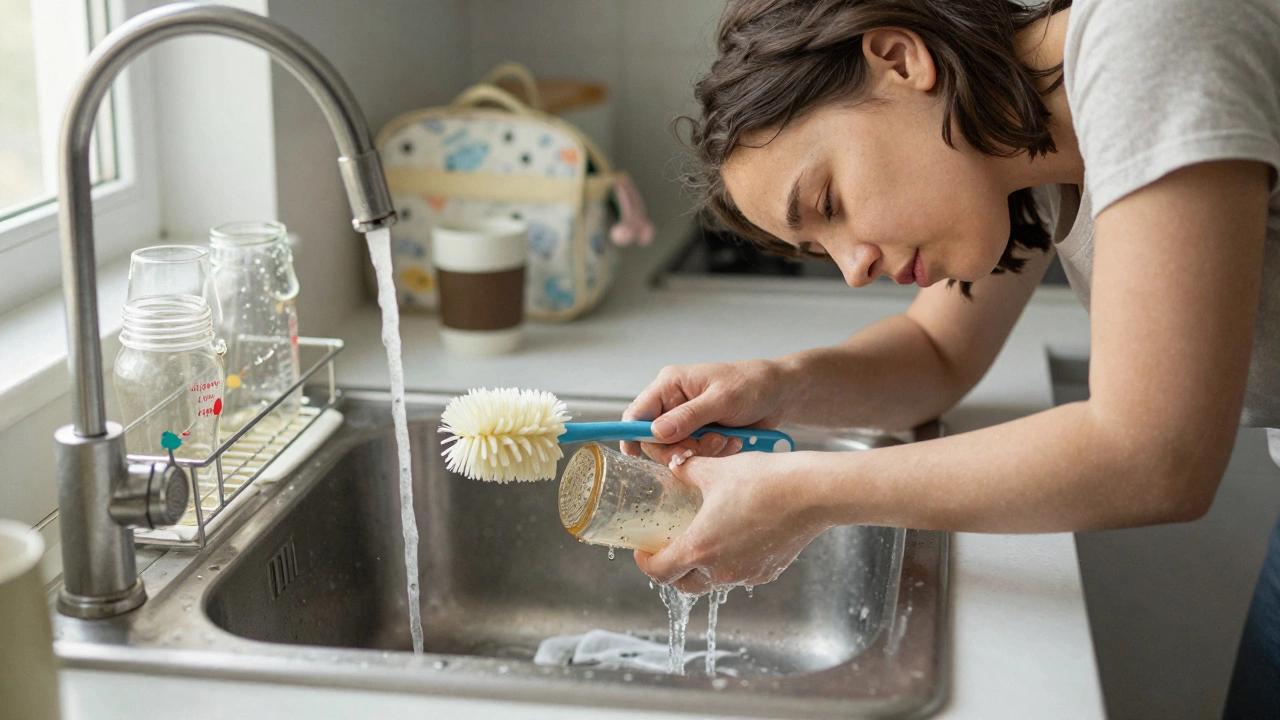
- Wash with hot, soapy water using a dedicated bottle brush. Scrub inside the nipple and threads.
- Rinse thoroughly under running water.
- Let air-dry on a clean rack - don’t towel dry, because towels can harbor bacteria.
That’s it. No boiling. No microwave steam. No UV light. Just soap, water, and time.
What Sterilizers Actually Do - and Don’t Do
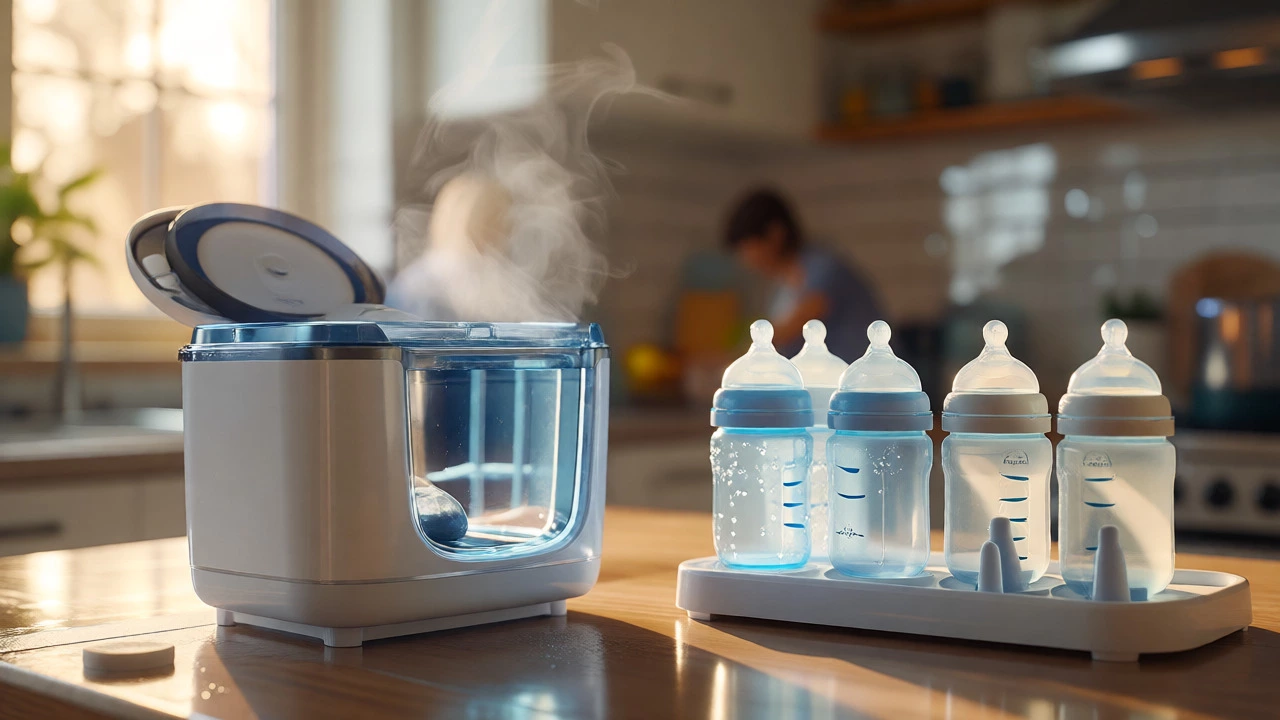
Sterilizers come in three types: steam, UV light, and microwave. All claim to kill 99.9% of bacteria. But here’s the catch:
- They don’t clean - they only sterilize. If there’s dried formula stuck in the nipple, sterilizing won’t remove it.
- They don’t prevent contamination after sterilization. If you touch the nipple with dirty hands or put it on a dirty counter, it gets contaminated again.
- They take time. A steam sterilizer runs for 10-15 minutes, then needs to cool. That’s 30 minutes of your day, every time.
One study from the University of Toronto’s Department of Pediatrics tracked 200 families over six months. Those who cleaned bottles with hot soapy water had no higher rate of infections than those who sterilized daily. The only difference? The sterilizer users spent 12 extra hours a month on bottle prep.
Real-Life Scenarios
Let’s say you’re a new parent in Vancouver, juggling sleep, work, and a newborn. You’re tired. You don’t have time to boil bottles after every feed. What should you do?
Scenario 1: Baby is 6 weeks old, healthy, full-term. Wash bottles with hot soapy water after each use. No sterilizer needed. Store assembled bottles in the fridge for up to 24 hours if you’re prepping ahead.
Scenario 2: Baby is 3 months old, had a cold last week, now on antibiotics. Sterilize bottles for the next week. Antibiotics can disrupt gut bacteria and make your baby more vulnerable to new infections.
Scenario 3: You’re visiting family in a rural area with well water. Boil water for 1 minute before mixing formula. Sterilize bottles during the visit. Once you’re back home with city water, go back to washing.
What Experts Say
The American Academy of Pediatrics (AAP) updated its guidelines in 2023: “For healthy term infants, thorough washing with soap and water is sufficient for bottle hygiene after the first few weeks of life.”
Health Canada echoes this: “Sterilization is not routinely recommended for infants older than 3 months who are healthy and living in a clean environment.”
Even the World Health Organization doesn’t require sterilization for formula-fed babies in high-income countries - only for those in areas with unsafe water or poor sanitation.
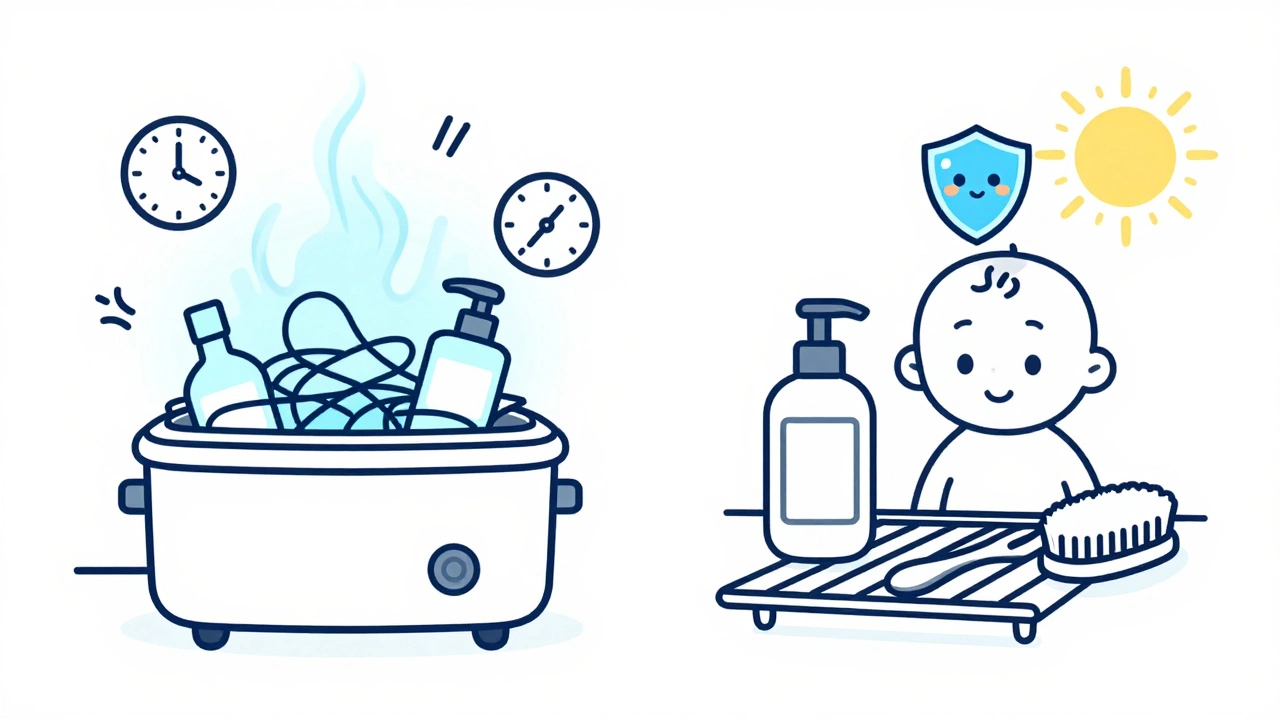
Cost, Waste, and Stress
Sterilizers cost $50 to $200. Replacement parts (trays, filters, UV bulbs) add up. They take up counter space. They use electricity. And they create a false sense of security.
One mother in Burnaby told me: “I bought a sterilizer because everyone said I needed it. After three weeks, I was drowning in bottles. I’d sterilize them, then forget to use them. They’d sit there for days, collecting dust. I finally threw the thing out and just washed them. My baby never got sick.”
It’s not about being lazy. It’s about being smart. Your baby’s immune system needs exposure to everyday germs to grow strong. Over-sterilizing might actually increase the risk of allergies later on - a theory backed by the “hygiene hypothesis” studied by the University of British Columbia.
What to Do Instead
Here’s a simple routine that works for 95% of families:
- Wash bottles after every use with hot, soapy water and a bottle brush.
- Let them air-dry on a clean rack - never use a towel.
- Store assembled bottles in the fridge for up to 24 hours if prepping ahead.
- Replace nipples every 2-3 months or if they show cracks or stickiness.
- Boil water for formula if you’re unsure about your tap water quality.
- Sterilize only if your baby is under 3 months, sick, or immunocompromised.
That’s it. No fancy gadgets. No guilt. Just common sense.
Final Thought: Trust Your Baby’s Immune System
Your baby’s immune system isn’t fragile. It’s designed to learn. From skin-to-skin contact to licking toys to breathing in household dust - they’re building defenses every day. Bottles don’t need to be germ-free. They just need to be clean.
Stop stressing. You’re doing better than you think.
Do I need to sterilize baby bottles every time?
No. For healthy babies over 3 months old, washing bottles with hot, soapy water after each use is enough. Sterilizing every time is unnecessary and adds extra work without added safety.
Can I use the dishwasher to clean baby bottles?
Yes, if your dishwasher has a hot water cycle (at least 140°F or 60°C) and a drying cycle. Place small parts in a closed basket so they don’t get lost. Make sure the bottles are dishwasher-safe. Many parents find this the easiest method.
Is boiling bottles in water just as good as a sterilizer?
Yes. Boiling bottles in a pot of water for 5 minutes kills the same germs as steam sterilizers. It’s cheaper, uses no electricity, and works even if you’re camping or traveling. Just make sure all parts are fully submerged.
What if I use formula? Do I still need to sterilize?
Formula is produced in sterile conditions, so you don’t need to sterilize bottles for every feed. Just clean them well after use. The only time sterilization matters with formula is if your water isn’t safe or your baby is under 3 months and has a health condition.
Can I reuse bottles without sterilizing between uses?
Yes. If you clean bottles properly after each use and store them in the fridge for up to 24 hours, reusing them is safe. Just don’t leave milk residue sitting out - bacteria grow fast in warm, sugary environments.
Are UV sterilizers better than steam?
Not necessarily. UV sterilizers only kill germs on surfaces the light touches. Shadows or crevices can be missed. Steam penetrates better and works faster. Both are effective if used correctly, but neither is needed for healthy babies over 3 months.