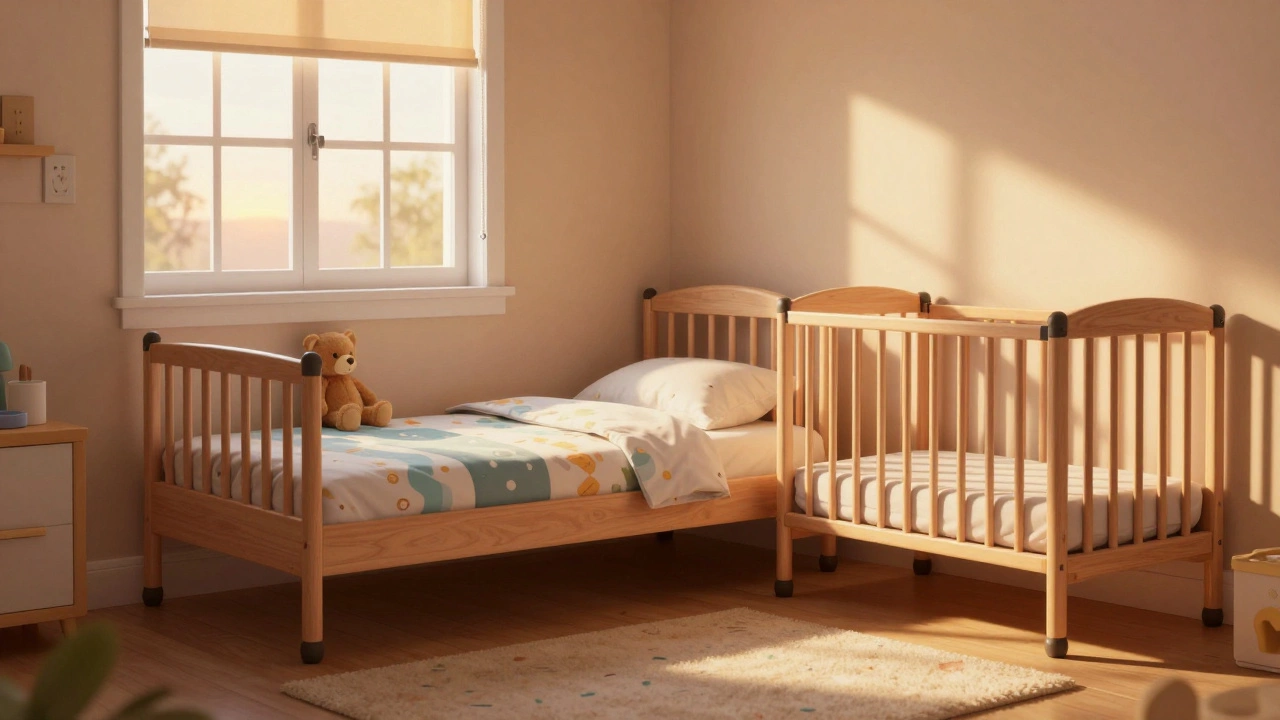
How Do I Know If My Toddler Is Ready for a Bed?
Switching your toddler from a crib to a bed is a big step - and not just for them. It’s a milestone that feels like a rite of passage, but it’s also one of those parenting decisions where timing matters more than you think. Too early, and you’re dealing with midnight wanderings and endless "I’m not tired" protests. Too late, and you’re stuck with a kid climbing out of the crib like it’s a ninja training ground. So how do you really know if your toddler is ready for a bed?
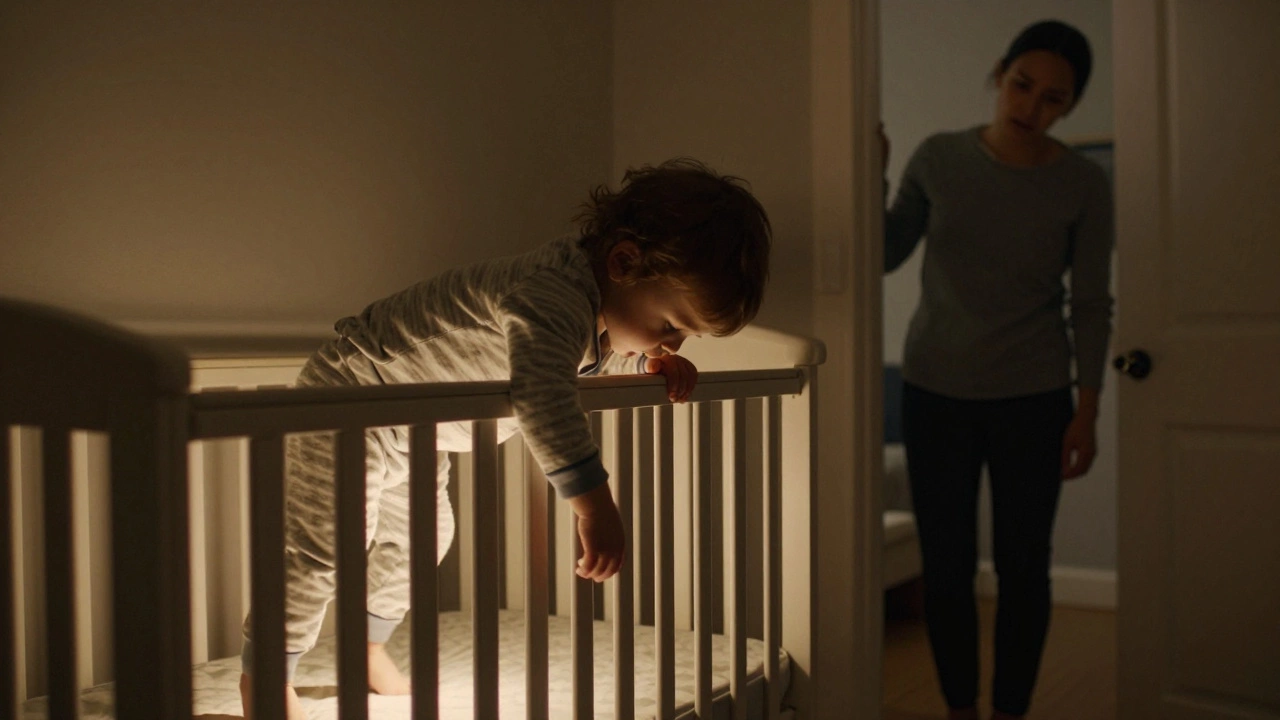
They’re climbing out of the crib
This is the most obvious sign - and also the most urgent one. If your toddler is regularly scaling the crib rails, even with the mattress at its lowest setting, they’re not just being curious. They’re telling you their body has outgrown the safety of the crib. A 2024 study from the Canadian Pediatric Society found that over 68% of toddlers who climbed out of their cribs did so before age 2. That’s not an accident. It’s a signal. Once your child can pull themselves up and use the crib as a ladder, it’s not a matter of "if" they’ll fall - it’s "when."
They’re starting to understand "no" - and still ignore it
Before you move them to a bed, ask yourself: does your toddler understand simple rules? Can they follow a basic instruction like "stay in bed" or "wait until morning"? If they can, great. If they say "no" to bedtime, then climb out anyway? That’s a problem. Toddlers who are ready for a bed can process boundaries, even if they test them. Those who can’t yet grasp cause and effect - like "if I get out of bed, I’ll get picked up" - aren’t ready for the freedom a bed offers. A bed without boundaries is a playground. And your toddler isn’t ready to run it.
Their sleep patterns are changing
Most toddlers need 11-14 hours of sleep a day, including naps. If your child is suddenly resisting naps, waking up earlier than usual, or tossing and turning for over an hour before falling asleep, their body might be shifting. Around age 2, many kids naturally start reducing their nap time. When that happens, their nighttime sleep becomes more important - and more fragile. A crib can feel confining when they’re outgrowing their sleep needs. A bed gives them space to move, stretch, and settle into a deeper rhythm. But if they’re still napping for 2 hours a day and sleeping soundly through the night? Hold off. They’re not ready.
They’re showing interest in a bed
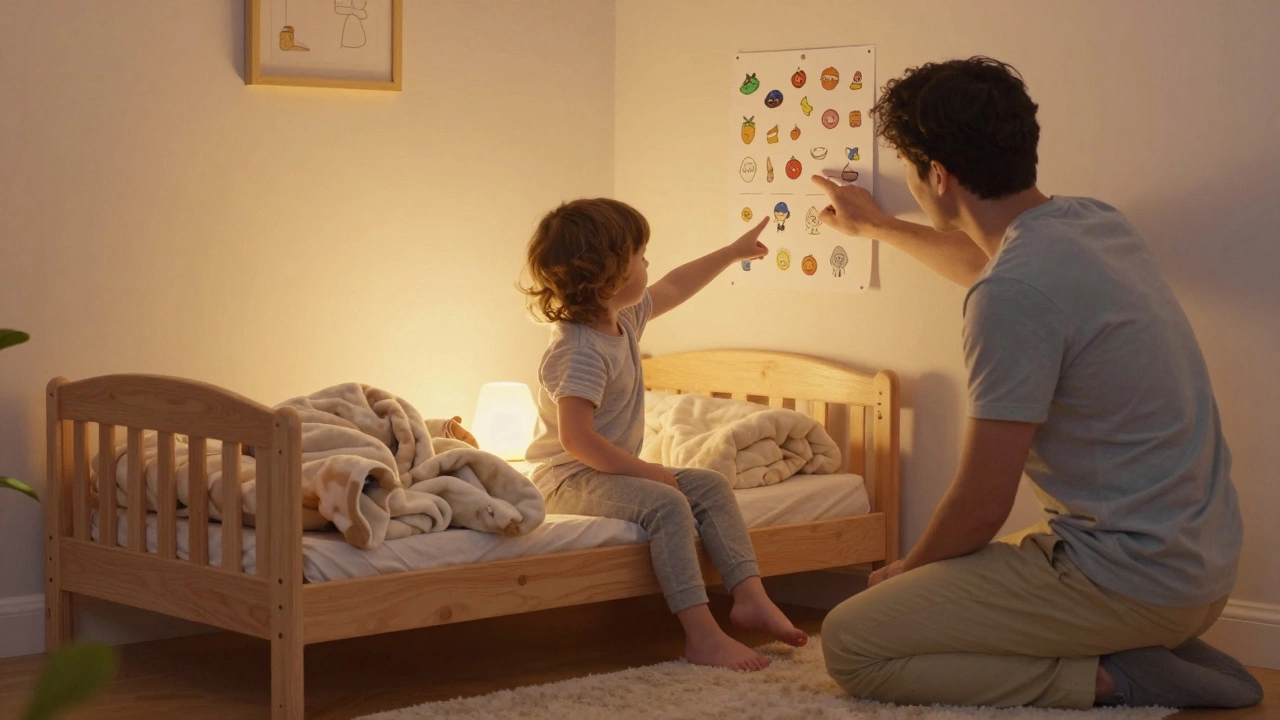
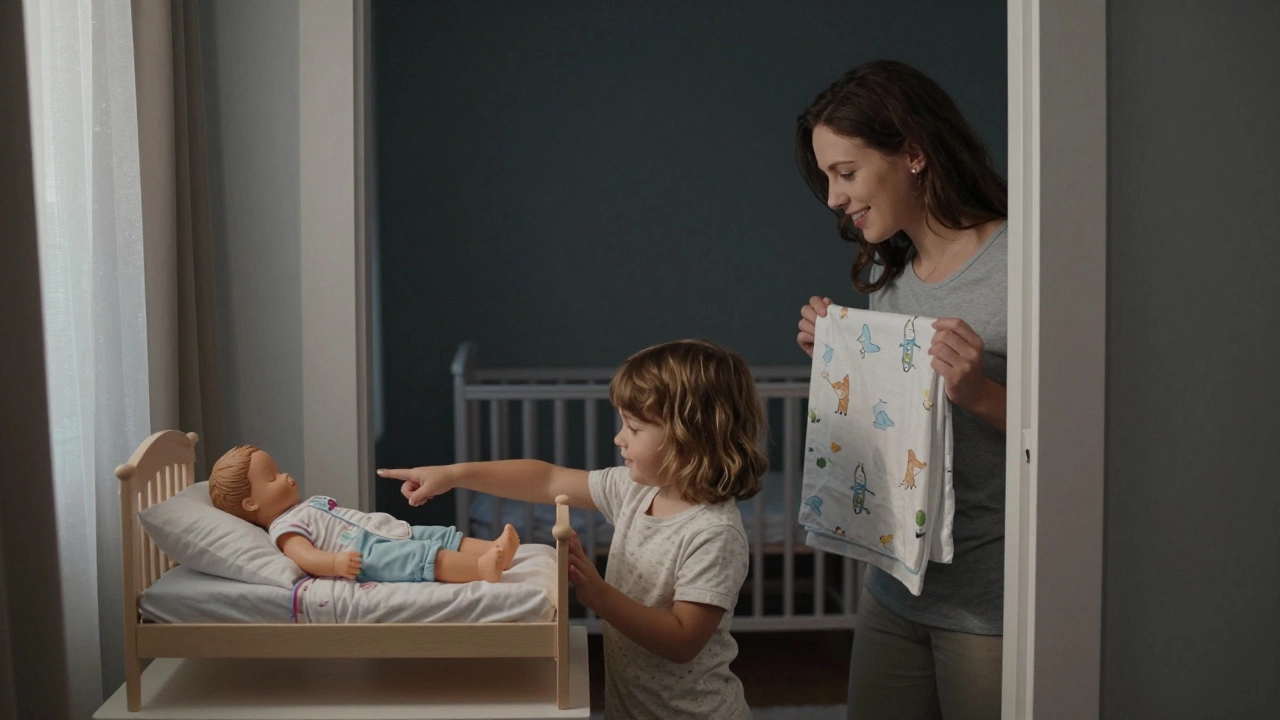
Let’s be honest - kids love to mimic. If they’ve been watching their older sibling sleep in a bed, or they’ve started asking questions like "Can I sleep like that?" or "Can I have a blanket like Mommy?" - that’s not just curiosity. It’s motivation. When a toddler starts talking about beds, choosing their own sheets, or pretending to sleep in a dollhouse bed, they’re mentally preparing. That’s a strong emotional cue. You can’t force readiness, but you can support it. Let them help pick out a mattress or a nightlight. Make the transition feel like a celebration, not a chore.
They’re starting to communicate needs clearly
Bedtime accidents happen. Wet pants. Thirst. A nightmare. A need to use the bathroom. If your toddler can say "I need water," "I’m scared," or "I have to go potty," they’re far more likely to handle nighttime independence. A crib doesn’t let them get up. A bed does - and that means they need to be able to ask for help. If they’re still mostly nonverbal or only use gestures to communicate, they’re not ready to manage nighttime needs on their own. A bed isn’t just about sleeping - it’s about communication.
They’ve outgrown their crib physically
Most cribs are designed for kids up to 35 inches tall or around 50 pounds. If your toddler’s head is brushing the top of the crib, or their feet are dangling over the edge, it’s not just uncomfortable - it’s unsafe. The American Academy of Pediatrics says cribs become hazardous when a child’s height exceeds 35 inches. That’s usually around age 2, but some kids hit it earlier. If you’re constantly adjusting the mattress to the lowest setting and they’re still climbing, it’s time. No amount of padding or guardrails fixes a mismatch between the child and the space.
What to do next - and what not to do
Don’t rush. Don’t do it because your friend’s kid switched at 18 months. Don’t do it because you want the crib for a baby sibling. Do it because your child is showing clear signs - and you’re ready to set up boundaries.
- Install bed rails on both sides - even if you think they won’t need them.
- Put a soft rug next to the bed to cushion falls.
- Keep the room safe: lock drawers, cover outlets, remove small objects they could swallow.
- Use a nightlight - not a TV or tablet. A dim, warm light helps them feel secure.
- Set a clear rule: "You can get out of bed once, for a drink or a hug. Then it’s time to sleep." Stick to it.
Avoid these mistakes:
- Don’t let them sleep with stuffed animals or pillows yet. The AAP still recommends keeping soft items out of the bed until age 2.
- Don’t move them to a big bed if they’re still in a crib for naps. That creates confusion.
- Don’t expect perfection. The first week will be messy. They’ll get up. You’ll walk them back. Repeat. It’s normal.
How long does the transition take?
It varies. Some toddlers adapt in 3 days. Others take 3 weeks. One parent in Vancouver told me her 22-month-old climbed out of the crib on a Friday, got into a toddler bed on Saturday, and slept through the night by Monday. Another’s 24-month-old woke up 7 times a night for 10 days. Both were normal. The key isn’t speed - it’s consistency. Stick to the same bedtime routine. Same pajamas. Same story. Same nightlight. Repetition builds security.
What if they’re not ready?
That’s okay. Not every toddler is ready at 2. Some aren’t ready until 3. If they’re still safe in the crib, happy at bedtime, and not climbing, wait. There’s no deadline. The crib isn’t a prison - it’s a safe space. And if they’re not ready for a bed, they’re not ready for a bed. Pushing it won’t make them grow up faster. It’ll just make bedtime harder.
Final thought
You’re not just moving a mattress. You’re giving your child more freedom - and more responsibility. And that’s scary. For them. And for you. But when the signs line up - when they’re climbing, communicating, and curious - it’s time. Trust the cues. Don’t rush. And when they finally sleep through the night in their new bed? That’s the moment you’ll realize: they were ready all along.