How to Pick a Baby Carrier: A Simple Guide for New Parents
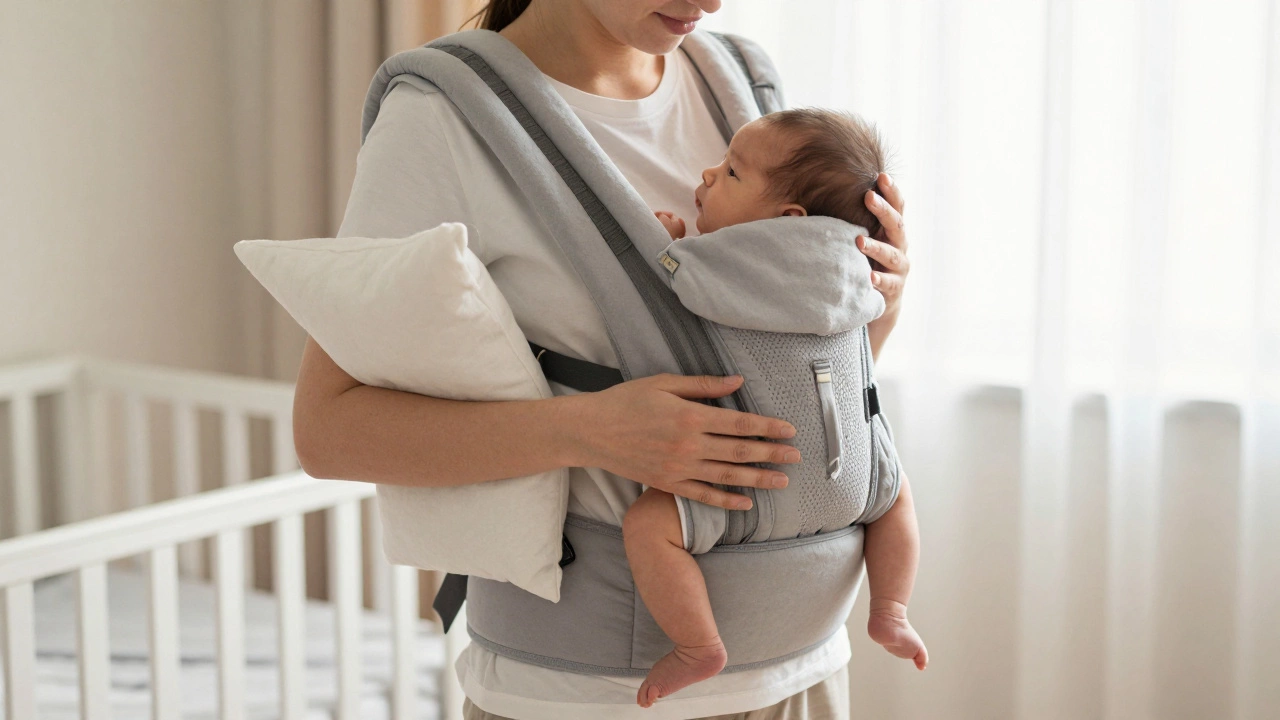
Baby Carrier Selection Tool
Find your perfect baby carrier
This tool helps you select the right carrier based on your baby's age, weight, daily activities, and climate. Always check manufacturer safety guidelines before purchasing.
Recommended Carrier Types
Choosing the right baby carrier isn’t just about convenience-it’s about comfort, safety, and making everyday life easier. With so many options on the shelf, from wraps to structured carriers, it’s easy to feel overwhelmed. But you don’t need to buy every style or follow the latest trend. You just need to find one that works for your body, your baby, and your daily routine.
Start with your baby’s age and weight
Not all baby carriers are made for every stage. Newborns under 12 pounds need full head and neck support. Carriers designed for infants usually have a narrow, curved seat that keeps their legs in a frog-like position-this supports healthy hip development. If your baby is under four months, avoid carriers that force their legs straight down. That position can strain their hips and spine.Most carriers list weight limits clearly: 7-45 pounds, 15-50 pounds, etc. Stick to those numbers. Some parents stretch the limits, but it’s risky. A carrier that’s too big for a small baby won’t hold them securely. A carrier that’s too small for a 20-pound toddler will dig into your shoulders and make walking painful.
Check the manufacturer’s guidelines. Brands like Ergobaby, BabyBjörn, and Tula all have clear age and weight recommendations based on years of testing. Don’t guess. Your baby’s safety depends on it.
Know the main types of baby carriers
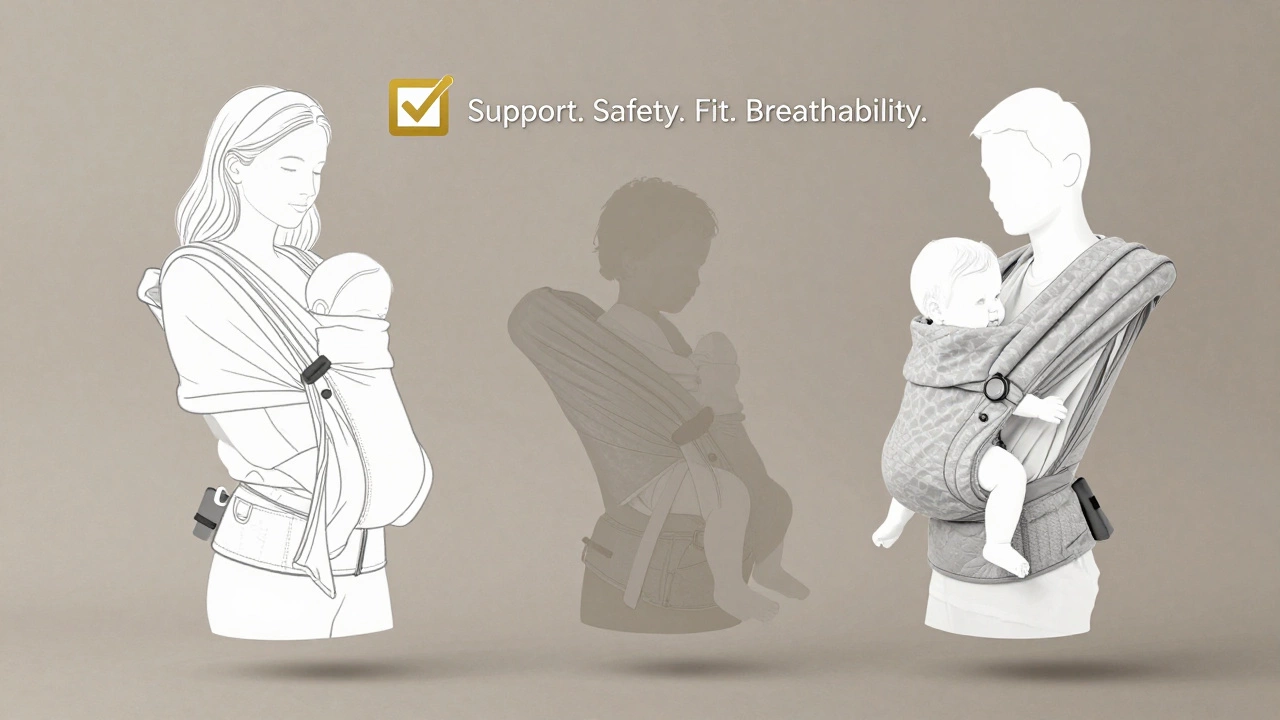
There are four common types, each with pros and cons:- Wraps: Long pieces of stretchy or woven fabric you tie around your body. Great for newborns because they mold to your baby’s shape. But they take practice to tie correctly. If you’re not patient, you’ll end up frustrated.
- Ring slings: One-shoulder carriers with adjustable rings. Easy to slip on and off. Perfect for quick trips or nursing on the go. But they put all the weight on one shoulder, which can hurt over time.
- Soft-structured carriers (SSCs): The most popular type. Think of them like backpacks for babies-with padded straps, a waistband, and buckles. Brands like Ergobaby and Tula fall here. Good for longer wear and toddlers. Easy to use right out of the box.
- Mei tais: Traditional Asian carriers with four straps and a panel. More support than slings, less bulk than SSCs. Great if you want something lightweight but sturdy. They’re not as common in the U.S., but gaining popularity.
If you’re new to babywearing, start with a soft-structured carrier. They’re the most forgiving. You can learn to use them in five minutes. Wraps and slings are better as second carriers once you’ve got the hang of things.
Look for proper support-yours and your baby’s
A good carrier doesn’t just hold your baby-it supports their spine, hips, and head. For babies under six months, their back should be in a natural C-curve, not flat or arched. Their knees should be higher than their bottom. This is called the “M-position.” It’s what doctors recommend for healthy hip development.For you, the parent, the carrier should distribute weight evenly. Look for wide, padded shoulder straps and a waistband that wraps around your hips, not your belly. A waistband that’s too thin or too high up will dig in and cause back pain. You should feel like your baby is sitting on your body, not hanging from your shoulders.
Test the fit before you buy. Hold a 10-pound bag of rice or a pillow in the carrier. Walk around your house. Bend over. Sit down. If the straps slide, the waistband shifts, or you feel pressure on your neck-keep looking.

Consider your lifestyle
What do you actually do with your baby every day? That matters more than how cute the carrier looks.- If you walk the dog, run errands, or hike on weekends: go for a structured carrier with good back support and a waistband.
- If you’re at home most of the day and want to nurse in private: a ring sling or wrap gives you quick access.
- If you’re tall and your partner is short: choose a carrier that adjusts easily for multiple wearers. Some brands offer different strap lengths or modular designs.
- If you live in a hot climate: look for breathable mesh panels. Cotton and linen are better than polyester for summer.
- If you’re on a budget: you don’t need to spend $200. Many affordable options (like the Lillebaby Complete or Baby K’tan) work just as well for everyday use.
One parent I talked to used a wrap for her newborn and switched to a soft-structured carrier at four months. She said the wrap was perfect for cuddling at night, but the carrier was the only thing that let her carry her 18-pound toddler while cooking dinner. Having two carriers isn’t overkill-it’s smart.
Safety first: what to avoid
Some carriers look great in photos but are dangerous in practice. Here’s what to skip:- Carriers that let your baby’s chin touch their chest-this can block their airway. Always check that their face is visible and their nose and mouth aren’t pressed against fabric.
- Carriers with no head support for babies under four months. Even if your baby seems strong, their neck muscles aren’t developed enough to hold their head up safely.
- Carriers with thin straps or no waistband. These put too much pressure on your shoulders and spine. You might not notice it right away, but after a few hours, you’ll feel it in your lower back.
- Used carriers with frayed fabric, broken buckles, or faded labels. Safety gear doesn’t age well. If the instructions are missing, don’t risk it.
The AAP (American Academy of Pediatrics) says baby carriers should keep babies in an upright, face-forward position with their airway clear. That’s it. No need for extra gadgets or fancy features. Just safety and support.
Try before you buy
Never buy a baby carrier blind. Even if it has great reviews, it might not fit your body. Many baby stores have demo stations. Ask if you can try one on with a doll or weighted bag. Some online retailers like BuyBuy Baby or Target let you return carriers within 30 days-even if you’ve used them.Join a local babywearing group. These are free, community-led meetings where parents show off their carriers and help each other tie, adjust, and troubleshoot. You’ll learn more in one hour than you will from ten YouTube videos.
What to look for in a quality carrier
You don’t need the most expensive one, but you do need a few key features:- Adjustable straps: Should fit both tall and short wearers.
- Padded waistband: At least 3 inches wide, with a secure buckle.
- Machine-washable fabric: Babies spit up, drool, and have accidents. You’ll wash this often.
- Clear instructions: If the manual is just a few blurry photos, walk away.
- US ASTM or EU EN 13209 safety certification: This isn’t optional. Look for it on the tag.
These features aren’t marketing fluff. They’re the difference between a carrier that lasts a year and one that lasts through two kids.
Final tip: Don’t rush
You don’t need to buy a carrier the day your baby comes home. Many parents wait a week or two. Use a car seat for short trips and borrow one from a friend to test it out. Your body needs time to heal after birth. Your baby needs time to grow into their muscles.When you’re ready, pick one that fits your life-not someone else’s Instagram feed. The best baby carrier is the one you’ll actually use. Not the one that looks the prettiest. Not the one with the most features. The one that lets you move through your day without pain, stress, or worry.
Can I use a baby carrier with a newborn?
Yes, but only if the carrier is designed for newborns and provides full head and neck support. Look for carriers that keep your baby in a curled, frog-legged position with their face visible. Avoid carriers that let their head flop forward or their legs hang straight down.
Are baby carriers safe for the hips?
When used correctly, baby carriers support healthy hip development. The key is keeping your baby’s knees higher than their bottom in an M-shape. Carriers that force legs straight or too far apart can increase the risk of hip dysplasia. Always check that your baby’s legs are properly supported.
How long can I wear my baby in a carrier?
There’s no set time limit, but listen to your body and your baby. If you feel pain, take a break. If your baby seems fussy, tired, or overheated, it’s time to stop. Most parents wear their babies for 1-3 hours at a time, switching positions or taking breaks. Babies under six months should not be in a carrier for more than 2 hours without a break.
Is it okay to sleep with my baby in a carrier?
No. Sleeping in a carrier increases the risk of suffocation. Babies can slump forward, blocking their airway. Even if they seem fine, the position isn’t safe for sleep. Always transfer your baby to a flat, firm surface for naps and nighttime sleep.
What’s the best baby carrier for hot weather?
Look for carriers made with breathable mesh or lightweight cotton. Brands like Tula and Lillebaby offer summer-specific models with ventilation panels. Avoid thick, padded carriers with synthetic fabrics. Dress your baby in light clothing and stay hydrated. If you’re sweating, your baby is too.