How to Turn Your Grandparents' Stories Into a Children's Book
Children's Book Story Suitability Checker
This tool helps you determine if your grandparent's story has the right elements to become a children's book. Based on the article's guidance, we'll evaluate key components like emotional core, structure, sensory details, and appropriate length.
Results
Every family has stories-old tales told over Sunday dinners, whispered bedtime memories, or laughs shared in the kitchen. But what happens when those stories start to fade? If your grandparents have shared their lives with you-how they walked to school barefoot, the first time they saw snow, or the day they met your grandparent-you have something rare. Not just memories. Material for a book that could outlive you.
Start by listening, not writing
- Set up a recording session. Use your phone. No fancy gear needed.
- Ask open questions: "What was your favorite thing to do as a kid?" or "Tell me about your first job."
- Let them talk. Don’t interrupt. Silence is okay-it’s where the real stories live.
- Record at least three sessions. You’ll hear patterns: repeated phrases, favorite words, emotional moments.
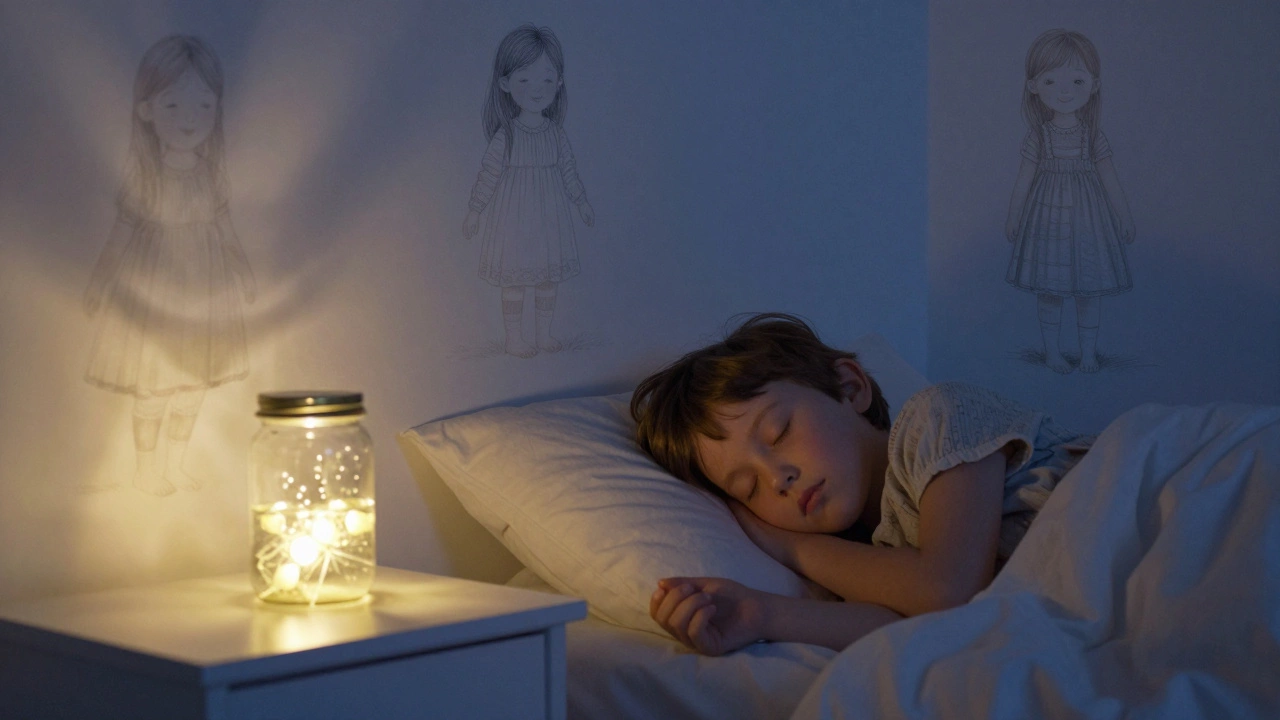
One grandmother I knew said, "I used to catch fireflies in a jar and let them glow under my pillow." That one line became the opening of her grandson’s book. It wasn’t grand. It was real. And kids feel that.
Find the heart of the story
Not every memory works as a children’s book. Kids need a clear beginning, a little trouble, and a satisfying end. Look for moments where your grandparent faced something small but meaningful: losing a toy, standing up to a bully, waiting for a letter from overseas.Take the story of a 7-year-old girl who saved her allowance for a year to buy her mom a scarf. That’s not just a memory-it’s a plot. Kids understand waiting. They understand love shown through small actions.
Ask yourself: What emotion is at the center? Joy? Fear? Hope? That’s your book’s compass.
Turn facts into feelings
Your grandfather might have said, "I worked on the railroad in 1948." But what did that feel like? Did his hands ache? Did he hear whistles all night? Did he miss his little sister?Children’s books don’t explain history-they make it felt. Replace dates with senses:
- Instead of: "They lived in a small town." → "The whole town had one stoplight, and everyone knew when it was broken because the dogs started barking at midnight."
- Instead of: "She wore hand-me-down clothes." → "Her dress had three patches, each from a different season. The red one was from her first snowfall."
This isn’t fiction. It’s truth dressed in the clothes of a child’s imagination.
Choose the right voice
Who’s telling the story? Your grandparent? A child in their world? A talking animal who saw it all?Try writing the same scene three ways:
- As a first-person adult recalling the past.
- As a child living through it.
- As a bird watching from the roof.
Most successful family-based children’s books use the child’s point of view. Why? Because kids read to step into someone else’s shoes. They don’t want to learn history-they want to feel it.
One book based on a Polish grandmother’s escape during WWII was told through the eyes of her stuffed rabbit. The rabbit didn’t understand war. But it understood cold. And hunger. And the sound of a mother whispering, "We’re safe now." That book sold over 40,000 copies.
Keep it short
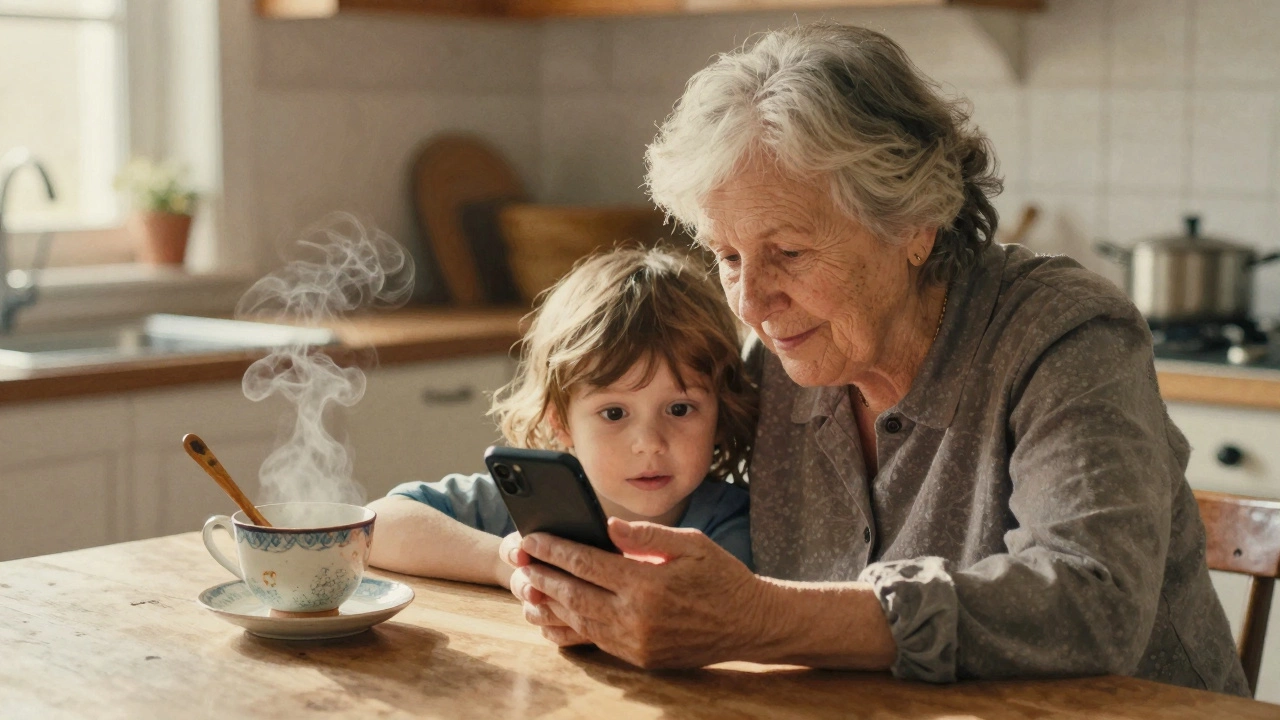
Children’s books for ages 4-8 are usually 500-800 words. That’s less than two pages of typed text. Don’t try to fit everything in. Pick one moment. One feeling. One object.Think of it like a photograph-not the whole family reunion, but just your grandma’s hands holding a teacup, steam rising, her wedding ring still on her finger.
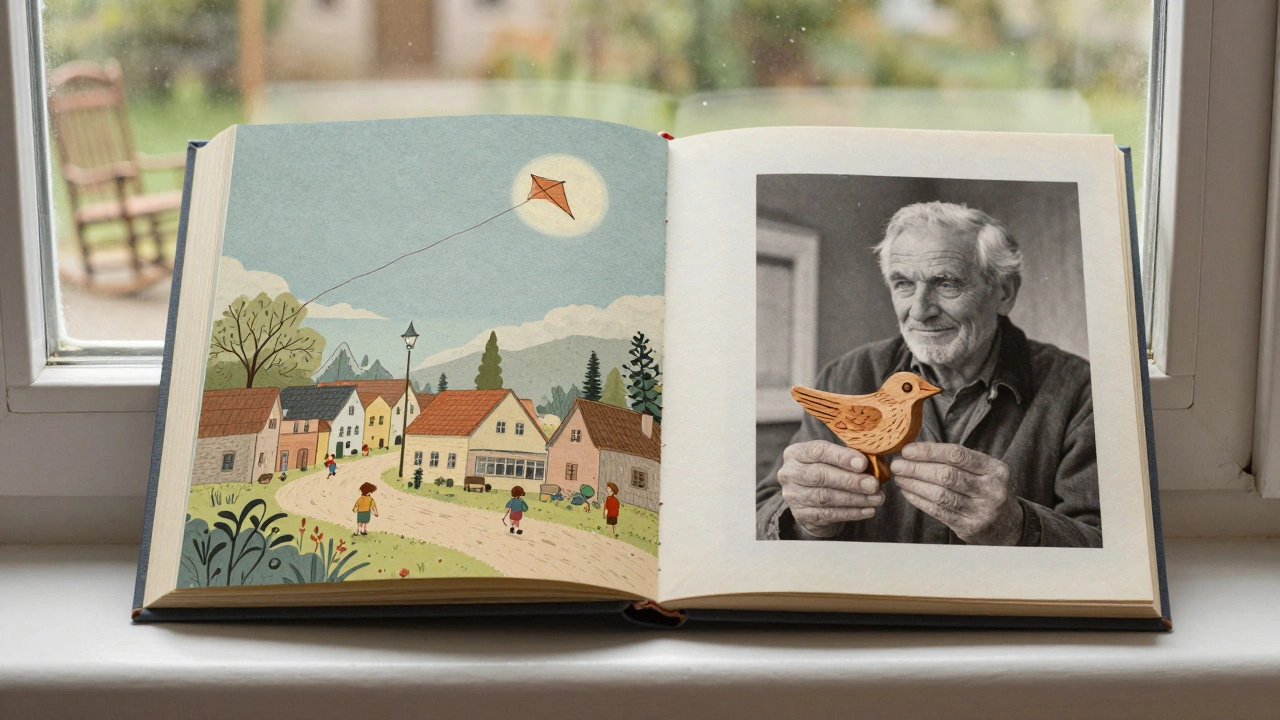
One author turned her grandfather’s daily ritual of whittling a wooden bird into a 600-word book. Each page showed the bird changing-until the last page, where the child holds it, and the grandfather is gone. No words. Just the bird. And the silence.
Use illustrations to carry the story
Words aren’t everything. In children’s books, pictures do half the work. If you’re not an artist, work with one.Find illustrators who specialize in warm, nostalgic styles-soft watercolors, textured pencils, muted tones. Avoid cartoonish or overly bright designs unless that matches your grandparent’s world.
Some families hire local art students. Others use platforms like Fiverr or Upwork and search for "vintage children’s book illustrator." Show them photos of your grandparents, their home, their clothes. Authenticity matters more than polish.
Test it with kids
Before you print anything, read the draft to a group of kids ages 5-7. Don’t ask, "Do you like it?" Ask:- "What did you think happened next?"
- "Which part made you feel something?"
- "Would you want to read this again?"
If they ask for a second reading, you’ve got something.
If they fidget, skip ahead, or say, "That’s boring," go back. Maybe the pacing is too slow. Maybe the emotion is buried under too many details.
Print it yourself-or share it digitally
You don’t need a publisher. Many families make one copy as a gift. Use services like Blurb, Lulu, or even Amazon KDP. Choose a hardcover with a dust jacket. Add a note on the first page: "This story was told to me by [Grandma’s Name]. I wrote it so you’d never forget."One mother printed 12 copies-each for a grandchild. On the inside cover, she taped a small photo of her grandmother. Every child who got the book now has a piece of their family’s voice.
What if they’re gone?
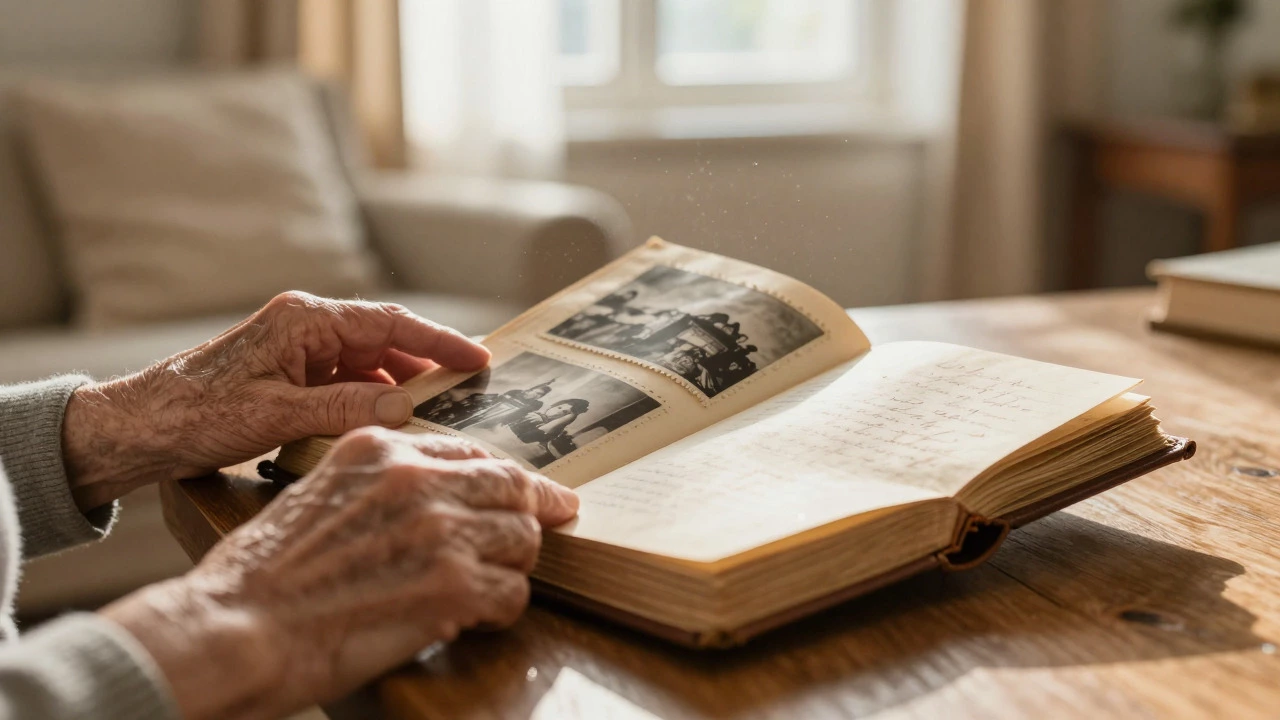
If your grandparents have passed, don’t wait. Pull out old letters, photo albums, cassette tapes. Talk to aunts, uncles, cousins. Write down everything they remember. Combine fragments. You’re not making up a story-you’re piecing together truth.One woman found her grandfather’s 1953 diary tucked in a toolbox. It had entries like: "April 12: Made a kite with Billy. Wind was strong. We flew it till dark. He laughed like a bell." She turned it into a book called The Kite That Flew Past the Moon. It’s now in three school libraries.
Why this matters
Children today live in a world of screens, algorithms, and fast-moving noise. But they still crave connection. Not to influencers. Not to trends. To real people. Real feelings.A book made from your grandparents’ stories is a quiet rebellion against forgetting. It’s a way to say: "You mattered. I heard you. I’m keeping you alive."
And someday, your child-or their child-will open that book. And for a few minutes, your grandparent will be there again. Not as a name on a photo. But as a voice. A laugh. A story.
Do I need to be a writer to turn my grandparents’ stories into a book?
No. You don’t need to be a professional writer. You just need to listen well and care enough to shape what you hear. Many of the most powerful family books are written by people who’ve never published anything before. The heart of the story matters more than perfect grammar.
How old should my child be to enjoy a book based on my grandparents’ stories?
Children as young as 3 can enjoy picture books based on family stories, especially if the illustrations are warm and the language is simple. For ages 4-8, focus on one clear moment with emotion. Older kids, 9-12, can handle longer narratives with more context-like how life was different back then.
Can I include photos in the book?
Yes. Many family books include photos on the endpapers or between chapters. Use black-and-white or faded color images to match the tone. Avoid cluttering pages with too many. One photo per spread is enough. Make sure the photo adds emotion-not just information.
What if my grandparents’ stories include difficult parts-like poverty, loss, or discrimination?
Yes, include them-but adapt them for children. Don’t sugarcoat, but don’t overwhelm. Focus on resilience. For example: "Grandma didn’t have shoes, but she danced in the rain anyway." Or: "The store wouldn’t serve them, so they made dinner at home and sang louder than ever." Kids understand courage more than cruelty.
How long does it take to make a book like this?
It depends. Gathering stories might take weeks or months. Writing the first draft could take a weekend. Editing and finding an illustrator might take 2-3 months. Printing and binding adds another 2-4 weeks. But the most important part? Start now. Even one page is better than waiting for perfect.