Ideal Weight for a 3-Month-Old Baby: Growth Charts and Carrier Safety

Baby Weight & Carrier Safety Checker
Carrier Safety Check
Waiting for input...
No Data Entered
Enter your baby's details on the left to see their growth status and carrier safety information.
Is your three-month-old gaining weight too fast? Or are you worried they aren't growing enough? If you are holding your little one and wondering if their size is normal, you are not alone. Parents obsess over numbers on the scale, especially when it comes to choosing the right baby carriers. Getting this right isn't just about vanity; it is about safety, comfort, and ensuring your baby develops correctly.
The truth is, there is no single "ideal" weight that fits every baby. Genetics, birth weight, feeding method, and overall health play massive roles. However, medical professionals use standardized growth charts to determine what is healthy for your specific child. Understanding these ranges helps you pick gear that supports them safely and gives you peace of mind during those crucial early months.
Understanding Average Weight Ranges
To get a baseline, we look at data from major health organizations like the World Health Organization (WHO) and the Centers for Disease Control and Prevention (CDC). These bodies track thousands of infants to create percentiles that show where most babies fall.
For a typical three-month-old boy, the average weight hovers around 14 to 15 pounds (6.4 to 6.8 kg). For girls, it is slightly lower, averaging between 13 to 14 pounds (5.9 to 6.4 kg). But "average" is just a statistical middle point. A healthy baby can weigh significantly less or more and still be thriving.
| Percentile | Boys (lbs) | Girls (lbs) | Boys (kg) | Girls (kg) |
|---|---|---|---|---|
| 50th (Average) | 14.7 | 13.4 | 6.7 | 6.1 |
| 75th | 16.2 | 14.8 | 7.3 | 6.7 |
| 90th | 17.8 | 16.3 | 8.1 | 7.4 |
| 10th | 12.3 | 11.2 | 5.6 | 5.1 |
If your baby falls between the 5th and 95th percentile, they are generally considered within the normal range. The key is consistency. A baby who stays along the 10th percentile curve is usually healthier than one who jumps erratically from the 50th to the 90th in a few weeks.
Why Growth Curves Matter More Than Single Numbers
Doctors don't just look at today's weight. They plot it on a graph over time. This creates a "growth curve." Think of it like a road trip. It doesn't matter if you are currently at mile marker 50 or mile marker 100. What matters is that you are moving forward steadily without stopping or speeding dangerously.
During the first three months, babies grow rapidly. Most infants double their birth weight by four to six months. So, if your baby was born small (say, 6 pounds), weighing 12 pounds at three months is perfect progress. If they were born large (9 pounds), weighing 18 pounds might be expected. Comparing your baby to a neighbor's child who had a different birth weight is misleading and unnecessary stress.
Pediatricians watch for "crossing percentiles." If a baby drops from the 75th to the 25th percentile quickly, it could signal feeding issues, illness, or metabolic problems. Conversely, shooting up too fast can sometimes indicate overfeeding, particularly with formula, which may lead to childhood obesity risks later on.

Feeding Methods and Weight Gain
How you feed your baby influences their weight trajectory. Breastfed babies often gain weight differently than formula-fed infants. In the first few months, breastfed babies might gain weight slightly faster initially but then slow down as they become more active. Formula-fed babies tend to gain weight more steadily and sometimes heavier due to the precise calorie count in each bottle.
- Breastfeeding: Milk composition changes based on baby's needs. Some babies cluster feed, gaining weight in spurts.
- Formula Feeding: Consistent calories mean predictable weight gain. Overfeeding is easier here if parents push extra ounces.
- Mixed Feeding: Combines both patterns, requiring careful monitoring of total intake.
Remember, weight is only one metric. Your baby should also be meeting developmental milestones, having regular wet diapers (about 6+ per day), and showing alertness during awake times.
Baby Carrier Safety and Weight Limits
This is where weight becomes practical. Many parents start using baby carriers devices designed to hold infants close to the body for hands-free carrying around this age. But not all carriers are created equal, and weight limits are critical for safety.
Most structured baby carriers have a minimum weight requirement, usually around 7 to 8 pounds (3.2 to 3.6 kg). At three months, most babies exceed this, making them eligible for many carriers. However, the upper limit varies. Soft-structured carriers often support up to 35 pounds (16 kg), while wrap-style carriers can go higher, sometimes up to 45 pounds (20 kg).
Using a carrier outside its weight range is dangerous. If your baby is underweight for their age, ensure they have enough neck control before placing them in a carrier that requires head support. If they are overweight, check that the carrier's buckles and fabric can handle the strain without slipping or breaking.
Always follow the "T.I.C.K.S." rule for safe carrying:
- Tight: Keep baby snug against your chest.
- In view: You should always see their face.
- Close enough to kiss: Their chin should be near your shoulder.
- Keep clear: Ensure airways are open and unobstructed.
- Safe: Follow manufacturer guidelines strictly.
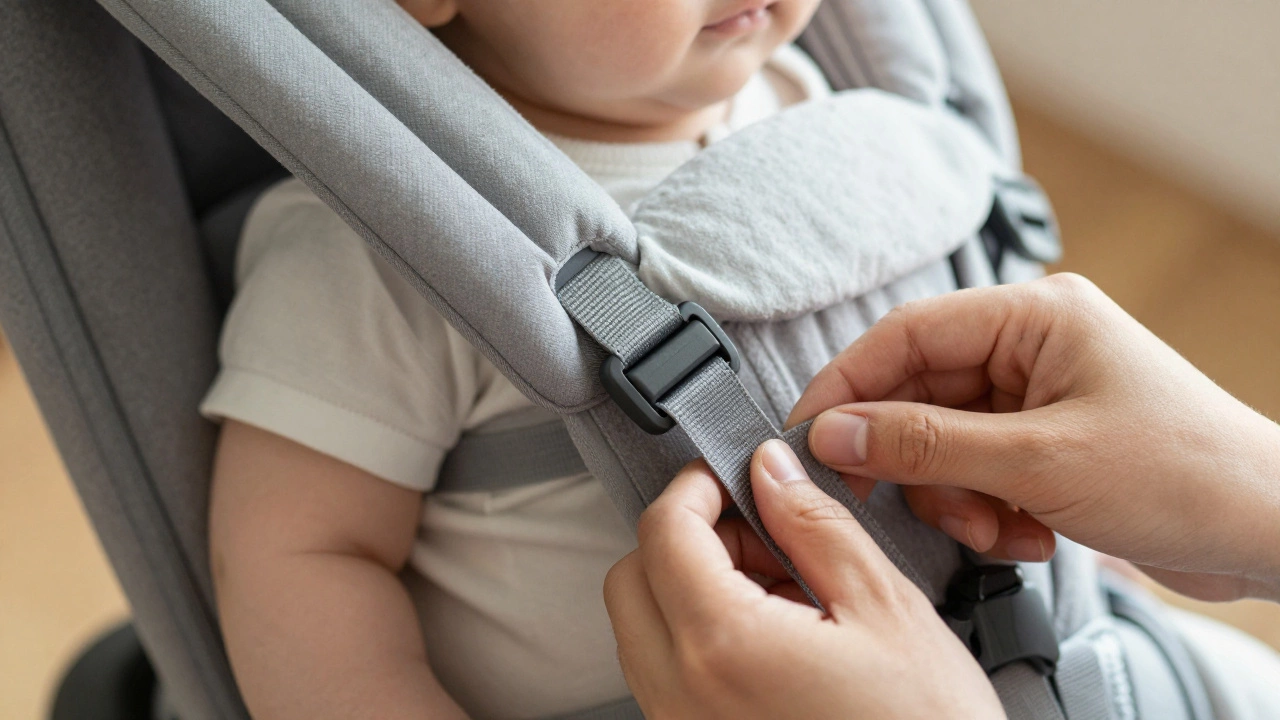
When to Consult a Pediatrician
While online charts are helpful, they are not diagnostic tools. You should talk to your doctor if:
- Your baby loses weight instead of gaining it.
- They consistently fall below the 5th percentile or above the 95th without a genetic explanation.
- You notice signs of dehydration (fewer wet diapers, sunken soft spot on head).
- Your baby seems lethargic or unusually fussy during feeds.
Pediatricians consider head circumference and length alongside weight. A heavy baby with a small head circumference might have different concerns than a heavy baby with proportional growth. Always bring your questions to your next well-child visit.
Practical Tips for Monitoring Growth
Don't weigh your baby daily at home. Home scales vary in accuracy, and daily fluctuations due to diaper fullness or clothing can cause panic. Instead, rely on professional weigh-ins at 2-week, 1-month, and 2-month checks. Between visits, focus on how your baby acts. Are they happy after eating? Do they sleep reasonably well? Are they interacting with you?
If you are using a baby carrier, observe your baby's comfort. If they slump or turn blue, take them out immediately. As they grow heavier, adjust the carrier straps frequently. A three-month-old gains an ounce or two a day, so what fit last week might feel loose today.
What is the heaviest a 3-month-old can be?
There is no strict maximum weight, but typically, boys in the 95th percentile weigh around 17.8 lbs (8.1 kg) and girls around 16.3 lbs (7.4 kg). Babies can weigh more and still be healthy, especially if they were large at birth. Consult your pediatrician if you are concerned about rapid weight gain.
Can I use a baby carrier for a 3-month-old?
Yes, most 3-month-olds meet the minimum weight requirements (usually 7-8 lbs) for soft-structured carriers. Ensure the carrier provides adequate head and neck support, as some babies at this age still lack full head control. Always follow the T.I.C.K.S. safety rules.
Why is my baby lighter than other 3-month-olds?
Genetics play a huge role. If parents are smaller, the baby will likely be smaller. As long as your baby is following their own growth curve and meeting developmental milestones, being on the lower end of the chart is normal and healthy.
Does breastfeeding affect weight gain compared to formula?
Yes. Formula-fed babies often gain weight more steadily and may be heavier in the first year. Breastfed babies might gain weight faster initially but then taper off. Both patterns are normal. Focus on your baby's individual growth curve rather than comparing to formula-fed peers.
How do I know if my baby is getting enough milk?
Look for output: at least 6 wet diapers and several dirty diapers per day. Also, watch for steady weight gain at check-ups and contentment after feeds. If your baby is constantly hungry or losing weight, contact your pediatrician.