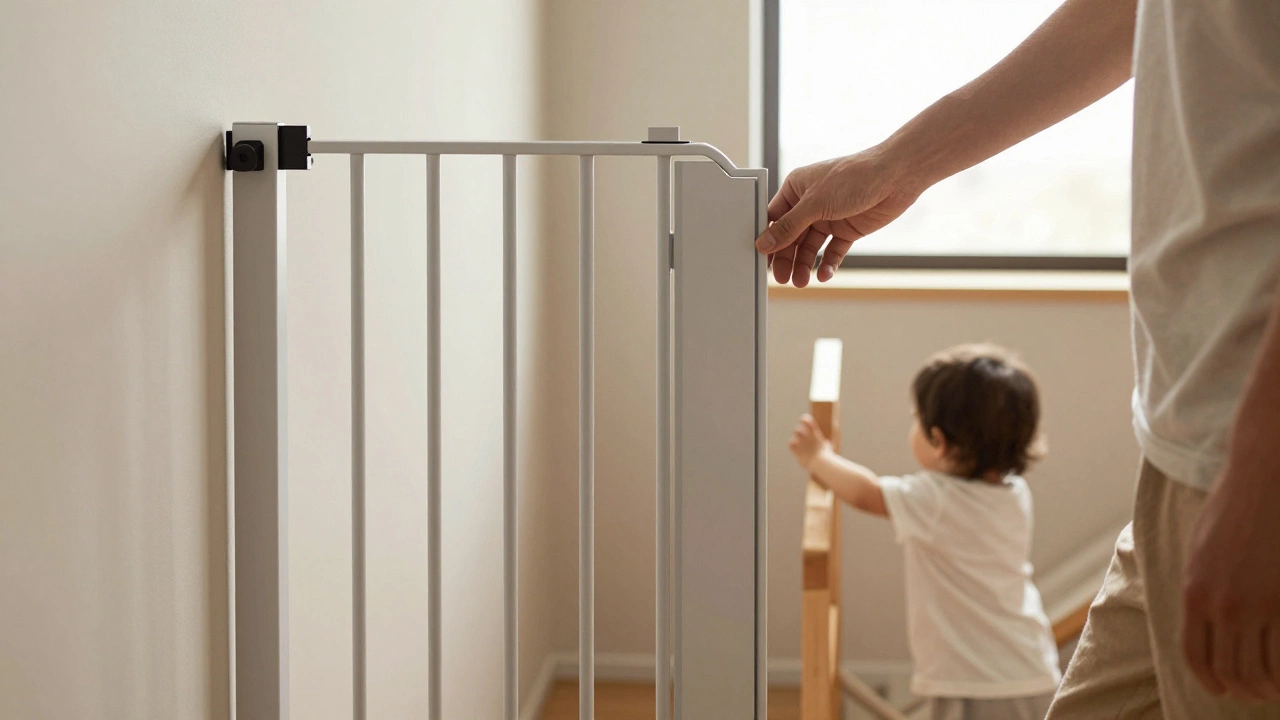
Should House Gate Open In or Out? Safety Guide for Parents
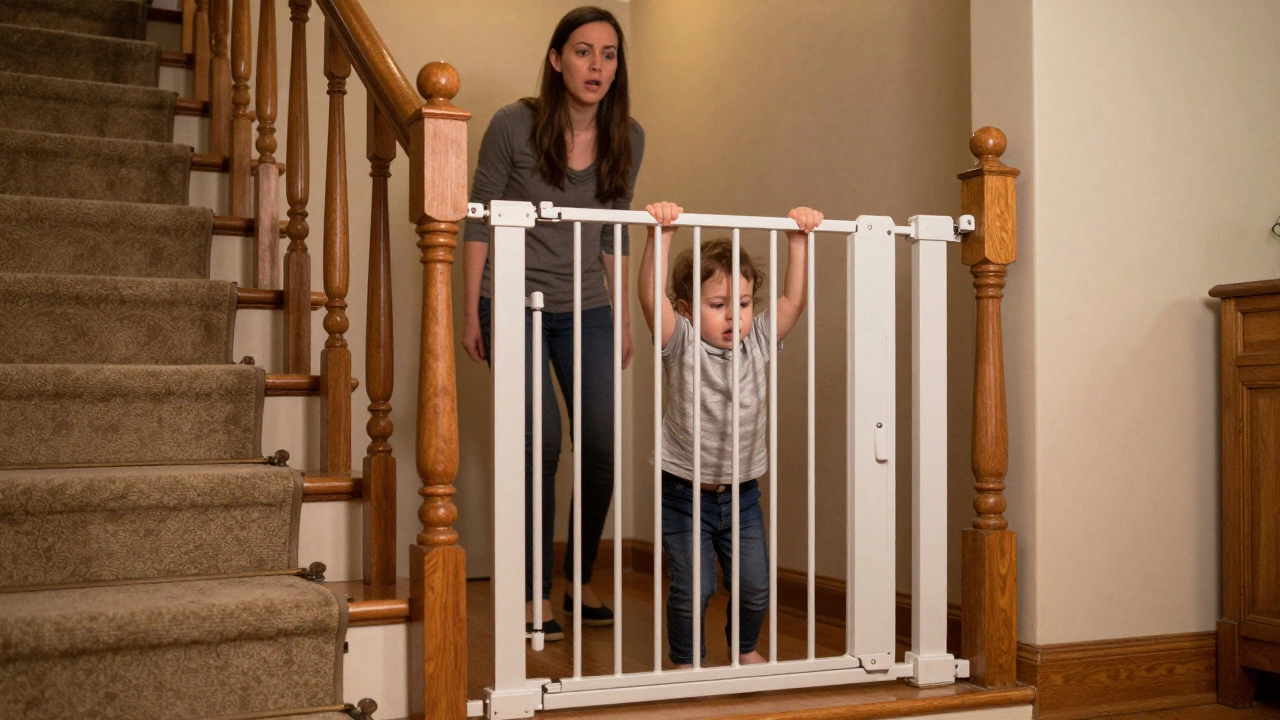
When you install a baby gate at the top or bottom of your stairs, or across a doorway, the direction it opens isn’t just a matter of convenience-it’s a matter of safety. Too many parents assume it doesn’t matter whether the gate swings in or out. But one wrong choice could mean a serious fall, a trapped child, or a gate that doesn’t even stay closed. Here’s what actually works in real homes, based on safety standards, real-life incidents, and expert recommendations from childproofing specialists.
Why Gate Direction Matters More Than You Think
A baby gate isn’t just a barrier. It’s a physical layer of protection for a child who can’t yet understand danger. If the gate swings the wrong way, it can fail at the exact moment you need it most. For example, a gate that swings outward at the top of the stairs becomes a hazard if a child pushes against it while crawling or pulling up. The gate can pop open, and the child goes tumbling. That’s not speculation-it’s documented in injury reports from the Canadian Paediatric Society and the U.S. Consumer Product Safety Commission.
On the other hand, a gate that swings inward might seem safer, but if it opens into a narrow hallway or a room with furniture, it can get stuck, block an escape route, or even trap a child’s head or limbs. The direction isn’t just about physics-it’s about context.
The Rule for Stair Gates: Always Swing Inward
If you’re installing a gate at the top of the stairs, it must open inward-toward the landing, not toward the stairs. This isn’t a suggestion. It’s a mandatory standard in Canada, the U.S., and the EU. Why?
- If the gate opens outward, a child pushing on it while climbing or pulling up can force it open. The latch isn’t designed to hold against downward pressure from a child’s weight.
- If it opens inward, gravity and the child’s own movement work in your favor. Even if they lean or push, the gate stays shut because the force pushes it into the frame.
- In case of emergency, an adult can quickly push the gate open from the top without needing to reach around or pull it toward them.
Real-world example: In 2023, a Vancouver toddler slid down the stairs after a top-of-stairs gate swung outward. The latch gave way because the child was holding onto the gate’s top bar while pulling up. The gate was installed correctly-just in the wrong direction. After that incident, the family switched to a gate that swings inward. No more falls.
Bottom-of-Stairs Gates: It Depends
At the bottom of the stairs, the direction is more flexible. You can install a gate that swings either way-but you still need to think about space.
- If there’s a wall or a sturdy piece of furniture directly behind the gate, it’s safe to let it swing outward.
- If the gate opens into a walkway, a play area, or a kitchen with cabinets, swing it inward. That way, the gate won’t block movement or knock over a chair when opened.
- Always choose a gate with a pressure-mounted or hardware-mounted system. Spring-loaded gates without screws can shift under pressure, especially if the floor is uneven.
Don’t assume a gate at the bottom is low-risk. In fact, over 30% of gate-related injuries happen at the bottom, according to a 2024 study by the Canadian Injury Prevention Network. That’s because parents often think the bottom is safe and skip checking the latch.
Doorway Gates: Think About Traffic Flow
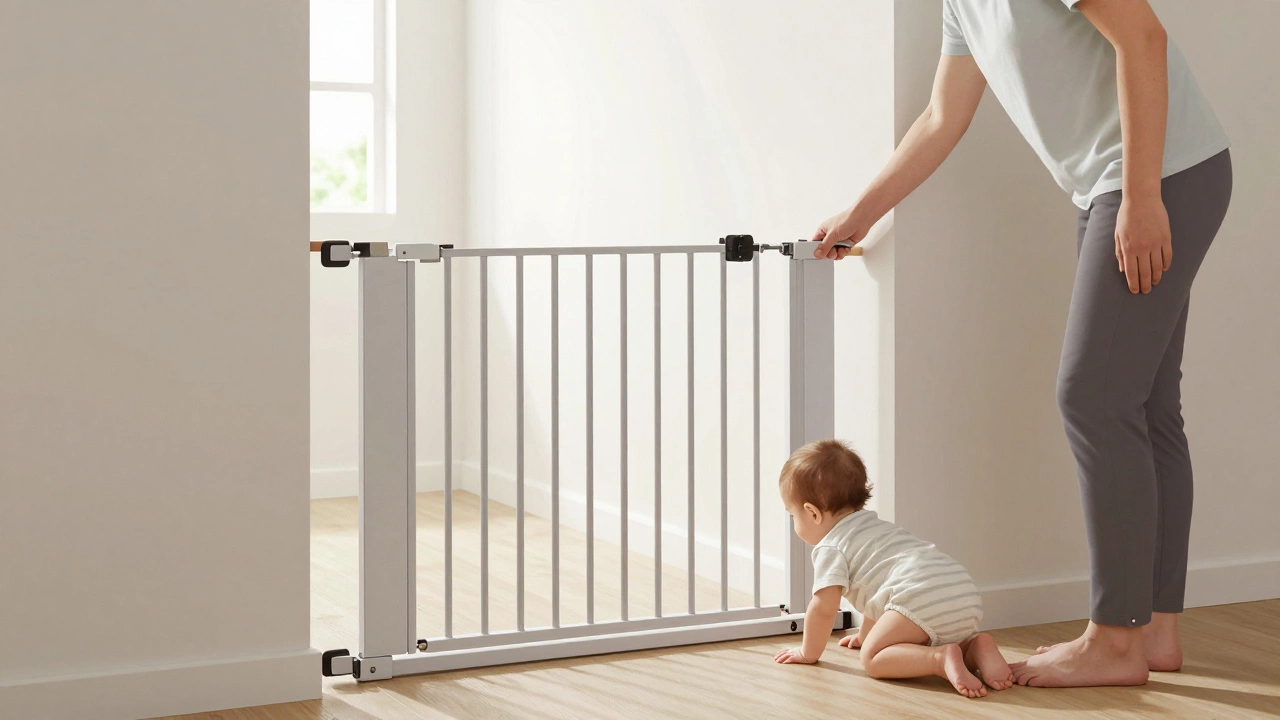
Doorway gates-like those across the kitchen or living room-are different. Here, the goal isn’t just to stop a child. It’s to let adults move freely without tripping over a gate that swings into their path.
- If the door opens inward into the room, the gate should swing the same way. Otherwise, the door and gate will collide.
- If the gate opens into a high-traffic zone (like a hallway), swing it inward to avoid blocking the path.
- For narrow doorways, consider a gate with a swing-clear design. These open fully without taking up extra space.
One mother in Burnaby installed a gate that swung outward into the hallway. Every time she walked by with groceries, she had to stop, turn, and pull the gate open. After two weeks, she gave up and left it open. That’s not safety-that’s failure.
What About Gates That Swing Both Ways?
Some modern gates offer reversible hinges. These are great-if you use them right. A gate that can swing both ways gives you flexibility, but it also means you have to decide which way to set it. Don’t leave it on ‘both’ unless you’re okay with it swinging randomly.
Set it based on the location:
- Top of stairs: Set to swing inward.
- Bottom of stairs: Set to swing inward if space is tight, outward if there’s a wall.
- Doorways: Match the door’s swing.
Don’t assume the gate will work if you just install it and forget it. Check the latch every week. Babies learn fast. By 9 months, many are already testing gates with their hands, knees, and shoulders.
Other Safety Tips You Can’t Ignore
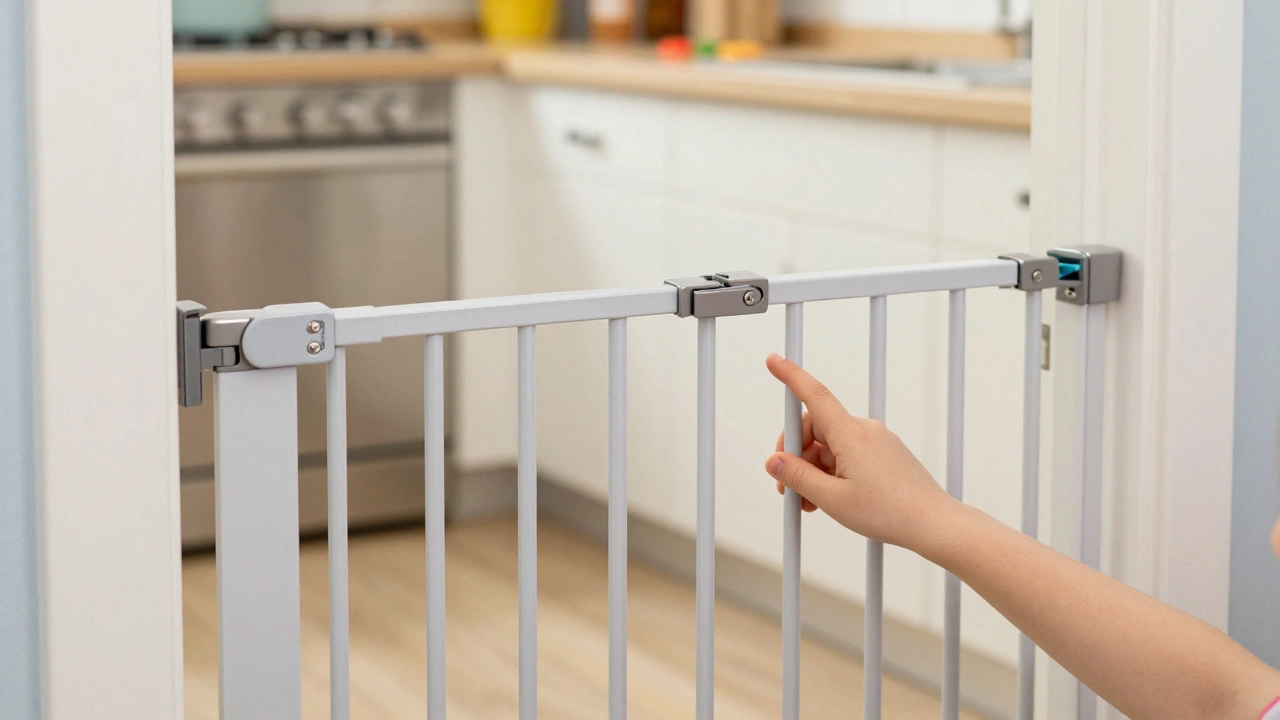
Direction is just one part. Here are three other things that make or break gate safety:
- Use hardware-mounted gates for stairs. Pressure-mounted gates can pop open under pressure. Look for gates labeled ‘ASTM F1004-21 compliant’-that’s the current safety standard in North America.
- Never use a gate with a gap larger than 2.5 inches. That’s the width a child’s head can slip through. Check the spacing between bars, not just the overall width.
- Remove toys or furniture near the gate. If a child can climb on a chair to reach the gate, they’ll find a way over it. Keep the area clear.
Also, avoid mesh gates for stairs. They’re flexible, and a child can push them out of shape. Stick to rigid, metal or wood gates with secure latches.
What to Do If Your Gate Already Opens the Wrong Way
If you’ve already installed a gate and realize it opens toward the stairs, don’t wait. Replace it. Most major brands like Regalo, Summer Infant, and Kidco offer gates with reversible mounting kits. You can often switch the direction in under 10 minutes with a screwdriver.
Or, if you’re renting and can’t drill holes, swap out the gate entirely for a pressure-mounted model that’s specifically designed for top-of-stairs use. These use a tension system that locks into place without screws. Just make sure it’s rated for stairs.
Final Rule: When in Doubt, Go Inward
There’s no perfect one-size-fits-all answer, but there is a simple rule: When in doubt, make the gate swing inward.
It works for stairs. It works for doorways. It works for tight spaces. It’s harder for a child to force open. It’s easier for you to open with one hand while holding a baby or a cup of coffee.
And if you’re ever unsure, ask yourself: What happens if my child pushes on this gate right now? If the answer is ‘it might open,’ then it’s already too late. Fix it before the next crawl.
Can I use a baby gate at the top of the stairs without drilling holes?
Yes, but only if you use a gate specifically designed for stair use with a pressure-mounted system. These gates use high-tension clamps and are tested to hold against a child’s push. Look for models labeled ‘ASTM F1004-21 compliant’ and ‘top-of-stairs rated.’ Never use a standard pressure gate on stairs-it’s not safe.
Is it okay to use a gate with mesh panels?
Mesh gates are fine for doorways or wide openings, but avoid them at the top of stairs. They can bend or stretch under pressure, creating gaps where a child’s head or limbs could get caught. For stairs, use rigid gates made of metal or wood with fixed bars.
How often should I check my baby gate?
Check it every week. Latches wear out. Screws loosen. Pressure mounts shift. Children grow faster than you think-by 10 months, many are strong enough to push gates open. A quick tug test before each use is the best habit.
What’s the difference between pressure-mounted and hardware-mounted gates?
Pressure-mounted gates rely on tension between walls to stay in place. They’re easy to install but can slip if the walls aren’t perfectly parallel or if a child pushes hard. Hardware-mounted gates are screwed into the wall or door frame. They’re much stronger and are the only safe option for stairs. If you can drill, always choose hardware-mounted.
Can I use a baby gate for pets too?
Not reliably. Pet gates are designed for animals, not children. They’re often lighter, have wider gaps, and lack child-safe latches. A dog might not push through, but a toddler will. Use gates labeled for child safety only.