What Are the Age Groups for Car Seats? A Simple Guide for Parents
Choosing the right car seat isn’t just about buying something that looks cute or fits in your backseat. It’s about keeping your child safe every time you drive. And the biggest mistake parents make? Moving their child to the next stage too soon.
Stage 1: Rear-Facing Car Seat (Birth to Age 2-4)
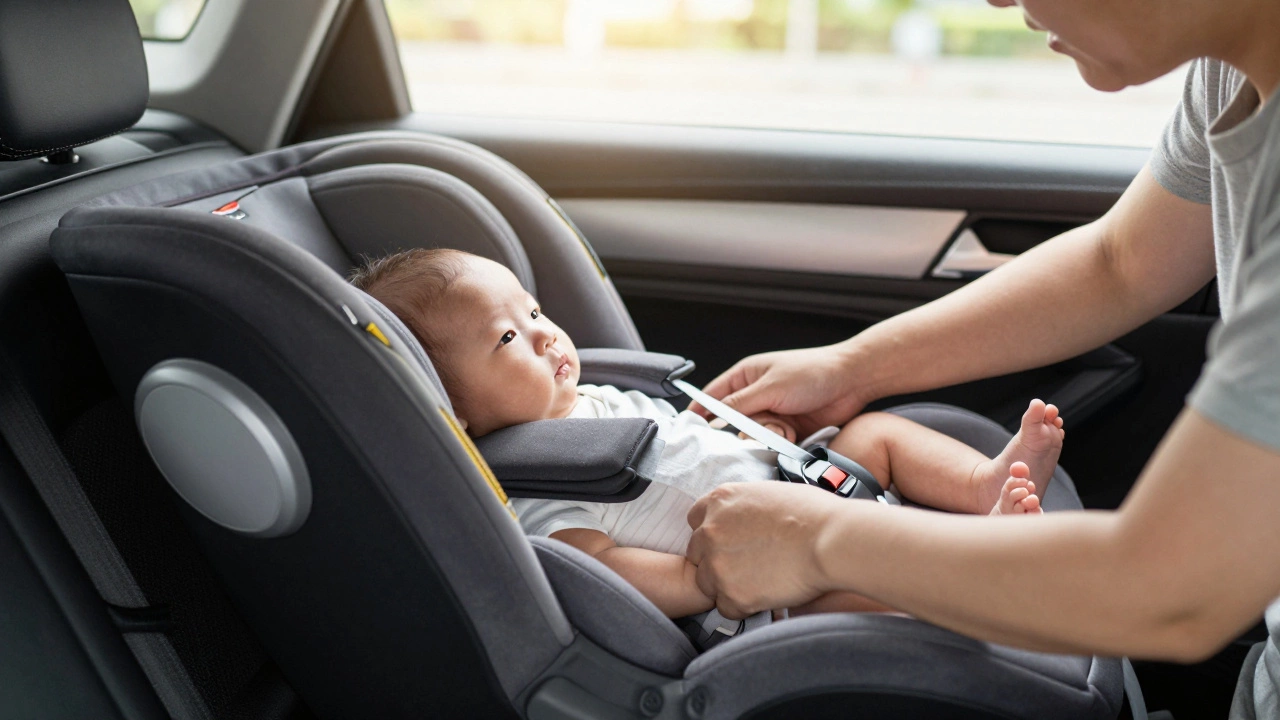
The safest place for a baby is in a rear-facing car seat. This isn’t just a suggestion-it’s backed by the American Academy of Pediatrics and Transport Canada. Rear-facing seats cradle the head, neck, and spine in a crash, which is critical because babies have heavy heads and weak neck muscles. Most infants start in a rear-facing infant seat, usually with a handle and base that clicks into the car. But you don’t have to switch to a convertible seat right away. Keep your child rear-facing until they hit the height or weight limit of the seat, which is often around 40 pounds or 40 inches tall. That usually means they stay rear-facing until age 2, 3, or even 4.
Don’t be fooled by the idea that kids’ legs are too long if they’re bent up. Children’s bones are flexible. They sit cross-legged or in a frog position naturally. It’s far safer than forward-facing too early. A 2017 study in Injury Prevention found that children under age 2 are 75% less likely to die or suffer serious injury in a crash when rear-facing.
Stage 2: Forward-Facing Car Seat (Age 2-5)
Once your child outgrows the rear-facing seat, it’s time for a forward-facing seat with a five-point harness. These seats have a tether strap that connects to the car’s anchor point, reducing head movement in a crash. Look for seats that go up to at least 40-65 pounds. Many parents switch too early because their child seems big, but the real trigger is the seat’s limits-not age alone.
Some kids stay in a forward-facing harness seat until they’re 5 or 6, especially if they’re smaller or the seat allows higher weight limits. Don’t rush to a booster just because your child turns 4. If they still fit within the harness limits, keep them in it. The harness distributes crash forces across the strongest parts of the body: shoulders, hips, and pelvis. Boosters don’t do that.
Stage 3: Booster Seat (Age 4-10)
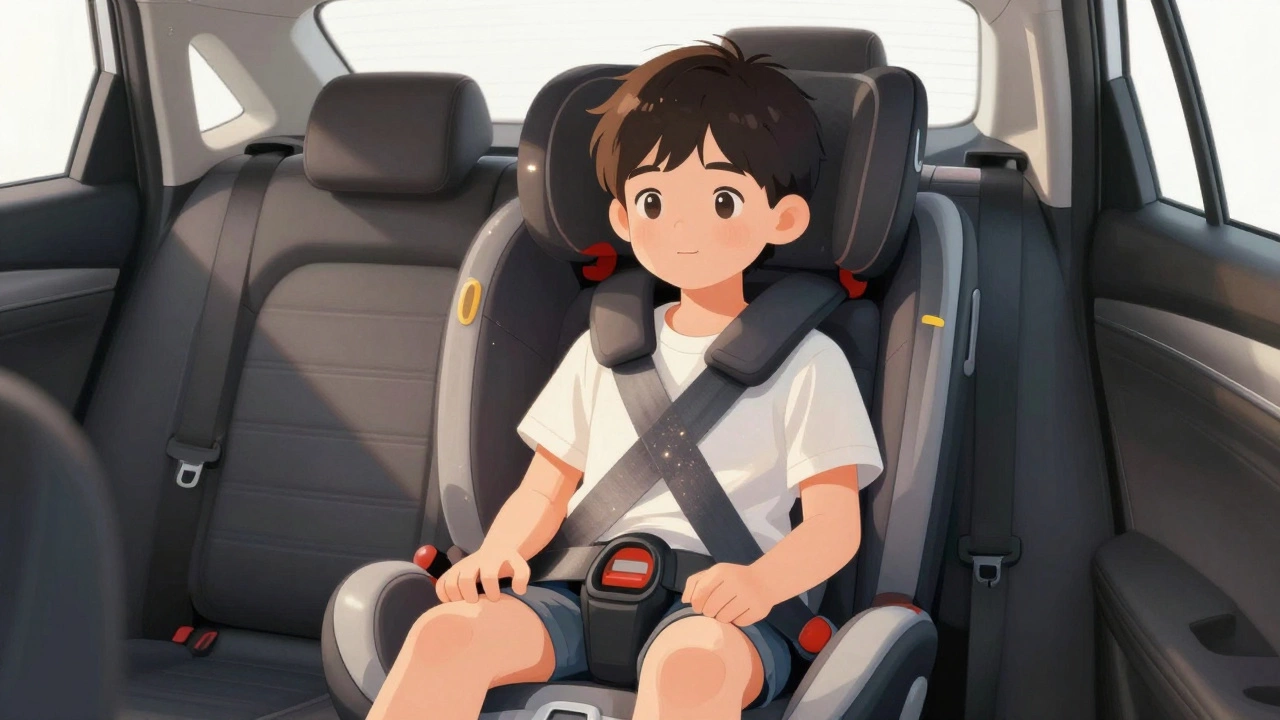
Booster seats lift your child so the car’s seat belt fits properly. Without a booster, the lap belt can ride up over the stomach, and the shoulder belt can cut across the neck. That’s dangerous. A booster ensures the belt lies flat across the upper thighs and snugly across the collarbone and shoulder-not the neck.
Most children need a booster from about age 4 until they’re 4’9” tall (about 145 cm) or between 8 and 12 years old. It’s not about age-it’s about fit. Test it: Have your child sit all the way back in the seat. Do their knees bend naturally at the edge? Does the shoulder belt cross the middle of the shoulder? Does the lap belt sit low on the hips? If any of those are off, they still need a booster.
There are two types: high-back boosters (better for cars without headrests) and backless boosters (fine if the car has a high seat back and headrest). Many parents switch to backless too soon, but high-back boosters offer side-impact protection and help keep the child in position.
Stage 4: Seat Belt Only (Age 8-12, or taller than 4’9”)
When your child can sit properly with the seat belt fitting right, they’re ready to skip the booster. But many kids aren’t ready until they’re 10 or 11-even if they’re tall. The rule of thumb: Can they sit with their back against the seat, knees bent comfortably over the edge, feet flat on the floor, and the seat belt staying in place without slouching? If not, they still need a booster.
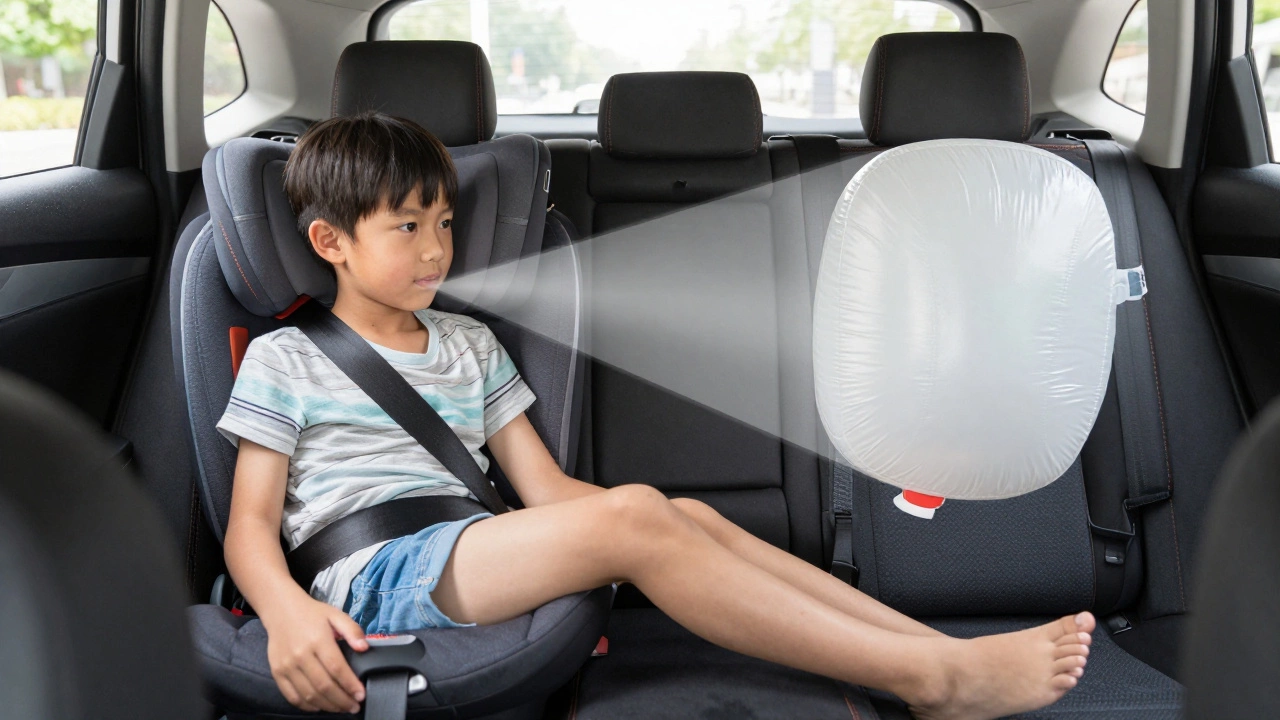
Don’t let them sit in the front seat until they’re at least 13. Airbags deploy at over 200 mph. Even a small child can be seriously injured by one. In British Columbia, it’s illegal for anyone under 13 to sit in the front. That’s not just a suggestion-it’s law.
What About Special Needs or Medical Conditions?
Some children need specialized seats because of physical conditions, muscle tone issues, or orthopedic needs. These aren’t covered by standard guidelines. If your child has a medical condition that affects seating, talk to a pediatrician or a certified child passenger safety technician. Hospitals and clinics often have specialists who can recommend custom restraints. Don’t assume a regular seat will work. Safety isn’t one-size-fits-all.
Common Mistakes Parents Make
- Moving to the next stage based on age, not fit. Age is a rough guide. The seat’s limits are the real rule.
- Loose straps. You shouldn’t be able to pinch any slack at the shoulder. Tight is safe.
- Using expired seats. Most car seats expire after 6-10 years. Plastic gets brittle. Labels fade. Check the sticker on the seat.
- Buying used seats without knowing the history. If it was in a crash, even a minor one, it’s not safe anymore.
- Skipping the tether on forward-facing seats. That strap reduces head movement by up to 40%.
How to Check If Your Seat Is Installed Right
Even the best seat won’t protect your child if it’s not installed properly. Here’s how to check:
- Push down on the seat with your body weight while tightening the seat belt or LATCH straps. It shouldn’t move more than an inch side to side or front to back.
- Make sure the harness is at the right level: Shoulders should be at or just below the harness slots for rear-facing, and at or just above for forward-facing.
- Check the angle indicator on infant seats. Too flat? Too upright? It affects breathing and crash protection.
- For forward-facing seats, always use the top tether. It’s not optional.
If you’re unsure, book a free car seat check. Fire stations, hospitals, and community centers across Canada offer these. In Vancouver, you can find one through the BC Safe Kids program. A certified technician will show you how to fix common mistakes-usually in under 20 minutes.
What About Secondhand or Hand-Me-Down Seats?
It’s tempting to reuse a seat from an older sibling. But only do it if you know the full history. Did it ever crash? Was it stored properly? Is the label still readable? Has it been recalled? You can check recalls on Transport Canada’s website. If you can’t answer all those questions, don’t risk it. A new seat costs less than a hospital bill.
Final Rule: When in Doubt, Stay Back
Every stage transition should be delayed-not rushed. The longer your child stays in each stage, the safer they are. Rear-facing longer. Harness longer. Booster longer. The goal isn’t to outgrow the seat. It’s to keep them protected as long as possible.
Car crashes are the leading cause of death for children under 13 in Canada. Most of these deaths are preventable. You don’t need the fanciest seat. You just need the right one, installed right, and used for the right amount of time.