What Did Babies Eat Before Baby Formula Existed?
Historical Infant Feeding Survival Calculator
Feeding Method Selection
Select a feeding method to see estimated survival statistics.
Before baby formula was invented, infants didn’t have bottles of powdered milk mixed with water. They didn’t have sterilized nipples or temperature-controlled feeding stations. Yet, somehow, babies survived - and thrived - for thousands of years. So what did they eat? The answer isn’t one thing. It’s a mix of biology, culture, and necessity - and it’s far more varied than most people realize.
Breast Milk Was the Gold Standard
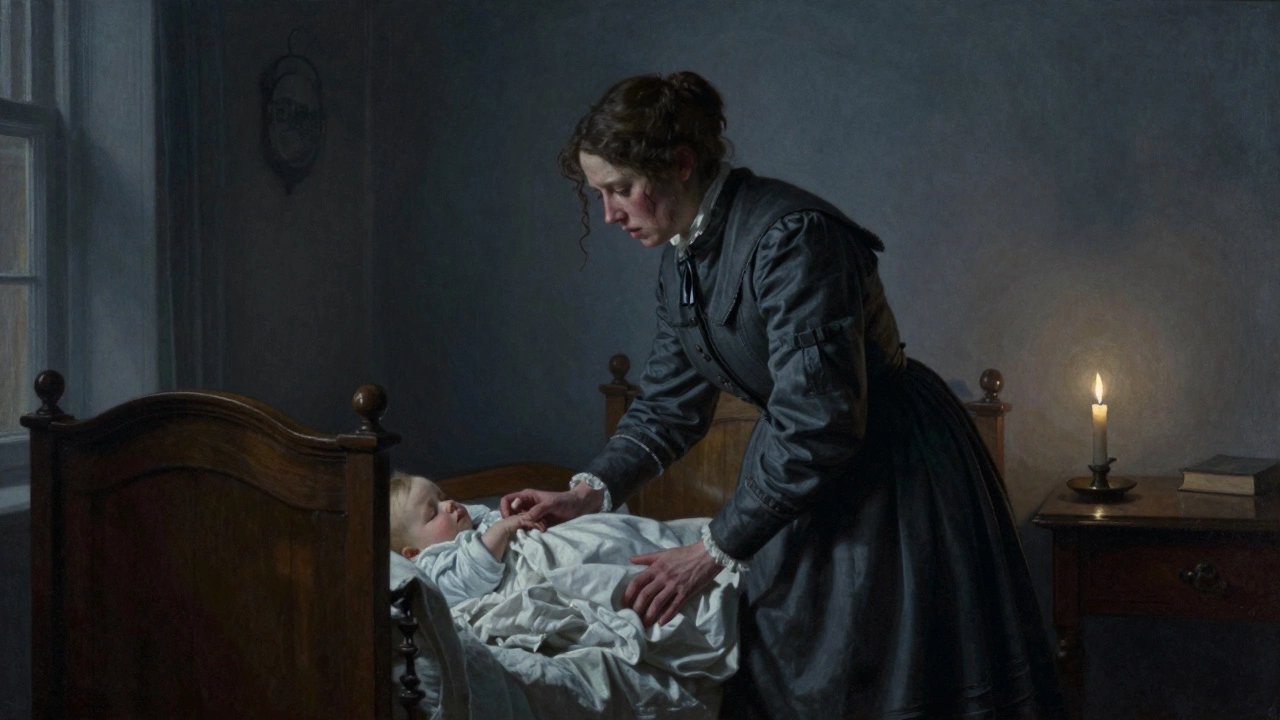
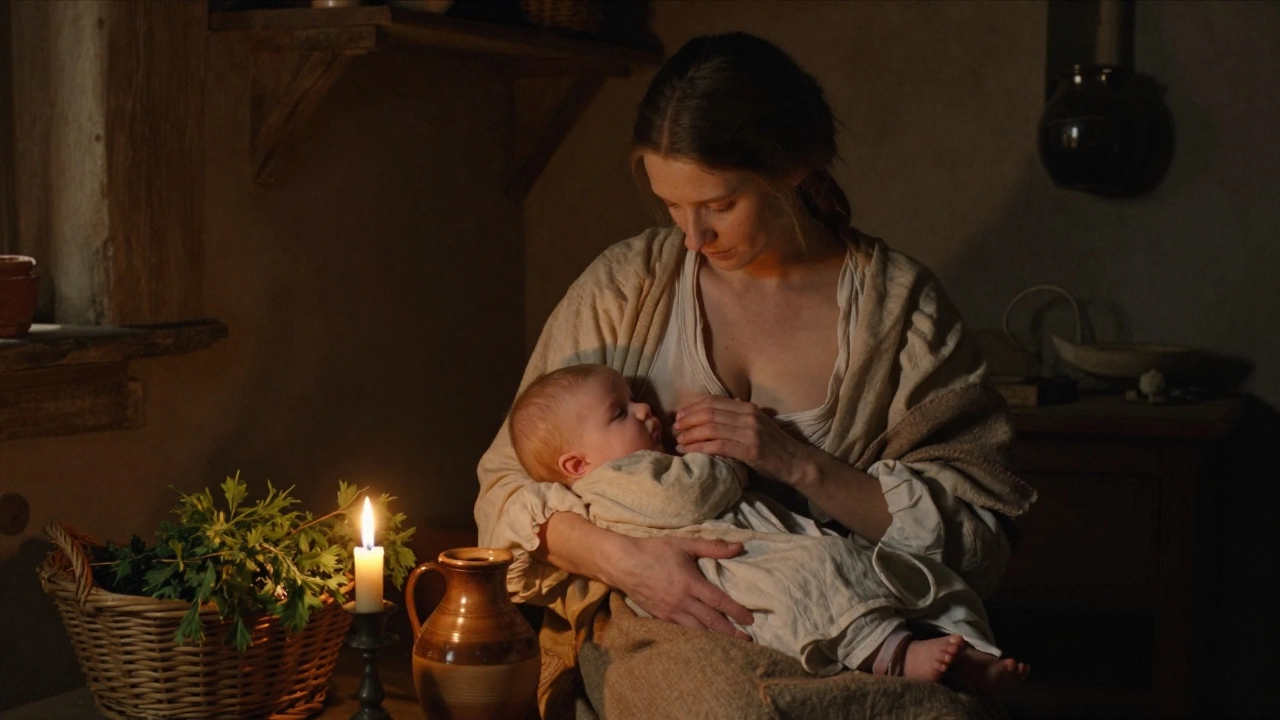
For most of human history, breast milk was the only reliable, safe, and complete food for babies. Human milk contains the perfect balance of proteins, fats, sugars, antibodies, and enzymes tailored for a newborn’s developing body. It changes over time too - colostrum in the first days, then mature milk that adapts to the baby’s needs. Mothers nursed on demand, often for two to three years, sometimes longer.
In societies without refrigeration or clean water, breast milk had a huge advantage: it was always fresh, always at the right temperature, and always sterile. No contamination risk. No preparation needed. No formula recalls. In fact, breastfeeding was so common that wet nursing - when another woman breastfed someone else’s child - was a normal, accepted practice across ancient Egypt, Rome, and medieval Europe. Wet nurses were often hired by wealthier families, but in poorer communities, mothers simply shared feeding duties with relatives or neighbors.
When Breastfeeding Wasn’t Possible
Not every mother could breastfeed. Illness, death, or physical inability meant alternatives had to be found. And they were - though not always safe.
In ancient times, animal milk was the most common substitute. Goats, cows, sheep, and even donkeys were used. Roman texts mention donkey milk as a preferred alternative because it was closer in composition to human milk than cow’s milk. In rural Europe, mothers sometimes fed babies goat’s milk from a horn or spoon. But animal milk lacked key nutrients. It was high in protein and minerals that strained a baby’s immature kidneys, and low in the fats and sugars babies needed. Many infants didn’t survive.
By the 1700s, some families started using bread soaked in water or broth. Others gave infants honey, sugar water, or diluted wine - especially in places where alcohol was considered safer than water. In colonial America, it wasn’t unusual to see babies fed gruel made from cornmeal or oats. These mixtures offered calories but almost no protection against infection or malnutrition.
The Rise of the Feeding Bottle - and the Danger
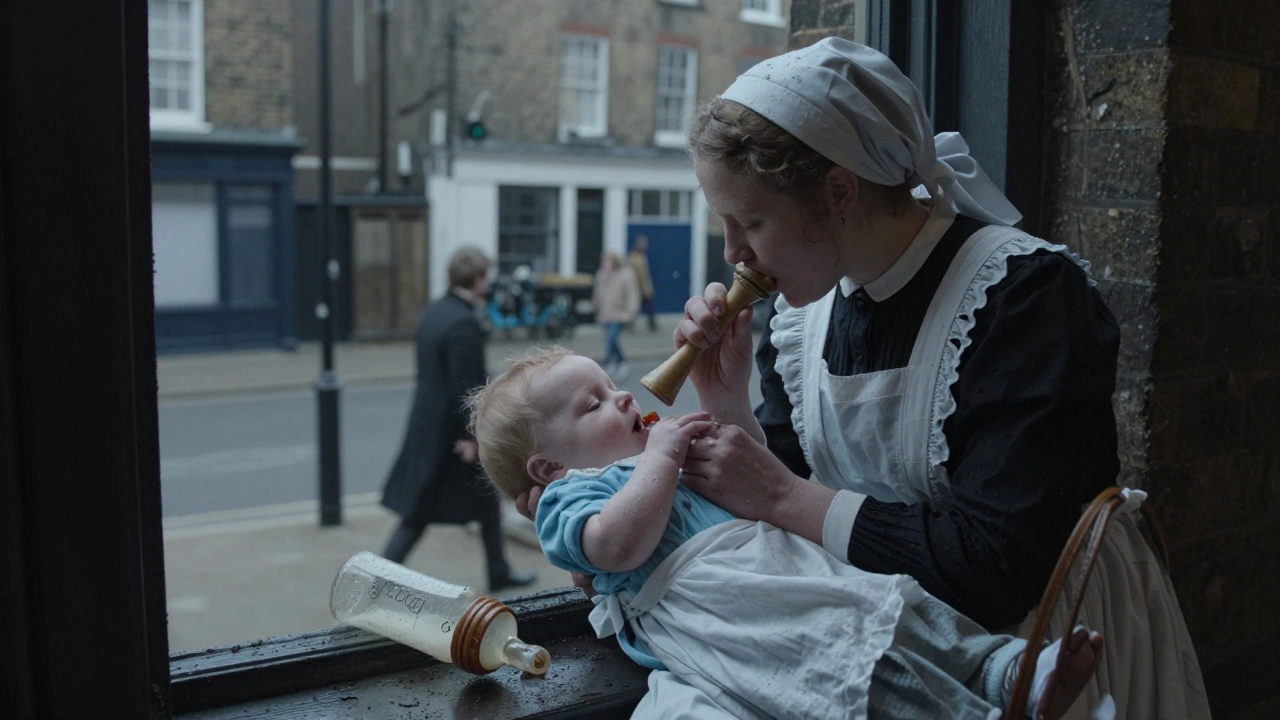
The 1800s brought the first real baby bottles. Made of glass, silver, or pottery, they often had a rubber nipple and a tube that ran into the milk. But they were hard to clean. Bacteria grew fast. In cities like London and New York, infant mortality rates spiked during summer months - not from disease outbreaks, but from contaminated bottles. A 1890 study in Boston found that over 50% of bottle-fed infants under one year old died before their first birthday. Breastfed babies? Only 15% died.
Some parents tried to improve things. They boiled bottles daily. They made homemade mixtures with cow’s milk, sugar, and chalk. Others added lime water to reduce acidity. These were desperate attempts to mimic breast milk. None came close.
Early Formula Attempts - and Why They Failed
The first commercial baby formula appeared in 1865. A German chemist named Justus von Liebig created a powdered mix of wheat flour, cow’s milk, malt flour, and potassium bicarbonate. It was marketed as a "scientific" solution. Parents loved it - until their babies started dying from diarrhea and malnutrition.
Early formulas didn’t account for the fact that human milk has 40% of its calories from lactose. Cow’s milk has 5%. Human milk has 3% protein. Cow’s milk has 8%. The wrong ratios overloaded babies’ kidneys and starved them of energy. By the 1920s, doctors were warning against formula unless absolutely necessary. The American Medical Association didn’t endorse any formula until 1930 - and even then, only after major reform.
How Did Babies Survive at All?
It’s a grim truth: many didn’t. Infant mortality rates before the 20th century were staggering. In 1800, about 30% of children died before age five. In some places, it was over 50%. Breastfeeding was the biggest factor in survival. Babies who were breastfed for at least six months had a much better chance. Those fed with bottles or animal milk often didn’t make it past the first year.
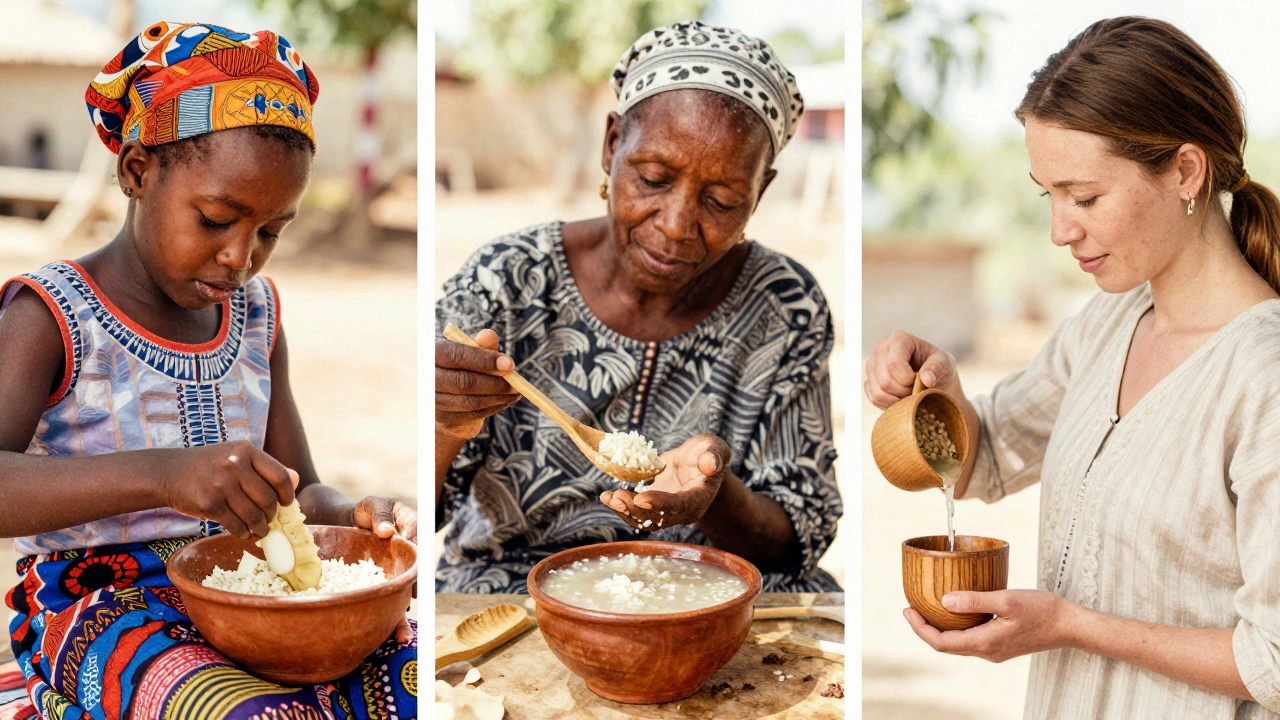
But families adapted. They used fermented milk - like kefir or yogurt - which was easier to digest. They added mashed bananas, cooked rice, or boiled lentils to thicken feeds. In parts of Africa and Asia, mothers fed babies mashed tubers like yams or cassava. In Scandinavia, barley water and oat broth were common. These weren’t nutritionally complete, but they kept babies alive until they could eat solid food.
The Shift to Modern Formula - and What Changed
Real progress didn’t come until the 1940s and 50s. Scientists finally understood the composition of human milk. They started adding lactose, adjusting protein levels, and fortifying formulas with vitamins A, D, and iron. Pasteurization, sterilization, and hygiene standards improved. Formula became safer - but not necessarily better.
Even today, modern formula is designed to mimic breast milk. But it still can’t replicate antibodies, live enzymes, or the dynamic way breast milk changes from day to day. Breast milk also changes based on the mother’s environment - if she’s exposed to a virus, her milk produces antibodies to protect her baby. No formula can do that.
Lessons from the Past
When you look back at what babies ate before formula, it’s easy to think it was all primitive and dangerous. But it wasn’t. It was practical. It was rooted in biology. And it worked - for those who had access to consistent breastfeeding.
Today, we have formula because it saves lives when breastfeeding isn’t possible. But history shows us something important: breast milk isn’t just a food. It’s a living system. It’s not just about calories - it’s about immunity, comfort, and connection. The best thing you can give a baby, if you can, is your own milk. If you can’t, modern formula is a remarkable tool - but it’s still a stand-in, not a replacement.
And if you’re ever tempted to try an old-fashioned home remedy - like honey, cow’s milk, or sugar water - remember: those were survival tactics in a time with no safety nets. We have better options now. Use them.
Did babies ever drink cow’s milk as their main food before formula?
Yes, but it was risky. Cow’s milk has too much protein and minerals for a baby’s kidneys and not enough iron or fatty acids. Many infants who were fed cow’s milk developed anemia, diarrhea, or kidney failure. It was never ideal, but in places without breastfeeding, it was often the only option.
Was wet nursing common in history?
Very common. In ancient Rome, Egypt, and medieval Europe, wealthy families hired wet nurses - often women who had recently given birth. In poorer communities, relatives or neighbors shared breastfeeding duties. Wet nursing was a normal, trusted practice, not a last resort.
When was baby formula first invented?
The first commercial baby formula was created in 1865 by German chemist Justus von Liebig. It was a powder made of wheat flour, cow’s milk, malt flour, and potassium bicarbonate. It was marketed as a scientific breakthrough, but it caused serious health problems because it didn’t match human milk’s nutritional balance.
Why did so many bottle-fed babies die in the 1800s?
Bottles were nearly impossible to clean properly. Bacteria thrived in the rubber nipples and narrow tubes. Milk spoiled quickly without refrigeration. In cities, contaminated bottles caused deadly outbreaks of diarrhea and sepsis. Studies from the 1890s showed over half of bottle-fed babies died before age one - compared to just 15% of breastfed babies.
What did babies eat in non-Western cultures before formula?
In many parts of Asia, Africa, and Latin America, babies were fed mashed local foods like rice porridge, yams, plantains, lentils, or fermented grains. These were often mixed with water or breast milk. In some cultures, babies started solids as early as four months. These foods weren’t sterile or fortified, but they provided calories and were culturally adapted to local needs.