What Makes a Children's Book Successful? Key Indicators
Children's Book Success Scorecard
Enter your book details below to estimate its potential for success across different lenses (Publisher, Reader, Educator).
Success Assessment
Score: 0%Publisher Lens
Analysis pending...
Reader Lens
Analysis pending...
Educator Lens
Analysis pending...
Recommendation
You just finished writing your story. The illustrations are done. You've printed the proofs and held them in your hands. But now you're staring at that stack of paper wondering: what is considered a successful children's book? Is it the number on the bestseller list? The size of the advance check? Or is it something quieter, like watching a kid beg to read it one more time before bed?
Here’s the truth that most new authors miss: "success" in children's literature isn't a single metric. It changes depending on who you ask. A publisher looks at sales velocity and shelf turnover. A librarian looks at circulation rates and curriculum fit. A parent looks at whether their toddler actually sits still long enough to hear the end. And the child? They don't care about any of that. To them, success means the book made them laugh, cry, or feel brave.
If you want to build a career-or even just get your first book into homes-you need to understand these different lenses. Let's break down what actually defines success in this industry, moving from hard numbers to the soft skills that make stories stick.
The Publisher's Lens: Sales and Market Fit
Publishers are businesses. When they greenlight a manuscript, they aren't just buying art; they're investing in inventory. For a traditional publisher, a "successful" book usually hits specific financial benchmarks within its first year. While exact figures vary by imprint, a debut title that sells over 10,000 copies in its first twelve months is generally considered a solid performer. Hitting 50,000+ puts you in the realm of a breakout hit.
But raw sales aren't the only thing editors watch. They look at sell-through rate, which is the percentage of books shipped to stores that actually get bought by customers. If a bookstore orders 100 copies and returns 60 unsold ones, that's a low sell-through, signaling poor market fit regardless of initial hype. High sell-through suggests the book has staying power and appeals to actual buyers, not just curious browsers.
Another critical factor is backlist longevity. A truly successful children's book doesn't spike and die. It keeps selling year after year because parents buy it for birthdays, schools add it to libraries, and grandparents gift it. Think of classics like Where the Wild Things Are. That book generates revenue decades later. If your book gets picked up for reprints three years post-launch, you have achieved sustainable commercial success.
The Reader's Experience: Engagement and Re-readability
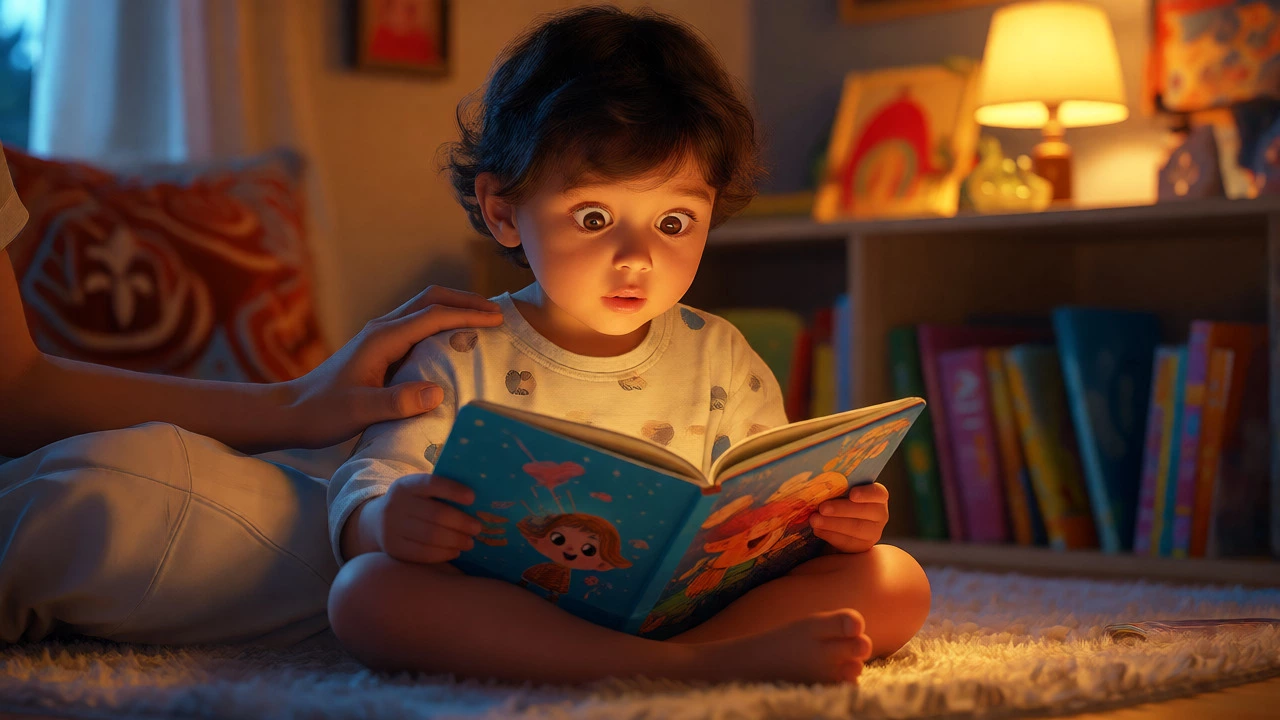
Let's shift gears. What does success look like when you strip away the money? For many authors, the ultimate validation is the "read-it-again" request. Children's books live or die by their re-readability. Unlike adult novels, which are often consumed once, picture books are designed to be ritualistic. Success here is measured by how many times a child asks for the same story in a single week.
This metric ties directly to early literacy engagement. Educational researchers emphasize that repetition builds neural pathways for language acquisition. If a book encourages repeated reading, it is actively contributing to cognitive development. Parents notice this. They see their child memorizing lines, predicting outcomes, or pointing at objects. These behaviors signal that the book has captured the child's attention span-a rare commodity in a screen-saturated world.
Consider the mechanics of engagement. Does the text invite participation? Books with call-and-response elements, predictable rhymes, or interactive lift-the-flaps features tend to score higher on engagement scales. Success isn't just about passive listening; it's about active interaction. If a child interrupts the story to ask questions or act out scenes, the book has succeeded as a tool for connection, not just entertainment.

Industry Recognition: Awards and Professional Validation
Not every great book becomes a bestseller, but some earn prestigious recognition that cements their status. Winning major awards can define a book's legacy. In North America, the Caldecott Medal honors the most distinguished American picture book for children, focusing heavily on artistic excellence. The Newbery Medal, conversely, recognizes outstanding contribution to children's literature, often favoring strong narrative structure in older picture books or chapter books.
Why do these matter? Because they serve as trust signals. Librarians and teachers use award lists to curate collections. A Caldecott winner is almost guaranteed placement in school libraries across the country. This institutional adoption drives consistent sales and visibility. Even being a finalist or honor recipient (like a Caldecott Honor) provides significant credibility. It tells the industry that your work meets the highest standards of craft and cultural relevance.
| Award Name | Focus Area | Primary Audience | Impact on Career |
|---|---|---|---|
| Caldecott Medal | Illustration Quality | Picture Books (Ages 3-8) | High library adoption, long-term backlist sales |
| Newbery Medal | Narrative Writing | Middle Grade & Older Picture Books | School curriculum inclusion, author prestige |
| Coretta Scott King Award | African American Author/Illustrator | All Ages | Cultural impact, diverse collection mandates |
| Geisel Award | Beginning Readers | Early Readers (Ages 4-8) | Classroom staple, high volume sales |
Educational Value: Curriculum Alignment and Learning Outcomes
Schools are massive buyers of children's books. For educators, success is defined by utility. Does this book help teach a specific skill? Can it support a lesson on emotions, science, history, or social-emotional learning (SEL)?
Books that align with Common Core State Standards or local curriculum guidelines often see steady, predictable sales. For example, a non-fiction book about ecosystems that includes a glossary and discussion questions is more likely to be purchased by a district than a purely fictional tale without educational hooks. However, fiction can also succeed educationally if it addresses themes like empathy, resilience, or diversity.
Teachers look for "teachable moments." If a book sparks debate, prompts journaling, or helps students identify feelings, it becomes a classroom tool. Success here is measured by adoption rates. If five different school districts buy bulk copies for their elementary libraries, your book has achieved educational success. This niche is less volatile than general retail; once a book enters a curriculum, it stays there for years.
The Digital Age: Social Proof and Online Presence
In 2026, success isn't just physical. Your book's digital footprint matters. Amazon reviews, Goodreads ratings, and social media mentions provide real-time feedback. A high average rating (4.5 stars or above) with a substantial number of reviews signals quality to new buyers. But beware of vanity metrics. Ten thousand likes on Instagram mean little if no one buys the book. Conversely, a modest following with high conversion rates indicates a loyal audience.
Self-published authors especially rely on these metrics. Without a marketing team, your online presence is your storefront. Success might look like maintaining a consistent email newsletter that drives pre-orders, or leveraging TikTok trends where #BookTok pushes specific titles to viral status. The key is authenticity. Parents are savvy; they can spot fake hype. Genuine recommendations from trusted parenting bloggers or literacy influencers carry more weight than paid ads.
Balancing Art and Commerce: Finding Your Definition
So, what should you aim for? If you're an aspiring author, try to balance these perspectives. Aim for high-quality storytelling that resonates emotionally (reader success). Ensure your manuscript fits current market trends without chasing fads too closely (publisher success). Include elements that allow for educational extension (teacher success).
Remember, many beloved books were slow burners. They didn't top charts immediately but found their audience over time. Don't let immediate sales data discourage you. Sometimes, success is simply knowing that your words helped a child navigate a big feeling or discover a new idea. That intangible impact is often the truest measure of a children's book's worth.
How many copies sold makes a children's book a bestseller?
There is no single number, as it depends on the category and platform. For the New York Times Best Seller list, a debut picture book might need to sell between 3,000 to 5,000 copies in a single week to appear. For Amazon categories, ranking in the top 100 of "Children's Picture Books" might require only 50-100 sales per day. Commercially, selling 10,000 copies in the first year is widely regarded as a strong performance for a debut title.
Do awards guarantee a book will be financially successful?
Not necessarily. Awards like the Caldecott or Newbery significantly boost credibility and lead to increased library purchases and long-term backlist sales. However, they do not always result in immediate mass-market retail spikes. Some award winners are critically acclaimed but have niche appeal, leading to steady rather than explosive sales. Financial success often depends on marketing support alongside the award recognition.
What is the most important factor for parents choosing a book?
Re-readability and age-appropriateness are paramount. Parents want books that hold their child's attention repeatedly without becoming annoying to the adult reader. Additionally, themes that address developmental stages-such as potty training, sharing, or bedtime fears-are highly valued. Visual appeal also plays a huge role, as attractive covers and engaging illustrations encourage browsing in stores.
Can self-published books achieve the same level of success as traditionally published ones?
Yes, but the path differs. Self-published authors often define success through direct-to-consumer sales, control over royalties, and building a personal brand. While they may struggle to get wide distribution in brick-and-mortar bookstores, many self-pub titles thrive on platforms like Amazon and through targeted marketing. Success stories exist on both sides, but traditional publishing offers broader reach and institutional trust.
How does school curriculum influence a book's success?
Inclusion in school curricula ensures recurring demand. Teachers purchase class sets or recommend titles for home reading, creating a stable sales channel independent of retail trends. Books that align with educational standards or support social-emotional learning goals are more likely to be adopted. This type of success is characterized by longevity and consistency rather than viral spikes.