What Milk Can Babies Drink Besides Formula? A Parent's Guide
Baby Milk Safety Checker
Not sure what to pour in the bottle? Select your baby's age and the type of milk you are considering to see if it is safe.
You’re staring at the empty bottle. Maybe you ran out of formula, maybe you’re trying to save money, or maybe your little one just refuses to drink it anymore. The fridge is open, and there’s a jug of regular white liquid sitting there. Can they have that? Is it safe? Or do you need to rush to the store?
Here is the hard truth: what milk can babies drink besides formula depends entirely on their age. There is no single answer that works for a newborn and a two-year-old. Giving the wrong type too early can cause intestinal bleeding, kidney stress, or nutrient deficiencies. Giving the right type at the right time supports growth and brain development.
The Golden Rule: Age Matters Most
Before you pour anything into a bottle, check the birth date. This isn’t just advice; it’s biology. Infant digestive systems are immature. They lack the enzymes needed to break down complex proteins found in animal milks other than breastmilk or specially formulated infant formula.
If your baby is under 12 months old, the only acceptable liquids are:
- Breastmilk
- Infant Formula (cow-based, soy-based, or hydrolyzed)
- Water (in small amounts, usually after 6 months, but not as a meal replacement)
Anything else-cow’s milk, goat’s milk, almond milk, oat milk-is generally off-limits until the first birthday. Why? Because these milks don’t have enough iron, vitamin C, or essential fatty acids that growing brains need. Worse, they contain high levels of protein and minerals that can overload an infant’s kidneys.
Can You Give Cow’s Milk Before One Year?
This is the most common question parents ask. The short answer is no, not as a main drink. The American Academy of Pediatrics (AAP) and Health Canada both recommend waiting until 12 months.
But what about emergencies? If you run out of formula and cannot get to the store, pediatricians often say whole cow’s milk is safer than watered-down juice or plant-based milks for a few days. However, this is a temporary fix, not a long-term strategy. Cow’s milk lacks sufficient iron and vitamin E. Long-term use before age one can lead to micro-bleeding in the intestines, which causes anemia.
Cow’s Milk is a dairy product derived from cattle, rich in calcium and protein but low in iron compared to human breastmilk. It contains beta-casein and whey proteins that are harder for infants under 12 months to digest efficiently.
So, if your 8-month-old takes a sip from your cup during dinner, don’t panic. It won’t hurt them. But don’t replace their formula bottles with cow’s milk yet.
Plant-Based Milks: Are They Safe Alternatives?
Almond, oat, soy, and coconut milks are everywhere. They look like milk, taste like milk, and sit next to dairy in the grocery aisle. But for babies, they are mostly water with flavoring.
| Liquid Type | Protein (g) | Fat (g) | Calcium (mg) | Suitable For Infants <1 Year? |
|---|---|---|---|---|
| Human Breastmilk | ~10 | ~40 | ~30 | Yes (Gold Standard) |
| Infant Formula | ~10 | ~40 | ~200 | Yes (Designed for Infants) |
| Whole Cow’s Milk | ~8 | ~8 | ~300 | No (Wait until 12 months) |
| Almond Milk | ~1 | ~2.5 | ~450 (fortified) | No (Too low in calories/protein) |
| Oat Milk | ~3 | ~5 | ~450 (fortified) | No (High carb, low protein) |
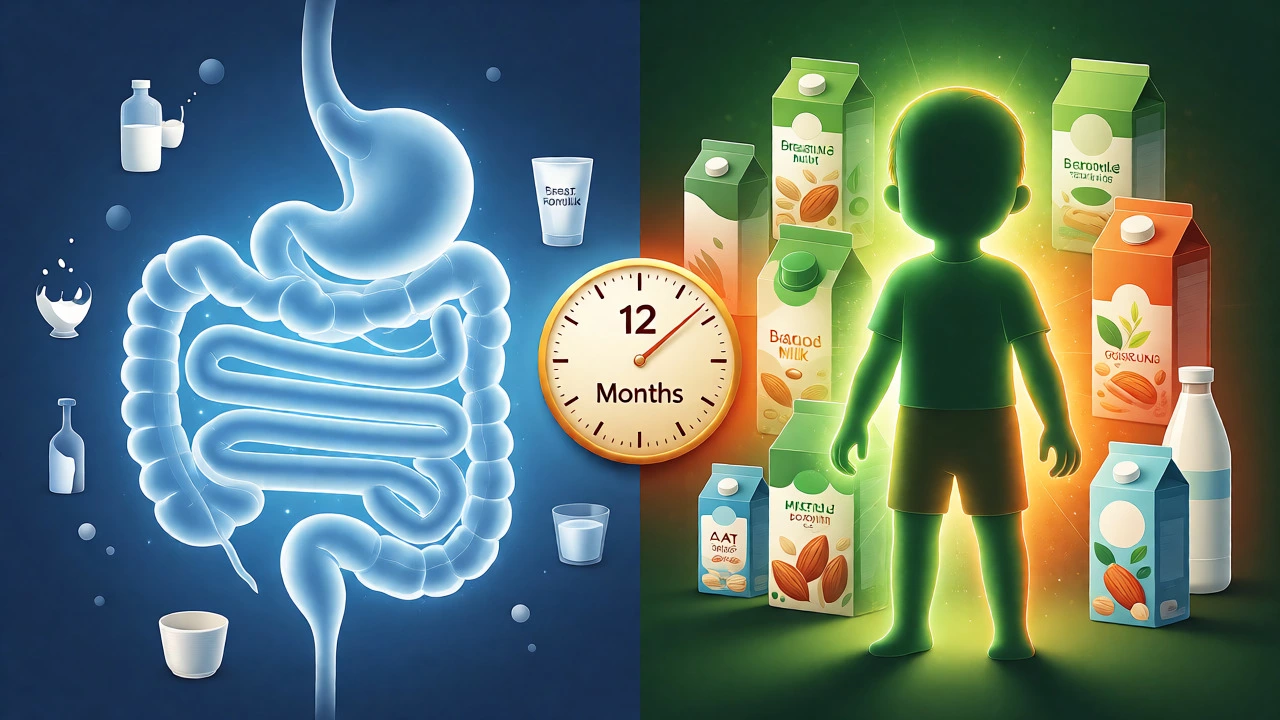
See the problem? Almond milk has almost no protein. Fat is crucial for brain growth in the first year. Plant milks are often fortified with calcium, which looks good on paper, but they miss out on the bioavailable nutrients found in breastmilk or formula. Unless your pediatrician specifically recommends a specialized plant-based formula (like soy formula), stick to the standard options for infants.
Goat’s Milk: A Better Option?
Some parents think goat’s milk is closer to human milk because the fat globules are smaller. While it’s true that goat’s milk is easier to digest for some people, it is not automatically better for babies.
Regular goat’s milk is very low in folate and vitamin B12. Deficiencies in these nutrients can cause megaloblastic anemia in infants. If you want to use goat’s milk, you must buy formulas made from goat’s milk, not fresh milk from the farm. These formulas are fortified to meet infant nutritional standards.
What Happens After the First Birthday?
Congratulations! Your child is now a toddler. The rules change significantly. At 12 months, most healthy children can transition to full-fat cow’s milk. Their digestive systems are mature enough to handle the proteins, and their kidneys can process the mineral load.
Why full-fat? Toddlers need dietary fat for rapid brain development. Low-fat or skim milk does not provide enough calories for active toddlers. Aim for 16-24 ounces (about 2-3 cups) per day. More than that can fill them up so they don’t eat solid foods, leading to iron deficiency.
At this stage, you can introduce other milks if your child has allergies or preferences:
- Soy Milk: The closest plant-based alternative to cow’s milk in terms of protein content. Ensure it is unsweetened and fortified with calcium and vitamin D.
- Oat Milk: Creamier than almond, but still lower in protein. Good for variety, but don’t rely on it as the sole source of milk.
- Pea Protein Milk: Brands like Ripple offer higher protein content than almond or oat, making them a viable option for toddlers who avoid dairy.

Signs Your Baby Isn’t Ready for Alternative Milks
How do you know if you’ve introduced a new milk too soon? Watch for these red flags:
- Blood in stool: This indicates intestinal irritation, common when cow’s milk is given too early.
- Persistent diarrhea or constipation: Digestive upset suggests the gut flora isn’t ready for the new protein structure.
- Poor weight gain: If your baby isn’t gaining weight despite drinking plenty of alternative milk, they likely aren’t getting enough calories or fat.
- Rash or hives: Classic signs of a milk protein allergy.
If you see any of these, stop the new milk immediately and consult your pediatrician. They may recommend a hypoallergenic formula or a gradual reintroduction strategy.
Practical Tips for Transitioning
Moving from formula to another milk doesn’t have to be a battle. Toddlers are creatures of habit. Here is how to make it smoother:
- Mix it up: Start by mixing 75% formula with 25% new milk. Gradually increase the ratio over 1-2 weeks.
- Use a sippy cup: By 12 months, many kids are ready to move away from bottles. This helps prevent tooth decay associated with prolonged bottle use.
- Keep it cold: Some kids reject warm milk. Serve it chilled to mask the taste difference.
- Don’t force it: If they refuse, wait a week and try again. Pressure creates resistance.
Remember, milk is just one part of the diet. Solid foods should be the primary source of nutrition after age one. Don’t worry if your toddler drinks less milk than expected, as long as they are eating a balanced variety of meats, grains, fruits, and vegetables.
When to Consult a Doctor
While general guidelines are helpful, every child is unique. You should speak with your healthcare provider if:
- Your baby has a family history of severe food allergies.
- Your child is failing to thrive (not meeting growth percentiles).
- You suspect lactose intolerance (rare in infants, more common in older toddlers).
- You are considering switching to a plant-based diet for ethical or environmental reasons.
A registered dietitian specializing in pediatrics can help design a menu that ensures your child gets enough calcium, vitamin D, and protein without relying solely on formula.
Can I dilute cow’s milk with water for my baby?
No. Diluting cow’s milk reduces its calorie density, which can lead to poor weight gain in infants. It also doesn't solve the issue of inappropriate protein and mineral levels for kidneys. Always give full-strength milk if recommended by a doctor, or stick to formula.
Is soy milk a good substitute for formula?
Soy milk (the beverage) is not a substitute for infant formula. However, soy formula is a medically approved alternative for babies who cannot tolerate cow’s milk protein or galactosemia. Do not confuse the two. Soy beverages lack the necessary vitamins and fats for infants under 12 months.
How much milk should a 1-year-old drink?
Most pediatricians recommend 16 to 24 ounces (2 to 3 cups) of whole milk per day for toddlers aged 1 to 2 years. Drinking more than 24 ounces can interfere with appetite for solid foods and increase the risk of iron-deficiency anemia.
Can babies drink almond milk?
Not as a main drink before age one. Almond milk is too low in protein and fat for growing infants. After age one, it can be used occasionally if fortified with calcium and vitamin D, but it should not replace cow’s milk or soy milk due to its low nutritional value.
What if my baby is allergic to formula?
If your baby has a cow’s milk protein allergy, your doctor will likely prescribe an extensively hydrolyzed formula or an amino acid-based formula. These are pre-digested and less likely to trigger an immune response. Do not switch to plant milks without medical guidance, as they may cross-react with allergies.