When Can a Kid Stop Using a Booster Seat? Age, Height, and Law Guidelines
Booster Seat Fit Checker
Booster Seat Fit Checker
Determine if your child is ready to stop using a booster seat based on height, age, and provincial regulations.
Results
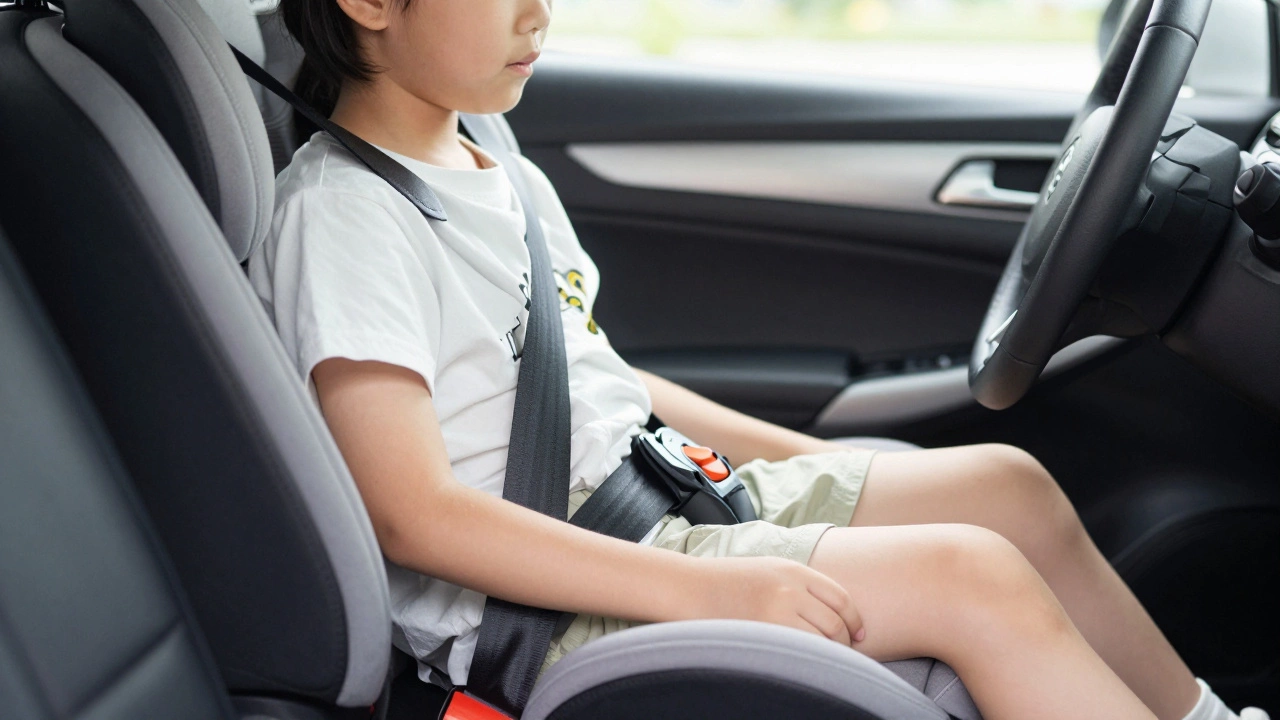
5-Step Fit Test
- 1. Can your child sit all the way back against the vehicle seat?
- 2. Do their knees bend comfortably at the edge of the seat?
- 3. Is the lap belt low on the hips, touching the upper thighs?
- 4. Is the shoulder belt crossing the center of the collarbone, not the neck or arm?
- 5. Can they stay like this for the whole ride—no slouching, no twisting?
Most parents think they’ll know exactly when their kid can ditch the booster seat. But the truth? It’s not just about age. It’s not even just about weight. The real answer sits somewhere between your child’s height, how the seat belt fits, and the laws in your province. And skipping this step too early? It’s not just risky-it’s illegal in most places.
What a Booster Seat Actually Does
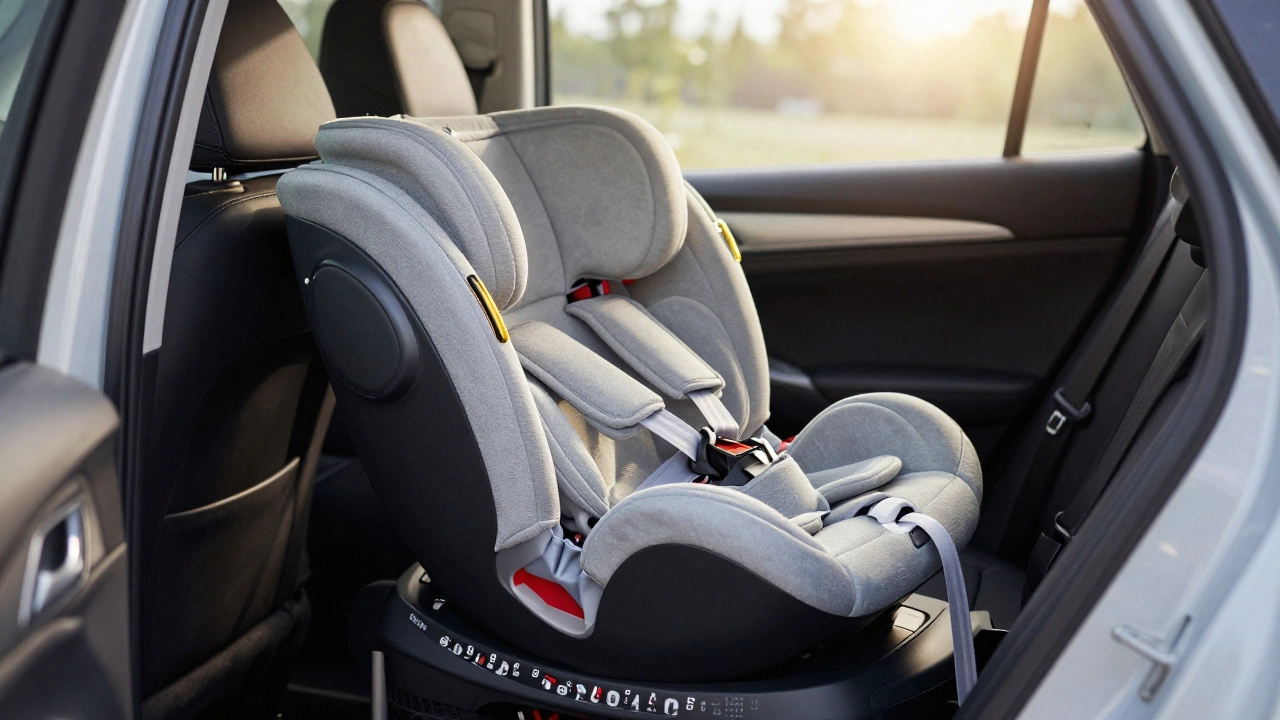
A booster seat isn’t just a cushion. It’s a positioning tool. Without it, a seat belt that’s meant for adults sits wrong on a child’s body. The lap belt rides up over the soft stomach instead of lying flat across the hips. The shoulder belt cuts across the neck or face instead of crossing the collarbone. In a crash, that misalignment can cause serious internal injuries-or even strangulation.
Booster seats lift the child up so the seat belt fits like it was designed to: lap belt low on the pelvis, shoulder belt snug across the chest and collarbone. This isn’t optional for kids under a certain size. It’s the difference between walking away from a crash and ending up in the hospital.
How Tall Does a Child Need to Be?
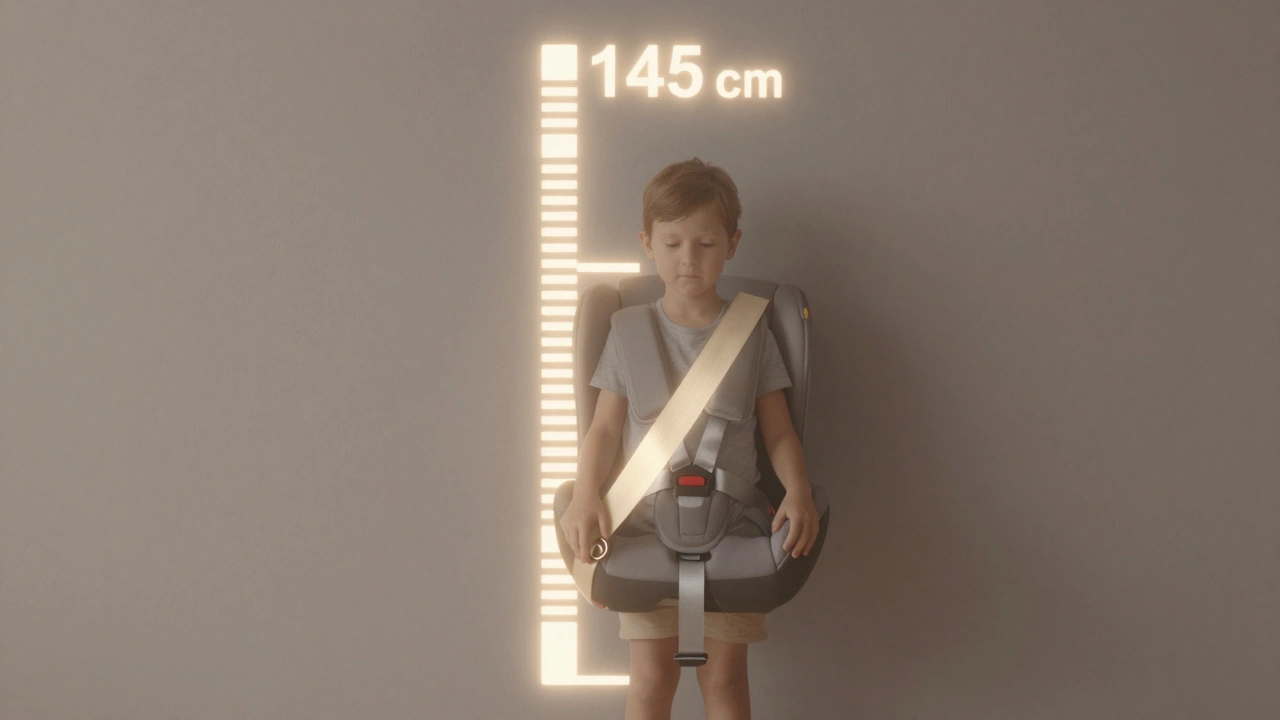
The magic number is 145 cm (4 feet 9 inches). That’s the height where most seat belts fit properly without a booster. This isn’t a guess-it’s based on crash test data from Transport Canada and the Insurance Institute for Highway Safety. At this height, a child’s knees bend naturally over the edge of the seat, and the belt lies correctly without adjustment.
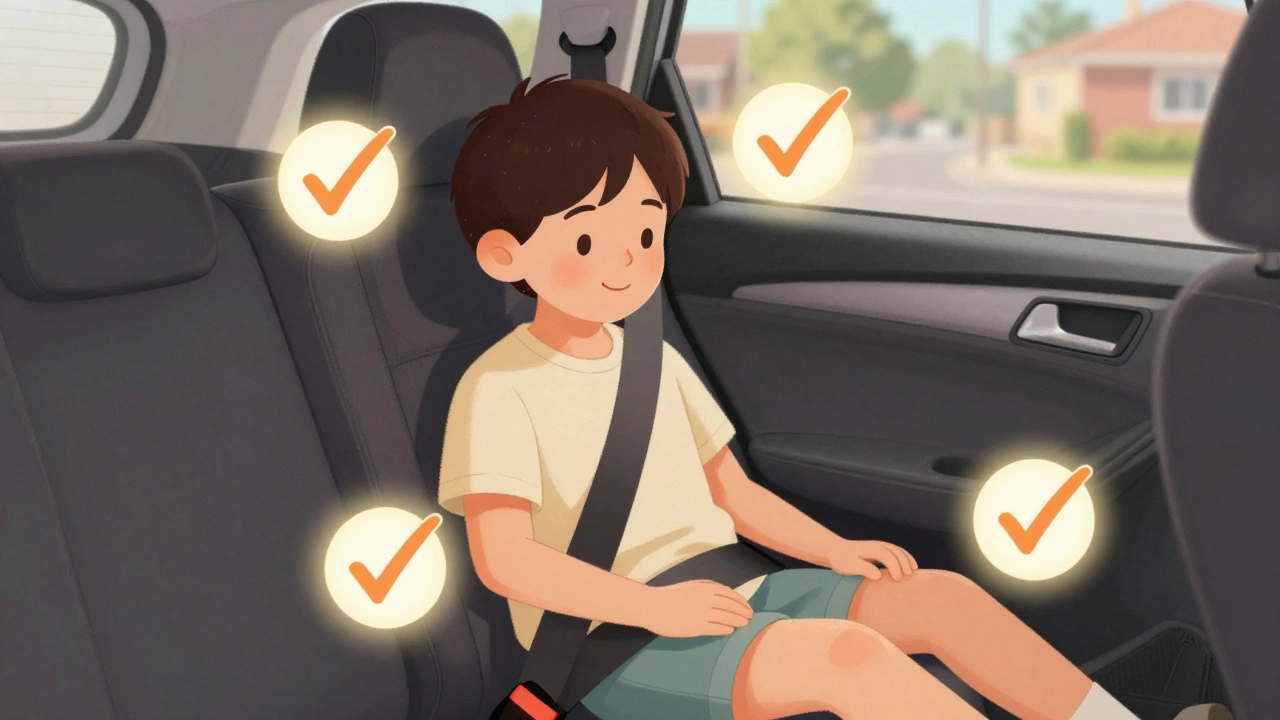
But don’t just measure height and call it done. You need to check the fit. Have your child sit all the way back in the seat. Do their knees bend comfortably at the edge? Is the lap belt low on the hips, not the belly? Does the shoulder belt cross the center of the collarbone, not the neck or arm? If any of those answers are no, they still need the booster.
Age Isn’t the Rule-But It’s a Clue
Most kids hit that 145 cm mark between ages 8 and 12. That’s why many parents assume 8 is the magic age. But some kids grow fast. Others grow slowly. A 10-year-old who’s 130 cm still needs a booster. A 7-year-old who’s 150 cm? They’re probably ready.
Don’t let age fool you. I’ve seen kids in Vancouver schools who are 11 but still need boosters because they’re petite. I’ve also seen 8-year-olds taller than their parents. The only reliable metric? The seat belt fit test.
Canadian Law: It Varies by Province
Canada doesn’t have one national law for booster seats-it’s set by each province. But here’s what’s common:
- British Columbia: Children must use a booster seat until they’re 9 years old OR 145 cm tall, whichever comes first.
- Ontario: Children under 8 must use a booster seat if they weigh between 18 kg and 36 kg and are under 145 cm tall.
- Alberta: Children under 16 must use a seat belt or child restraint. Boosters are required until 145 cm or 9 years old.
- Quebec: Mandatory booster use until age 9 or 145 cm.
In most provinces, the law says you must use a booster until your child is either 9 years old or 145 cm tall-whichever comes first. Some provinces, like BC and Quebec, are stricter. Others, like Ontario, focus more on weight and height. But none allow kids to skip the booster just because they’re "big for their age."
What About Those "I Got Away With It" Stories?
You’ve heard them: "My kid was 7 and didn’t use a booster, and nothing happened." Or, "We drove 3 hours every weekend and never used one. They’re fine."
That’s luck, not safety. Car crashes are unpredictable. The National Highway Traffic Safety Administration found that children ages 4-8 who use boosters are 45% less likely to be injured in a crash than those using seat belts alone. That’s not a small difference. That’s life-changing.
And if you get pulled over? Fines in Canada range from $200 to $500, plus demerit points. But the real cost? The peace of mind you lose the second you hear tires screech.
When You’re Ready to Go Without a Booster
Before you take the booster out, do the 5-Step Test:
- Can your child sit all the way back against the vehicle seat?
- Do their knees bend comfortably at the edge of the seat?
- Is the lap belt low on the hips, touching the upper thighs?
- Is the shoulder belt crossing the center of the collarbone, not the neck or arm?
- Can they stay like this for the whole ride-no slouching, no twisting?
If the answer to any of these is no, keep the booster. Even if they’re 10 and 140 cm tall. That extra 5 cm might be the difference between a safe ride and a dangerous one.
What About Back Seats and Front Seats?
Always keep kids in the back seat until they’re 13. Airbags deploy at over 200 km/h. Even if they’re tall enough for a seat belt, their bones aren’t strong enough to handle that force. The back seat is the safest place until they’re teens.
And no, a booster seat doesn’t work in the front seat if the airbag is active. Even if your car says it’s "safe," it’s not worth the risk.
What If Your Car Doesn’t Have LATCH?
Don’t worry. Boosters don’t need LATCH anchors. They’re held in place by the seat belt. Just make sure the belt is tight and the booster doesn’t move more than 2.5 cm side to side when you tug it. Some boosters have built-in belt guides-use them. They help keep the shoulder belt in the right spot.
What About Used Boosters?
You can use a used booster-but only if:
- It has no cracks, broken parts, or missing labels.
- You know its full history (no crashes, no recalls).
- It hasn’t expired. Most boosters expire after 6-10 years from the date of manufacture.
- It meets current Canadian safety standards (look for the National Safety Mark).
If you bought it at a garage sale or online without a manual or date stamp? Play it safe. Buy a new one. A $50 booster is cheaper than a hospital bill.
Final Check: When You Can Say Goodbye to the Booster
You can stop using a booster seat when your child meets ALL of these:
- They’re at least 145 cm tall.
- The seat belt fits properly using the 5-Step Test.
- They’re old enough to sit still and stay properly positioned during every ride.
- The law in your province allows it (check your local regulations).
Don’t rush it. Don’t let your child beg you into skipping it. Don’t let your friend’s kid skip it either. Every child grows differently. Your job isn’t to get them out of the booster as soon as possible-it’s to keep them safe until they truly fit the seat belt.
When in doubt? Keep the booster. One more year in a booster is a small price to pay for a lifetime of safety.
Can a 6-year-old stop using a booster seat?
No. Most 6-year-olds are not tall enough for a seat belt to fit properly. Even if they weigh over 18 kg, they’re usually under 145 cm. Canadian laws in most provinces require boosters until age 9 or 145 cm. A 6-year-old should always be in a booster unless they’re exceptionally tall and pass the 5-Step Test.
Is it legal to use a booster seat from the U.S. in Canada?
No. U.S. car seats don’t meet Canadian safety standards. Only boosters with the National Safety Mark (a circular symbol with a maple leaf) are legal in Canada. Even if the seat is new or expensive, using a U.S.-made booster can result in fines and puts your child at risk.
What if my child hates the booster and squirms?
Try a high-back booster with side wings-it gives more support and feels more secure. Some kids prefer backless boosters once they’re older, but only if the car seat has a high headrest. If they’re still uncomfortable, consider a booster with a built-in cup holder or a favorite toy nearby to keep them still. Never let them go without one just because they’re fussy.
Do I need a booster for short trips or rides around the neighborhood?
Yes. Most serious crashes happen within 25 km of home. A quick trip to the store or school is just as dangerous as a highway ride. Every single ride, no matter how short, requires the right restraint. Skipping it even once is a gamble you shouldn’t take.
Can my child use a seat belt without a booster if they’re tall but under 9?
Only if they’re 145 cm tall and pass the 5-Step Test. Age doesn’t override fit. A 7-year-old who’s 150 cm and fits the seat belt properly can legally stop using a booster in most provinces. But if they’re 140 cm, even at age 8, they still need it. Always check the belt fit-not the calendar.