When to Buy a Baby Carrier: Timing, Safety & Best Options

Baby Carrier Finder & Safety Checker
T.I.C.K.S. Safety Check
Check these boxes if your current setup meets these criteria:
Enter details and click analyze to see recommendations.
You’re three weeks postpartum, sleep-deprived, and your arms are screaming. The baby is crying in the bassinet because they want to be held, but you have dishes to wash and a toddler who needs attention. You’ve heard about baby carriers being a lifesaver, but you hesitate. Is it too early? Will you hurt their spine? Do you need to wait until they can hold their head up?
The truth is simpler than the forums make it seem. You don’t need to wait for a specific birthday or weight milestone to start wearing your baby. In fact, waiting too long might mean missing out on the calmest months of your life. But buying the wrong type at the wrong time can lead to wasted money and uncomfortable carries. This guide breaks down exactly when to buy, what to look for based on your baby’s development stage, and how to ensure safety from day one.
Key Takeaways
- Newborns (0-3 months): Use wraps or soft-structured carriers with newborn inserts. Hip seats are unsafe.
- Infants (4-6 months): Transition to ergonomic structured carriers as neck control improves.
- Toddlers (12+ months): Consider hip seats or back carriers for longer walks and heavier weights.
- Buy Early: Purchase your primary carrier during pregnancy or immediately after birth to utilize the "fourth trimester" bonding period.
- Safety First: Always follow the T.I.C.K.S. rule (Tight, In view, Close enough to kiss, Keep chin off chest, Supported back).
The Fourth Trimester Advantage
Many parents assume babywearing starts once the baby has some head control. That’s a myth. The first three months of life, often called the fourth trimester, are actually the ideal time to introduce a carrier. Why? Because newborns crave constant contact. They spent nine months in a tight, warm, moving environment. A crib feels vast and still by comparison.
Using a carrier during this phase helps regulate the baby’s heart rate, breathing, and temperature. It also reduces crying significantly. Studies show that babies carried upright cry less than those placed in strollers or cribs. If you buy a carrier before birth or within the first week, you’ll likely use it daily. Waiting until month four means you miss the window where carrying solves the most acute parenting challenges: feeding, sleeping, and soothing.
However, not all carriers work for newborns. You need support for their entire body, especially the head and neck. Their spine is C-shaped, not yet curved into the S-shape adults have. Forcing them into an unsupported position can cause issues. So, if you’re pregnant, now is the time to research. If you already have a newborn, check your current gear. Does it support the head? If not, you need an insert or a different model.
Matching Carrier Types to Developmental Stages
Your baby’s physical development dictates which carrier is safe and comfortable. Let’s break it down by age groups.
Newborns (0-3 Months)
At this stage, your baby has zero head control. Their hips are flexed, knees higher than their bottom (the M-position). The only safe options here are:
- Stretchy Wraps: Long pieces of fabric tied around your body. They distribute weight evenly across your shoulders and back. Great for small babies because they mold to their shape. Brands like Solly Wrap or Boba Wrap are popular choices. Note: Stretchy wraps are usually outgrown by 15-20 lbs.
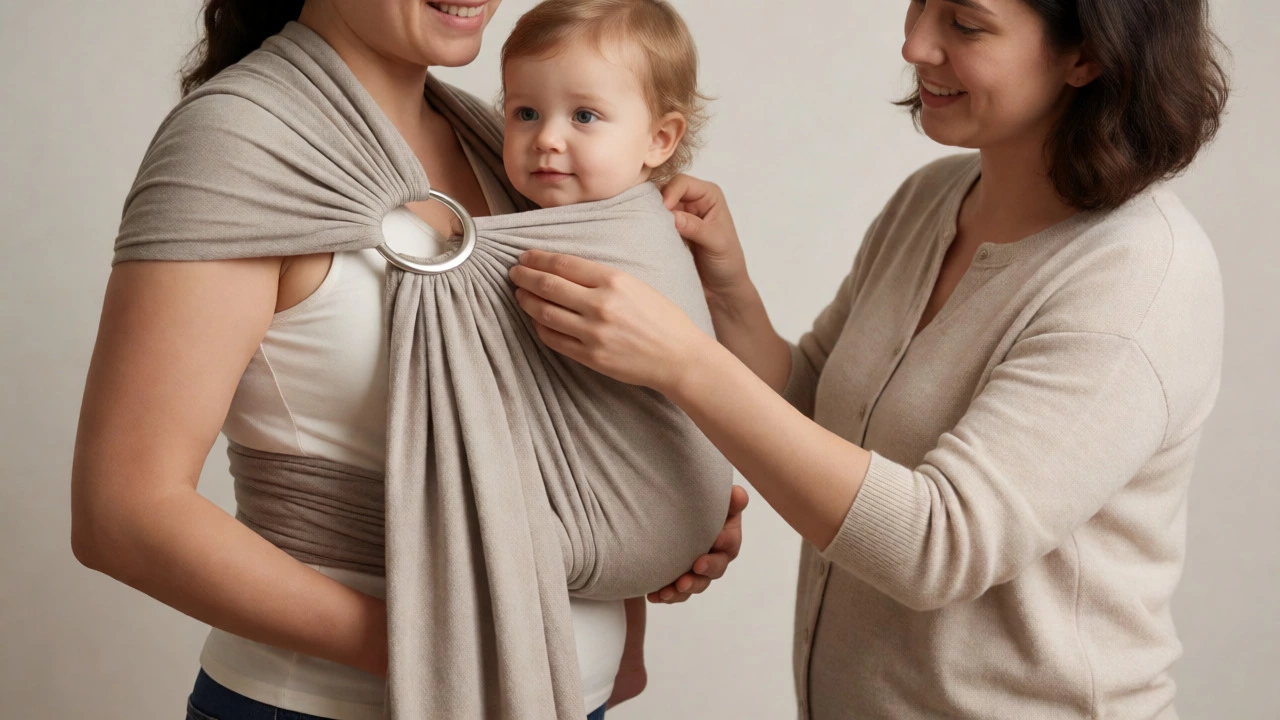
- Ring Slings: Fabric threaded through two rings. Adjustable and quick to put on. Requires practice to tie safely. Good for breastfeeding on the go.
- Soft-Structured Carriers (SSCs) with Inserts: Some modern SSCs come with built-in newborn panels or separate padded inserts. These allow you to carry facing inward with proper head support.
Avoid hip seats and back carriers entirely. Your baby cannot sit independently, so these positions strain their developing spine and hips.
Infants (4-6 Months)
By four months, many babies have gained significant neck strength. They can hold their heads up well while awake. This opens up more options. You can switch from a stretchy wrap to a more durable woven wrap or a structured carrier without an insert, provided the seat is narrow enough to keep their knees above their bottom.
This is the prime time for ergonomic structured carriers. Look for adjustable seat widths. A wide seat forces the baby’s legs apart unnaturally, which can irritate the hips. You want the fabric to end behind the knee, not under it. If your baby is strong, you might try outward-facing carries, though most experts recommend keeping them inward-facing until six months to prevent overstimulation.
Babies (7-12 Months)
Your baby is sitting up, maybe crawling, and definitely getting heavier. This is when comfort for the parent becomes critical. A poorly fitted carrier will wreck your lower back. Now is the time to invest in high-quality soft-structured carriers with lumbar support and padded straps.
If you haven’t bought a main carrier yet, do it now. You’ll be using it for hikes, grocery runs, and household chores. Back carries become viable here. If your baby’s head control is solid, you can move them to your back. This frees up your hands completely and shifts the weight to your stronger core muscles.
Toddlers (12+ Months)
Toddlers are heavy. Carrying a 30-pound child on your front is exhausting. This is when specialized gear pays off. Consider:
- Hip Seats: Small platforms that rest on your hip. They take the weight off your arms. Not full carriers, but great for short bursts of holding.
- Toddler-Specific SSCs: Designed with wider seats and reinforced waistbands to handle weights up to 45 lbs.
- Meh Dai or Woven Wraps: Advanced users often prefer these for older children because they offer customizable support and better weight distribution for heavy loads.

Buying Timeline: Pregnancy vs. Postpartum
Should you buy during pregnancy or after birth? There is no single right answer, but there are pros and cons to each approach.
| Timing | Pros | Cons |
|---|---|---|
| During Pregnancy | • Stress-free shopping. • Time to research reviews. • Can attend local babywearing classes pre-birth. • Ready to use Day 1. |
• Might buy wrong size if you gain/lose unexpected weight. • Risk of returning items if preferences change after seeing the baby. |
| After Birth (First Month) | • You know your baby’s exact size. • You know your own recovery status (C-section vs. vaginal). • Can return unused gifts. |
• Shopping with a newborn is hard. • Sleep deprivation affects decision-making. • Shipping delays might leave you without a carrier initially. |
| Later (3+ Months) | • Clear idea of usage frequency. • Can upgrade to advanced models if needed. |
• Missed the newborn bonding benefits. • Baby may resist new sensations if not introduced early. |
My recommendation? Buy a simple, affordable option before birth. Think a basic ring sling or a budget-friendly SSC. Test it on a stuffed animal or doll. Once the baby arrives, you’ll quickly learn if you love wearing or hate it. If you love it, upgrade to a premium carrier around month three or four. If you hate it, you haven’t wasted hundreds of dollars.
Safety Rules You Cannot Ignore
Buying the carrier is easy; using it safely takes practice. The biggest risk isn’t falling-it’s positional asphyxia. This happens when the baby’s airway gets blocked because their chin drops to their chest.
Use the T.I.C.K.S. rule every single time:
- Tight: The carrier should be snug. If you lean forward, the baby shouldn’t fall away from you.
- In View: You must be able to see their face by glancing down. No kissing the top of the head unless you turn yours.
- Close Enough to Kiss: Their head should be high enough that you can kiss their forehead easily.
- Keep Chin Off Chest: Ensure there’s a finger’s width of space between their chin and chest.
- Supported Back: The fabric should support them from shoulder blade to shoulder blade, following their natural curve.
Also, watch for overheating. Babies can’t sweat efficiently. If you’re wearing layers, dress the baby in fewer clothes than you would normally. Check their neck or back for dampness-if they’re sweaty, remove a layer.
Signs You Need to Upgrade or Switch
How do you know when your current carrier is done? Watch for these red flags:
- Slouching: If your baby’s back rounds excessively or their head lolls, the support is insufficient.
- Knees Below Bottom: If their legs dangle straight down instead of forming an "M" shape, the seat is too wide or the position is wrong.
- Pain: If your shoulders dig in or your lower back hurts after 15 minutes, the fit is poor. Try tightening the straps or adjusting the waistband.
- Resistance: Older babies may push away if they feel cramped. This might mean it’s time to switch to a back carry or a hip seat.
Final Thoughts on Investment
A baby carrier isn’t just gear; it’s a tool for connection. When to buy depends on your readiness, not just the baby’s age. Ideally, you have something ready for the newborn days. As your child grows, your needs change. Start simple, prioritize safety, and upgrade only when necessary. You don’t need five carriers. One good ergonomic SSC that fits both parents often lasts from birth to age three.
Can I wear my newborn in a regular baby carrier?
Not usually. Most standard structured carriers require the baby to have good head control (around 4 months). For newborns, you need a carrier with a built-in newborn panel, a removable insert, or a wrap/sling that supports the head and neck fully. Always check the manufacturer's minimum weight and developmental guidelines.
Is it safe to buy a used baby carrier?
Yes, but with caution. Inspect the fabric for thinning, holes, or faded colors (which indicate sun damage and weakened fibers). Check buckles and zippers for cracks or stiffness. Never buy a used carrier that has been recalled. Ask the previous owner for proof of purchase and recall history if possible.
Do I need a separate carrier for dad/partner?
Not necessarily, but it helps. Many carriers are adjustable, but torso length varies greatly between adults. If your partner has a much longer or shorter torso than you, a shared carrier might never fit perfectly. In that case, having a second carrier tailored to their size ensures comfort and safety for both.
What is the safest position for a newborn?
The safest position is upright against your chest, facing inward. Their head should be supported, and their back should be rounded naturally (not forced flat). Their knees should be higher than their bottom (the "M" position). Avoid outward-facing carries until the baby has strong neck control, typically around 4-6 months.
How long can I wear my baby in a carrier?
There is no strict limit, but listen to your body and the baby. Newborns may nap in the carrier for hours. Older babies might get restless after 30-60 minutes. Breaks are important for circulation. If your baby falls asleep, check their position periodically to ensure their airway remains open and they aren't slumping.