When to Remove Child Safety Gates: Age, Signs & Alternatives

Child Safety Gate Readiness Checker
There is no single birthday where you flip a switch. Use this interactive checker to assess your child's physical coordination, cognitive understanding, and specific home hazards. Select the type of gate you are evaluating and check off the signs your child demonstrates.
Next Steps & Alternatives
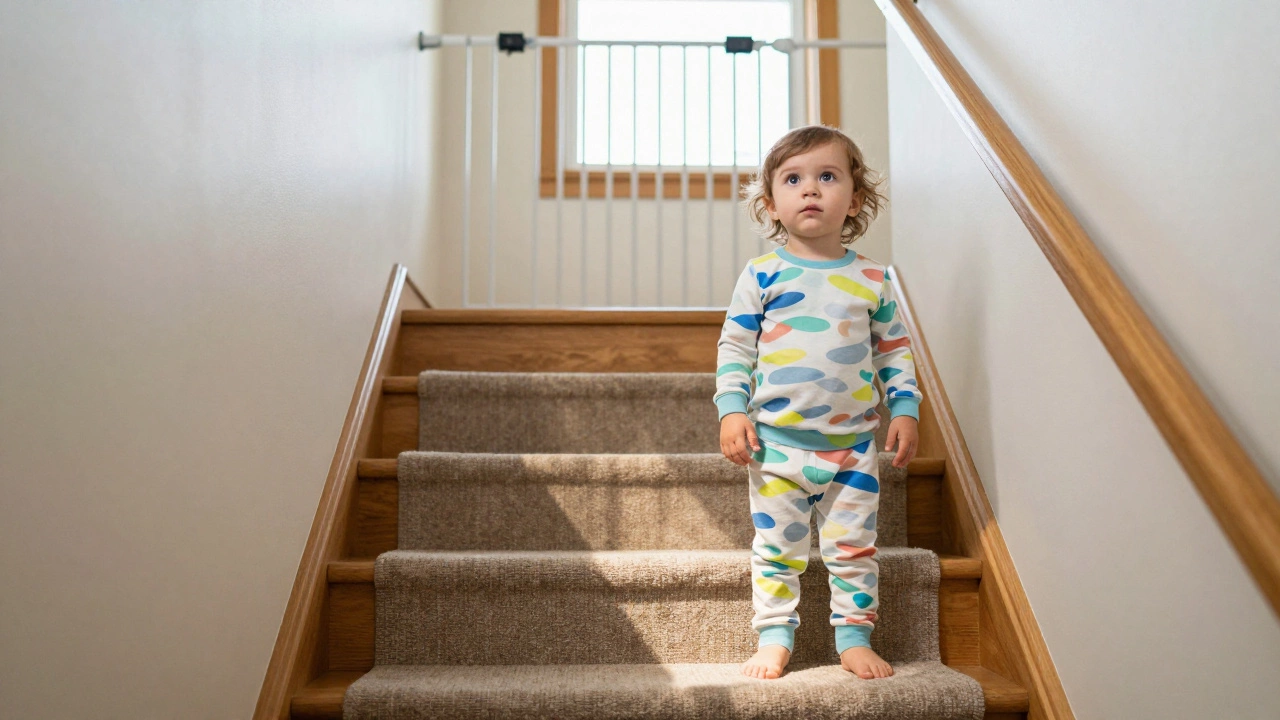
You’ve spent months installing child safety gates, checking latches, and dodging midnight trips down the stairs. It feels like a permanent fixture in your home. But here’s the thing: keeping them up too long can actually hinder your child’s independence, while taking them down too early risks a tumble. The question isn’t just about age; it’s about readiness.
Most parents wonder when they can finally retire that hardware store purchase. Is it when they turn two? Three? When they start school? The truth is, there’s no single birthday where you flip a switch. It depends on their physical coordination, cognitive understanding of danger, and your specific home layout. Let’s break down exactly how to know when your kid is ready, what signs to look for, and how to transition safely without compromising security.
The General Rule of Thumb: Age vs. Ability
If you want a quick answer, most pediatricians and safety experts suggest removing safety gates between ages 2 and 3. However, age is a poor predictor of ability. A sturdy 2-year-old might climb over a gate with ease, while a cautious 3-year-old might still hesitate at the top of stairs. The American Academy of Pediatrics (AAP) highlights that children under 6 are particularly prone to stair-related injuries, so caution remains key even after the gate comes down.
Think of the gate as training wheels. You don’t remove them because the bike looks silly; you remove them when the rider has mastered balance and braking. Similarly, you remove the gate when your child demonstrates consistent safe behavior around stairs and restricted areas. If your child is still crawling or pulling themselves up on furniture, the gate stays. If they are walking confidently but lack judgment, the gate likely stays too.
Signs Your Child Is Ready to Lose the Gate
Before you grab the screwdriver, run through this checklist. If your child checks off all these boxes, you’re probably in the clear for removal.
- Consistent Walking: They walk steadily without falling frequently. No more stumbling over their own feet on flat ground.
- Climbing Awareness: They do not try to climb over the gate. Many toddlers view gates as climbing frames. If they treat it like a jungle gym, it’s failing its purpose anyway.
- Understanding "Stop": They respond to verbal cues like "stop" or "careful" when approaching stairs or hazards.
- Nighttime Sleep Habits: If the gate was used to keep them in their room, they stay in bed throughout the night without trying to climb out or open the door.
- Fine Motor Skills: They aren’t picking locks or fiddling with complex latches that could trap fingers or cause accidental openings.
Watch them closely for a week before making the decision. Stand nearby when they approach the stairs. Do they pause? Do they hold the railing? Or do they sprint blindly toward the edge? Their instinctive reaction tells you more than their birth certificate does.

Different Gates, Different Removal Timelines
Not all gates serve the same function, so their removal criteria differ significantly. You need to evaluate each installation individually rather than ripping everything out at once.
| Gate Location/Type | Primary Purpose | Removal Indicator | Typical Age Range |
|---|---|---|---|
| Top of Stairs | Prevent falls from height | Child walks down stairs independently holding rail; understands gravity/danger. | 2.5 - 4 years |
| Bottom of Stairs | Restrict access to stairs | Child doesn't attempt to go up stairs unsupervised; respects boundaries. | 2 - 3 years |
| Room/Gate (Bedroom) | Sleep containment/safety | Child stays in bed all night; no longer climbs crib/gate to exit. | 2 - 3.5 years |
| Kitchen/Bathroom | Hazard restriction (knives, water) | Child avoids touching hot surfaces/sharp objects; follows rules consistently. | 3 - 5 years |
Notice the wide range in the kitchen example. A 3-year-old might be fine near the fridge but still fascinated by the garbage disposal button. Hazard-specific gates often stay longer than structural ones because the risk level remains high until cognitive maturity increases.
The Transition Strategy: How to Remove Them Safely
Don’t just unbolt the gate one morning and hope for the best. Use a phased approach to reduce anxiety for both you and your child.
- Supervised Exploration: Leave the gate open during the day while you watch closely. Teach them how to navigate the stairs or hazard zone. Hold their hand if needed.
- Verbal Reinforcement: Constantly narrate their actions. "You stopped at the top! Good job." Positive reinforcement helps cement the habit.
- Nightly Check-ins: If you removed a bedroom gate, check on them frequently at night. Ensure they aren’t wandering into unsafe areas.
- Partial Removal: Consider replacing a tall gate with a shorter barrier or a visual cue (like a tape line) if they are almost ready but not quite. This maintains a boundary without the physical obstacle.
If you have a doggy door or a pet gate that doubles as a human barrier, remember that pets often learn to bypass gates faster than kids. Ensure the latch mechanism is secure enough to withstand both curious paws and determined little hands.

Common Mistakes Parents Make
One major error is assuming that because a child *can* climb the gate, they *won’t*. In reality, many toddlers love the challenge of climbing. If your child starts using the gate as a ladder, it’s time to remove it or modify it, because a climbed-over gate offers zero protection. Another mistake is forgetting to childproof the area behind the gate. Once the gate is gone, ensure there are no loose rugs, sharp corners, or accessible blind cords in that newly accessible zone.
Also, beware of pressure-mounted gates at the top of stairs. These should never be used at the top of a staircase regardless of age, as they can pop out if leaned against. If you have a hardware-mounted gate at the top, double-check the wall anchors before removal to ensure they haven’t loosened over time, which might indicate the gate was being used as a support structure by the child.
Alternatives to Traditional Gates
If you’re hesitant to remove the gate entirely, consider alternatives that offer flexibility. Some families use motion-sensor alarms on doors or stairways. These provide audio alerts if a child enters a restricted zone, allowing you to intervene without physical barriers. Others opt for decorative arches or low fences that define space without blocking movement completely.
For older toddlers who understand rules but forget them in the heat of play, visual markers work well. Painting a colored line across the threshold or placing a rug can serve as a psychological boundary. This teaches self-regulation, a crucial skill for preschool and beyond.
Can I reuse safety gates for a second child?
Yes, absolutely. Most safety gates are designed to last multiple childhoods. However, inspect them thoroughly before reuse. Check for cracks in plastic parts, rust on metal screws, and worn-out rubber grips. If the spring-loaded mechanism feels weak or the auto-close feature fails, replace it. Safety standards evolve, so ensure the gate still meets current ASTM F1004 standards.
What if my child opens the gate latch?
If your child figures out the latch, the gate is no longer effective. You have three options: install a higher latch out of reach, add a secondary lock (like a child-proof cabinet lock), or remove the gate if they are old enough to handle the hazard. For top-of-stairs gates, a secondary lock is non-negotiable if they can open the primary one.
Do I need a gate if I have a closed door?
A closed door is a great alternative, provided the door closes automatically and latches securely. Many interior doors don’t latch tightly, allowing a strong-willed toddler to push them open. If you rely on doors, install a hook-and-eye latch high up or a sliding bolt lock. Never rely on a standard doorknob alone for a young child.
Is it safe to leave a child alone in a gated room?
Yes, if the room itself is fully childproofed. The gate only restricts entry/exit; it doesn’t protect against hazards inside the room. Ensure there are no blind cords, heavy furniture that can tip, small choking hazards, or unsecured electronics within reach. Always supervise infants and young toddlers, even if they are contained.
How far apart should gate slats be?
The spacing between vertical slats must be less than 3.5 inches (89 mm) to prevent head entrapment. This is a critical safety standard. If your gate has wider gaps, or if your child’s head size fits through the gap, the gate poses a strangulation risk. Measure regularly as children grow, though head width changes less dramatically than body length.