When to Switch Out of a Car Seat: Age, Height & Weight Rules
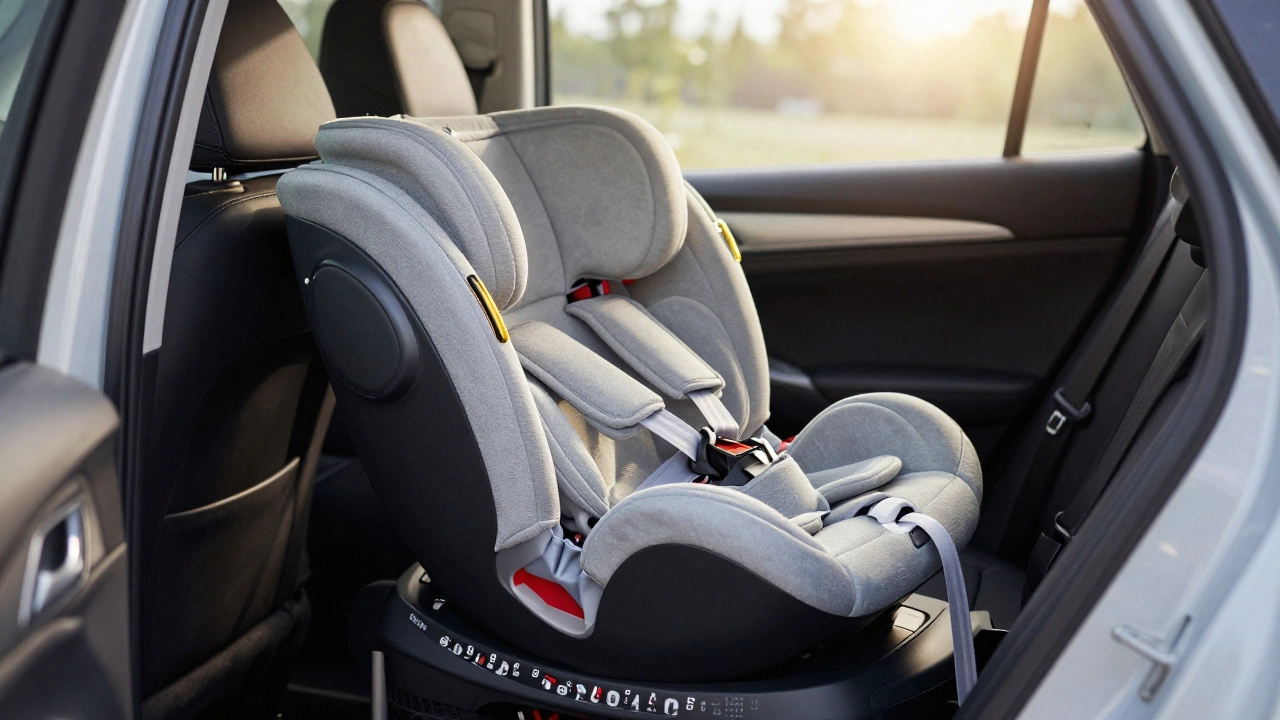
Car Seat Transition Guide & Fit Tester
Child's Details
Enter your child's details to see their recommended car seat stage.
Seat Belt Fit Test Checklist
Does your child pass these criteria without a booster?
Most parents look at the expiration date on their milk carton, but very few check the expiration date on their child’s car seat stage. It feels like you should just know when your kid is "big enough" to move up, but the truth is messy. One day they are squirming in a forward-facing harness, and the next, they seem too tall for it. The question isn't just about age; it is about height, weight, and behavior.
If you switch too early, you risk serious injury in a crash. If you wait too long, your child might be uncomfortable or legally non-compliant depending on where you live. Let’s break down exactly when to make each jump, from rear-facing infancy all the way to that final transition into a standard seat belt.
The Rear-Facing Rule: Keep Them Back Longer
The first major decision is how long to keep your baby facing the back of the car. For years, the advice was to switch at one year old if they weighed 20 pounds. That information is dangerously outdated. Today, every major safety organization-including the American Academy of Pediatrics (AAP) is the leading authority on pediatric health and safety guidelines in the United States-recommends keeping children rear-facing as long as possible.
Why? Because in a crash, a rear-facing seat distributes the force of impact across the entire shell of the seat, protecting your child’s head, neck, and spine. A forward-facing harness relies solely on the harness straps to hold the body, which can put immense strain on a developing neck.
- Minimum Standard: At least until age 2.
- Best Practice: Until they reach the maximum height or weight limit allowed by your specific car seat model.
- Typical Limits: Most convertible seats allow rear-facing up to 40-50 pounds and 49 inches tall.
You might think your two-year-old hates being rear-facing because they scream when you buckle them in. They probably don’t hate the position; they hate losing the view. Try hanging a mirror so they can see out the window, or distract them with toys. Do not switch them forward just to stop the crying. Their safety matters more than their entertainment.
Forward-Facing Harness: The Middle Ground
Once your child outgrows the rear-facing limits of their convertible seat, they move to a forward-facing position with a five-point harness. This is not a free-for-all. Many parents make the mistake of thinking that once a child is four or five, they can drop the harness and use a booster. This is wrong.
The five-point harness holds the child securely in place. Without it, a lap-and-shoulder belt can ride up over the stomach in a crash, causing severe internal injuries. Keep your child in a forward-facing harnessed seat until they hit the top height or weight limit for that seat.
| Stage | Minimum Age | Minimum Weight | Key Requirement |
|---|---|---|---|
| Rear-Facing | Birth | 4-5 lbs | Keep until max height/weight of seat (usually 2+ years) |
| Forward-Facing (Harness) | 2 years | 20-22 lbs | Use 5-point harness until outgrown (often age 4-7) |
| Booster Seat | 4-5 years | 40-65 lbs | Belt-positioning booster until proper fit (age 8-12) |
| Seat Belt Only | 8-12 years | 80+ lbs | Must pass the 5-step seat belt fit test |
Look at the label on your car seat. It will tell you the exact limits. Some seats go up to 65 pounds in the forward-facing mode. If your six-year-old weighs 50 pounds, they stay in the harness. Period. Even if all their friends are in boosters.
Booster Seats: When the Harness Comes Off
This is the most confusing transition for many families. You take off the five-point harness, but you don’t just let them sit in the car with an adult seat belt. Adult seat belts are designed for people who are at least 4 feet 9 inches tall. On a smaller child, the shoulder belt cuts across the neck or face, and the lap belt sits high on the soft belly area.
A booster seat is a device that raises a child's seating position so that the vehicle's seat belt fits correctly across the strong bones of the hips and shoulders. There are two main types: high-back boosters and backless boosters. High-back boosters provide side-impact protection and a headrest, which is useful if your car’s seats are low. Backless boosters are cheaper and portable but offer less support.
Most children are ready for a booster between ages 4 and 7. However, age is just a suggestion. The real rule is behavior and size. Does your child sit still? If they slouch, lean over, or unbuckle themselves, a booster is dangerous because the belt won’t be positioned right during a crash. In that case, keep them in a forward-facing harness longer.
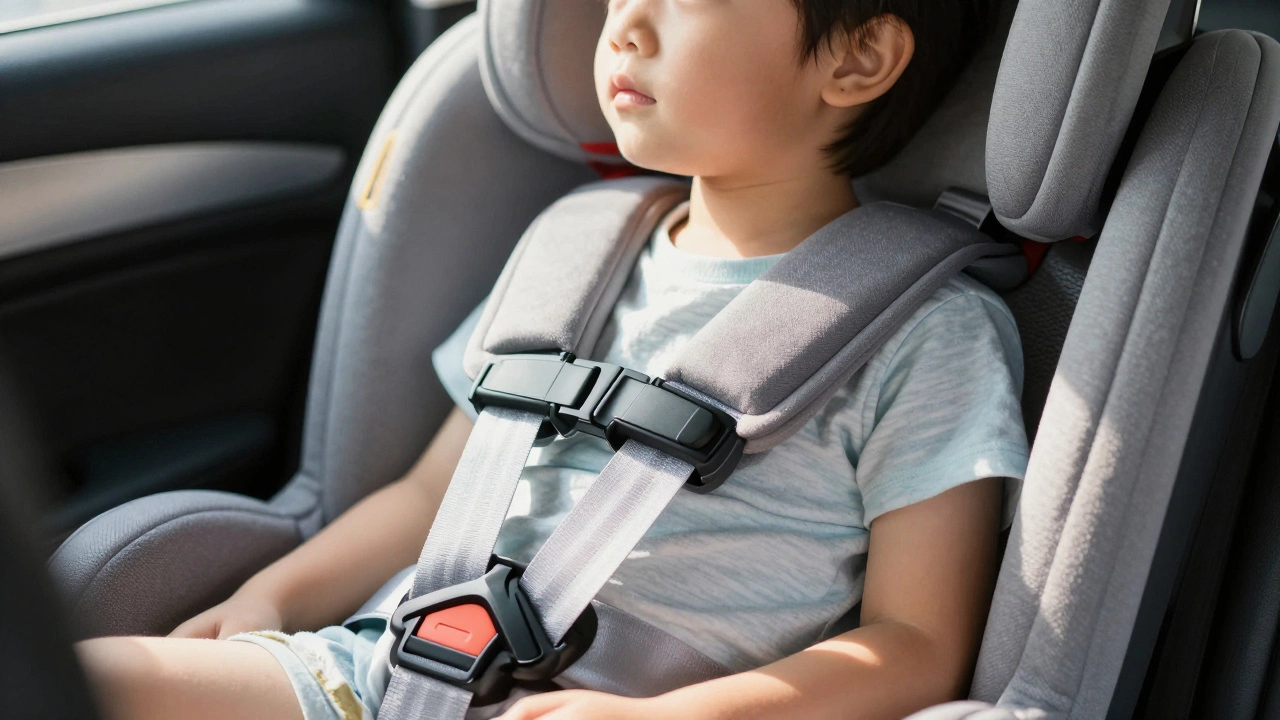
The Final Step: Seat Belt Fit Test
So, what age do you finally switch out of the car seat entirely? There is no single magic number. In some states, the law requires boosters until age 8. In others, it’s until age 12. But the law is the minimum, not the best practice.
You should only remove the booster seat when your child passes the 5-step seat belt fit test. This is the gold standard used by safety experts everywhere.
- Back against the seat: Your child’s back rests flat against the vehicle seat back.
- Knees bent: Their knees bend comfortably at the edge of the seat without slouching.
- Hips touching: Their bottom is all the way back against the seat, not sliding forward.
- Lap belt low: The lap belt lies snugly across the upper thighs, not the stomach.
- Shoulder belt correct: The shoulder belt crosses the center of the chest and shoulder, not the neck or face.
If any of these steps fail, they need a booster. This often means kids aren’t ready until they are 10 or 11 years old. I have seen nine-year-olds who are 5 feet tall pass this test easily, and I have seen twelve-year-olds who are petite and still need a booster. Measure your child, don’t guess.
State Laws vs. Safety Recommendations
Here is where it gets tricky. Laws vary wildly across North America. In British Columbia, where I live, the law requires children to be in an appropriate car seat until they are 9 years old or 80 pounds. In California, it’s until age 8 or 4 feet 9 inches. In New York, it’s until age 16 for seat belt usage, but booster requirements end earlier.
Always check your local laws. But remember: the law is the floor, not the ceiling. Just because the law says your eight-year-old can ride in a seat belt doesn’t mean it’s safe for them. If they haven’t reached 4 feet 9 inches, keep using the booster. Insurance companies may even deny claims if you were not following safety best practices, even if you were technically following the letter of the law.

Common Mistakes Parents Make
I talk to parents all the time who are doing things that compromise safety without realizing it. Here are the biggest pitfalls:
- Ignoring the Expiration Date: Car seats expire. Usually, it’s six to ten years from the date of manufacture. Plastic degrades, technology changes, and parts wear out. Check the bottom of the seat for the date. If it’s expired, throw it away.
- Using Second-Hand Seats Without History: If you buy a used car seat, you must know its history. Has it been in a crash? No. Do you have the manual? Yes. Are there cracks in the plastic? No. If you can’t answer these, don’t use it.
- Loose Installation: Shake the seat. If it moves more than one inch side-to-side or front-to-back at the belt path, it is too loose. A properly installed seat should feel rock-solid.
- Too Loose Harness Straps: You should not be able to pinch any excess webbing at the child’s shoulder. The straps should be snug against the body.
What About Older Kids and Teens?
Once your child passes the seat belt fit test, does that mean you’re done? Not quite. The biggest risk for older kids and teens is distraction. Texting, talking, or looking out the window during a crash can lead to ejection or improper belt positioning.
Teach your kids that the seat belt is non-negotiable. Model good behavior yourself. If you don’t wear your seat belt, why would they? Statistics show that consistent seat belt use reduces the risk of fatal injury by 45% for front-seat passengers. It’s the simplest safety tool you have.
At what age can a child sit in the front seat?
The AAP recommends that all children under the age of 13 ride in the back seat. Airbags in the front seat can cause serious injury or death to younger children. Even if your child is tall enough for a seat belt, the risk from a deploying airbag remains high until they are physically mature enough, usually around age 13.
Can I use a backless booster instead of a high-back booster?
Yes, but only if your vehicle has a high headrest and side-impact protection. High-back boosters are generally safer because they provide head support and side-impact protection. If your car seats are low bucket seats, a backless booster might leave your child’s head unsupported, increasing the risk of whiplash in a minor collision.
My child is 4 feet 9 inches but only 7 years old. Can they ditch the booster?
If they meet the height requirement AND pass the 5-step seat belt fit test, then yes. However, check your local laws. Some jurisdictions require boosters until a certain age regardless of height. Also, consider their maturity. If they cannot sit properly for the duration of the trip, they may not be ready for the responsibility of an adult seat belt.
Does my car seat need to be replaced after a minor fender bender?
It depends on the severity. Most manufacturers recommend replacing the seat after a moderate to severe crash. For minor crashes, you might not need to replace it if: 1) The vehicle was drivable afterward, 2) The airbags did not deploy, 3) The door near the seat was not damaged, 4) There is no visible damage to the seat, and 5) The child was not injured. When in doubt, contact the manufacturer or replace it. Safety is not worth gambling on.
How do I know if my child is too big for a forward-facing harness?
Check the labels on the sides of the seat. Look for the maximum height and weight limits for the forward-facing mode. If your child’s ears are above the top of the seat shell, or if the harness slots are below their shoulders, they have outgrown the seat. Never use the top harness slot if the child’s ears are higher than the seat back.