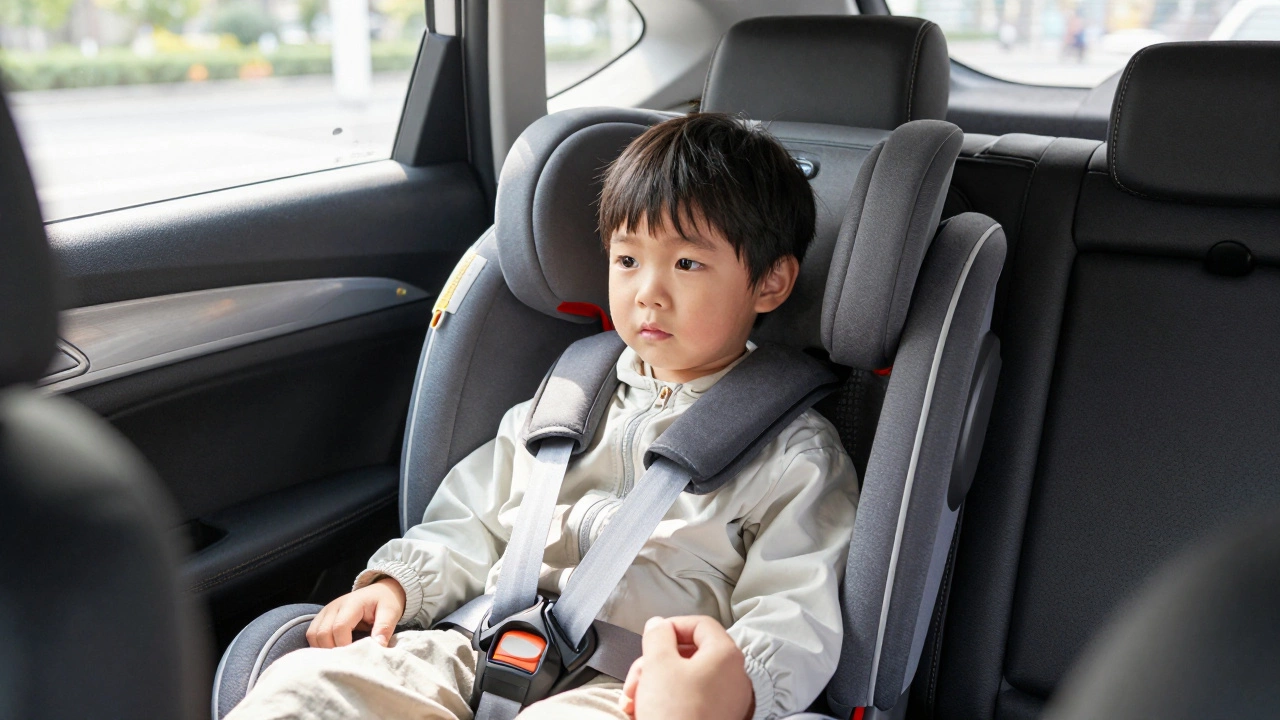
When to Switch Your Child to a Booster Seat: A Complete Guide for Parents

Booster Seat Readiness Checker
Use this tool to check if your child meets the basic physical criteria for transitioning to a booster seat. This tool uses standard safety guidelines (40 lbs minimum weight).
It is that moment every parent dreads. Your five-year-old climbs into the backseat, looks at you with those wide eyes, and says, "I'm too big for this." They are right about one thing: they are growing fast. But are they ready for a booster seat? This is not just a question of comfort or style; it is a critical safety decision. Moving too soon can be dangerous, while waiting too long might mean your child is riding in a seat that doesn't fit them properly anymore.
The short answer is usually no. Most five-year-olds are not yet ready to graduate from a forward-facing harness car seat to a belt-positioning booster. However, there are specific physical milestones and legal requirements that dictate the switch. Let’s break down exactly what you need to look for before making the change.
Why Age Alone Doesn't Tell the Whole Story
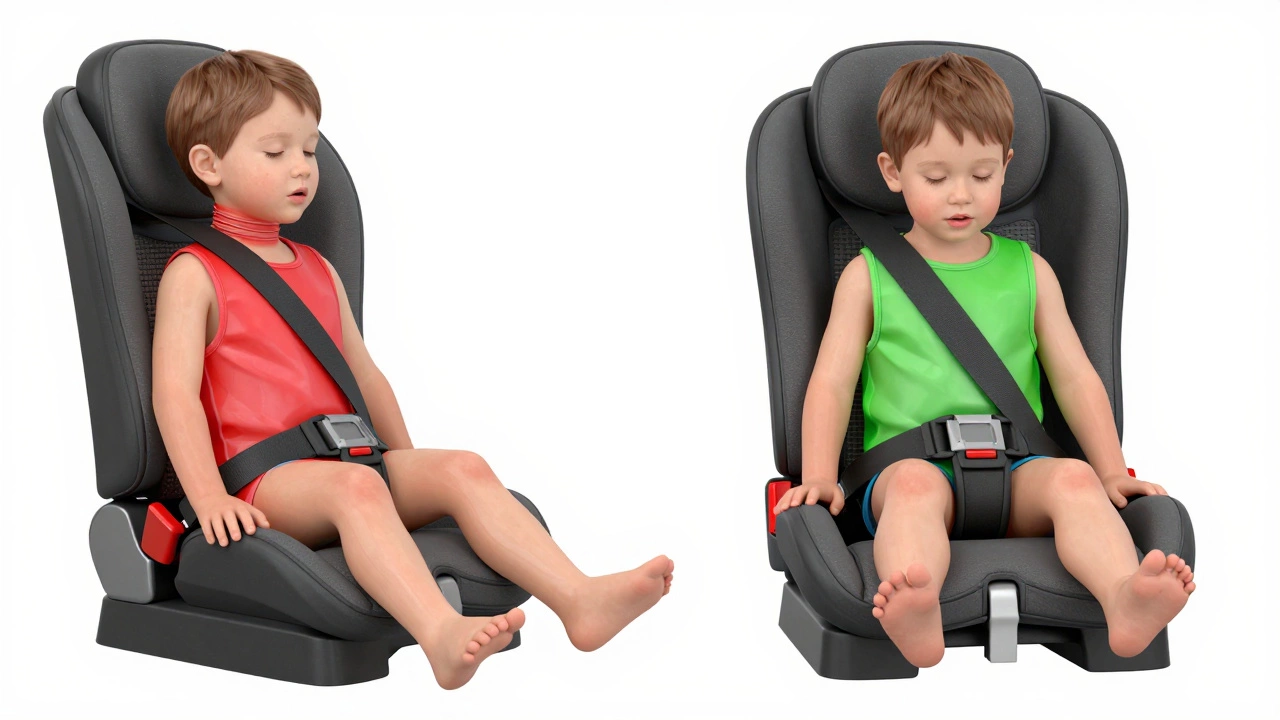
We often think of car seats in terms of age, but vehicle safety engineering relies on physics and anatomy. The primary job of a booster seat is to position the vehicle's lap and shoulder belts correctly over the strongest parts of a child's body. Without a booster, adult-sized seat belts sit dangerously high on a small frame. The lap belt rides up over the soft abdomen instead of the hard hip bones, and the shoulder belt cuts across the neck or face rather than resting on the collarbone.
In a crash, this improper positioning leads to "submarining," where the child slides under the lap belt. This causes severe internal injuries to the intestines and spine. A five-year-old typically lacks the height and skeletal maturity to handle these forces without assistance. While some jurisdictions allow children to exit harnessed seats at age four or five if they meet weight limits, most safety experts recommend keeping kids in a five-point harness as long as possible.
The Golden Rules: Height, Weight, and Harness Limits
To determine if your child is ready, you need to ignore their birthday and look at their body. There are three non-negotiable criteria for moving to a booster:
- Harness Outgrown: Your child has exceeded the maximum height or weight limit of their current forward-facing car seat. Most convertible seats top out at 65 pounds (approx. 30 kg) or 49 inches (125 cm). If they still fit within these limits, keep them in the harness.
- Minimum Weight: The child must weigh at least 40 pounds (18 kg). This is the universal minimum for all belt-positioning boosters.
- Maturity Level: This is the hardest metric. Can your child sit still? Do they stay upright without slouching? If they constantly lean against the door, slide down, or try to remove the shoulder belt, they are not ready for a booster, regardless of their size.
If your five-year-old weighs 45 pounds but is only 38 inches tall, the seat belt will still not fit correctly. Height is often more important than weight because it determines how the belt aligns with the shoulder and hips.
Understanding the Two Types of Boosters
Not all boosters are created equal. When you are ready to make the switch, you have two main options, each with different safety profiles.
| Feature | High-Back Booster | Backless Booster |
|---|---|---|
| Side Impact Protection | Yes, built-in side wings | No, relies on vehicle structure |
| Head Support | Provides headrest support | None |
| Belt Positioning | Uses belt guides to route belts | Uses slots to pull belts closer |
| Versatility | Works in most cars, including older models | Requires vehicles with good headrests and side structures |
| Portability | Bulkier and heavier | Lightweight and easy to move between cars |
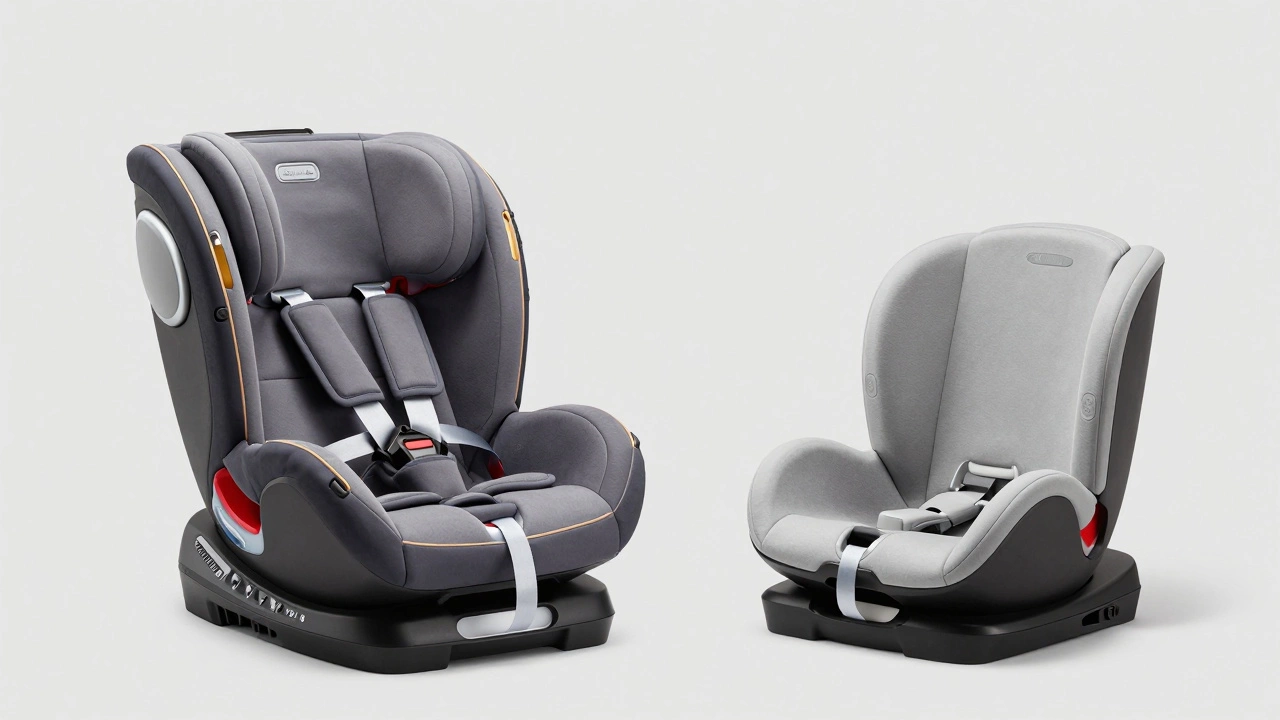
A high-back booster is generally the safer choice for a five-year-old. It offers integrated side-impact protection, which is crucial since side crashes are common and often severe. It also provides a headrest, which helps keep your child’s head aligned if they fall asleep. Furthermore, the back acts as a guide for the shoulder belt, ensuring it stays off the neck even if the child shifts slightly.
A backless booster is cheaper and easier to transport, but it leaves the child’s sides exposed. You should only consider a backless model if your vehicle has excellent side-impact airbags and high seat backs with integrated headrests. For a younger transitioner like a five-year-old, the high-back model is almost always the better investment.
The Five-Step Fit Test: Is the Belt Right?
You can tell if your child is truly ready for a booster by performing the "Five-Step Fit Test" after installation. If any step fails, they need to go back to a harnessed seat.
- Back Against Seat: Does the child sit all the way back against the vehicle seat? If they slump forward, the belt won't work.
- Knees Bent: Do their knees bend comfortably at the edge of the seat without sliding forward? Their legs should not hang straight down.
- Lap Belt Low: Does the lap belt lie snugly across the upper thighs or the very top of the legs? It should never touch the stomach.
- Shoulder Belt Proper: Does the shoulder belt cross the center of the chest and the middle of the shoulder? It should not cut into the neck or slip off the shoulder entirely.
- Stays Seated: Can the child maintain this position for the entire trip without playing with the buckle?
If your five-year-old passes all five steps, congratulations. They are physically ready. If they fail even one, especially the lap belt or shoulder belt alignment, the harness is still the safer option.
Legal Requirements and Regional Differences
Laws vary significantly depending on where you live. In many places, the law sets the minimum standard, not the best practice. For example, in some U.S. states, children can leave a harnessed seat at age four if they weigh 40 pounds. In Canada, regulations are stricter, often requiring children to remain in a rear-facing or forward-facing harness until they reach specific height thresholds, sometimes up to age seven or eight depending on the province.
In Europe, the i-Size regulation focuses heavily on height rather than weight, mandating that children stay in rear-facing seats until 15 months and then in appropriate forward-facing seats until they are 135 cm tall. Always check your local Department of Motor Vehicles (DMV) or transportation authority guidelines. However, remember that legal compliance does not equal optimal safety. Safety organizations like the National Highway Traffic Safety Administration (NHTSA) and the American Academy of Pediatrics (AAP) consistently advise keeping children in harnessed seats as long as the manufacturer allows.
Common Mistakes Parents Make
Even well-meaning parents make errors when transitioning to boosters. Here are the most frequent pitfalls to avoid:
- Using the Center Seat Without Guidance: Many boosters are designed for use in outer seating positions where headrests help guide the shoulder belt. Using a backless booster in the center seat can result in the shoulder belt slipping off the child’s shoulder completely.
- Ignoring the Vehicle Manual: Some cars have specific warnings about using boosters in certain seats due to airbag placement or seat shape. Check your owner’s manual.
- Assuming Expensive Means Better: A $300 booster is not necessarily safer than a $50 one if it is installed incorrectly. The key is proper fit and usage.
- Rushing the Transition: Peer pressure from other parents whose kids are in boosters is real. But every child grows at a different rate. Don’t rush based on social cues.
What Comes After the Booster?
The goal of the booster is to bridge the gap between the harness and the adult seat belt. Children typically remain in a booster seat until they are between 8 and 12 years old. The final test is simple: can they pass the Five-Step Fit Test without the booster? If yes, they can use the vehicle seat belt alone. Until then, the booster remains essential for distributing crash forces safely.
For a five-year-old, the journey is likely just beginning. Focus on finding a comfortable, well-fitted high-back booster that encourages proper posture. Look for models with easy-to-clean fabrics, adjustable headrests, and LATCH connectors or tether anchors for added stability during installation. Remember, the best car seat is the one that fits your child, fits your vehicle, and fits your budget-and gets used correctly every single time.
Can a 5-year-old legally use a booster seat?
Legality depends on your location. In some regions, yes, if the child weighs at least 40 pounds. In others, such as many Canadian provinces or European countries under i-Size, the law may require a harnessed seat until a higher age or height. Always check local laws, but prioritize safety over legality by keeping them in a harness if they still fit.
Is a backless booster safe for a 5-year-old?
A backless booster can be safe if the child is mature enough to sit properly and the vehicle has good side-impact protection and headrests. However, a high-back booster is generally recommended for younger transitioners because it offers additional side-impact protection and head support, reducing the risk of injury in a crash.
How do I know if my child has outgrown their current car seat?
Check the labels on the sides of the seat for the maximum height and weight limits. If your child’s shoulders are above the highest harness slot or their head is within one inch of the top of the shell, they have outgrown the seat. Never exceed these manufacturer limits.
Why is the five-step fit test important?
The five-step fit test ensures that the vehicle's seat belt works correctly with the child's body. It checks for proper posture, knee bend, and belt positioning. Failing any step means the belt could cause serious injury in a crash by riding over soft tissues instead of hard bones.
Should I buy a new booster seat or use an old one?
Only use an old booster if it is not expired, has never been in a crash, has all original parts and instructions, and meets current safety standards. Older models may lack modern side-impact protection features. If in doubt, buy a new one to ensure the latest safety technology.