ADHD Severity Levels Explained: How to Choose the Right Educational Toys
ADHD Severity & Toy Matcher
Based on the DSM-5, answer these questions honestly to determine the functional impact of symptoms.
Estimated Severity Level
--
--
Recommended Toy Type
--
--
There is a common misconception that Attention Deficit Hyperactivity Disorder (ADHD) comes in five distinct levels. If you are searching for a "Level 5" diagnosis or a specific chart ranking symptoms from one to five, you might be feeling confused or frustrated. The truth is simpler, yet more nuanced: the medical community does not use a five-level scale. Instead, the Diagnostic and Statistical Manual of Mental Disorders (DSM-5) classifies ADHD into three primary severity specifiers: Mild, Moderate, and Severe.
So, where did the idea of five levels come from? It often stems from a mix-up with other rating scales used in therapy or school settings, such as the Functional Assessment Scale or various behavioral checklists that rate intensity on a 1-to-5 Likert scale. Understanding this distinction is crucial for parents and educators because it changes how we approach support. When we stop looking for a rigid "level" and start looking at functional impairment, we can better select tools-like educational toys designed to build focus, executive function, and self-regulation.
The Three Official Severity Specifiers
To understand how to support a child with ADHD, you first need to understand how clinicians define severity. It isn't just about how hyperactive a child looks; it’s about how much their symptoms interfere with daily life across different settings, like home and school.
Mild ADHD means that few, if any, symptoms are present beyond those required to make the diagnosis. The impairment is limited to one setting. For example, a child might struggle significantly in a quiet classroom but function perfectly well at home during family time. Their social relationships are mostly intact, and they can complete tasks with minimal prompting.
Moderate ADHD represents a middle ground. Symptoms fall between "mild" and "severe." Here, the child experiences noticeable difficulties in multiple settings. They might forget homework regularly, interrupt conversations frequently, and have trouble sitting still during meals. However, they can still manage some responsibilities with consistent external structure and reminders.
Severe ADHD indicates that many symptoms are present in excess of what is required for the diagnosis, and several current symptoms are marked by significant intensity. Impairment occurs in multiple settings, severely affecting academic performance, social interactions, and family dynamics. A child with severe ADHD might be unable to stay seated for more than a minute, exhibit impulsive behaviors that put them at risk of injury, or completely shut down when faced with multi-step instructions.
Why Parents Talk About "Five Levels"
If the DSM-5 only lists three, why do so many parents and teachers reference five levels? The confusion usually arises from two sources: behavioral rating scales and the complexity of symptom presentation.
In schools and clinics, professionals often use tools like the Vanderbilt Assessment Scales or the Conners Rating Scales. These tools ask caregivers to rate behaviors on a scale of 0 to 3 or 1 to 5. A score of "5" might mean "Very Often" or "Extremely Severe." Over time, laypeople began conflating these numerical ratings with diagnostic levels. You might hear someone say, "My son is a level 4 on impulsivity," which sounds like a diagnostic tier but is actually just a frequency metric.
Additionally, some holistic practitioners and coaches break down ADHD challenges into five functional areas: Focus, Organization, Emotional Regulation, Time Management, and Physical Restlessness. While not a medical diagnosis, this framework helps parents pinpoint exactly where a child needs help. This functional breakdown is far more useful for choosing interventions than a simple severity label.
Matching Toys to Symptom Profiles
Once you move past the confusion of "levels," you can start addressing specific needs. Educational toys are not just for entertainment; they are tools for building neural pathways related to attention, impulse control, and working memory. The right toy depends less on the official severity label and more on the specific executive function deficits your child faces.
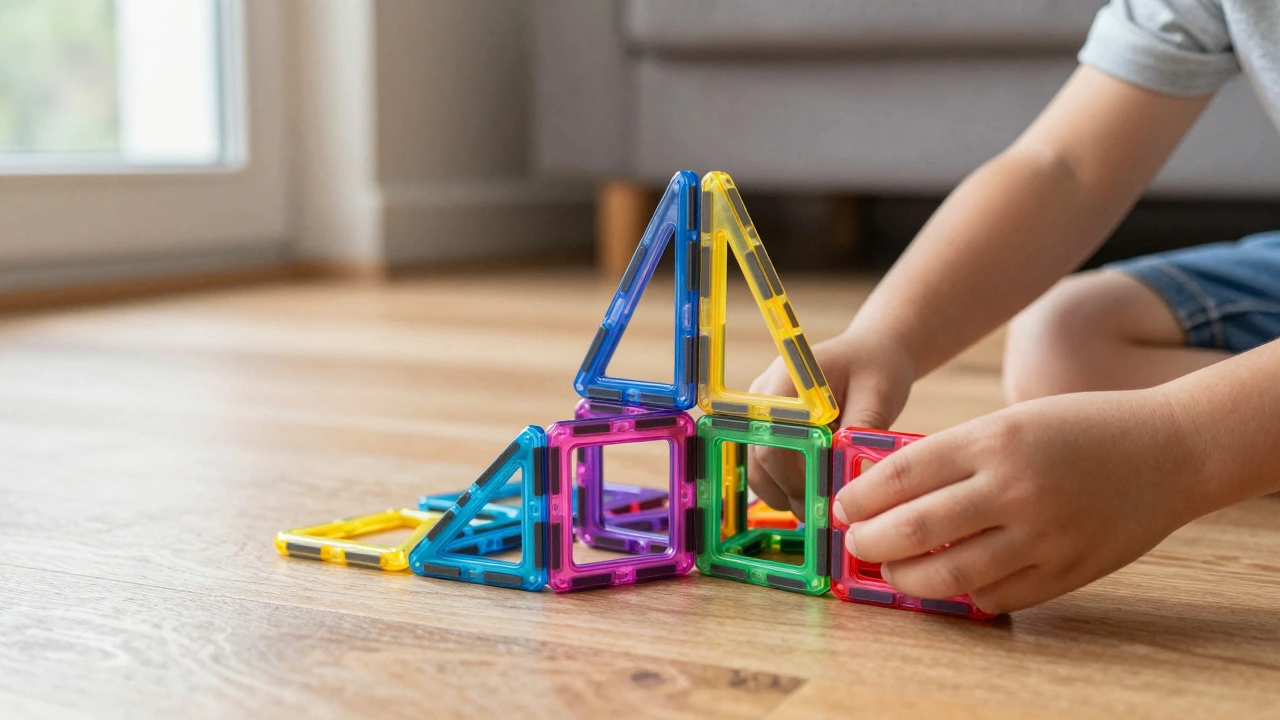
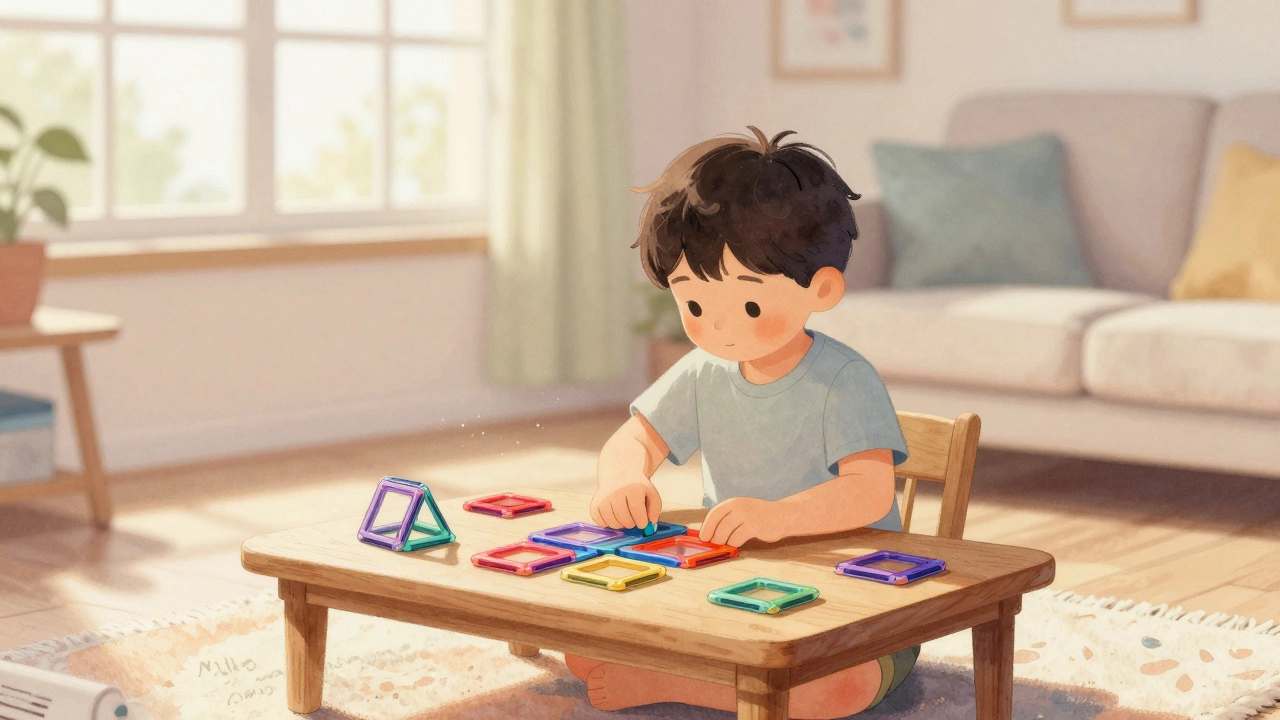
For children who struggle with sustained attention (common in all severities), look for toys that offer immediate feedback and clear goals. Simple puzzles, magnetic tiles, and cause-and-effect electronic toys work well. These provide a closed loop of action and reward, helping the brain practice staying engaged with a single task for longer periods.
For those with high physical restlessness, traditional desk-bound activities can feel torturous. Incorporating movement-based learning is key. Balance boards, fidget-friendly building sets, and kinetic sand allow the body to move while the mind focuses. This aligns with the concept of "sensory integration," where physical input helps regulate cognitive output.
Children who face challenges with emotional regulation benefit from role-play and social-emotional learning games. Board games that require turn-taking, patience, and dealing with loss can teach resilience in a low-stakes environment. Toys that encourage cooperative play rather than competition can reduce frustration triggers.
| Challenge Area | Symptom Indicator | Recommended Toy Type | Why It Works |
|---|---|---|---|
| Sustained Attention | Easily distracted, loses interest quickly | Puzzles, Magnetic Tiles, LEGO | Provides clear visual goals and immediate tactile feedback. |
| Impulse Control | Interrupts, acts without thinking | Board Games (e.g., Candy Land, Life) | Requires waiting for turns and following strict rules. |
| Working Memory | Forgets instructions, loses track | Memory Match Games, Simon Says Toys | Exercises the brain's ability to hold and manipulate information. |
| Physical Restlessness | Fidgeting, inability to sit still | Kinetic Sand, Play-Doh, Balance Boards | Allows safe movement and sensory input to calm the nervous system. |
| Emotional Regulation | Quick to frustration, mood swings | Role-play Sets, Calming Jars | Encourages empathy and provides a visual tool for self-soothing. |

The Role of Sensory Processing in ADHD
Many children with ADHD also have co-occurring sensory processing differences. This is another layer that complicates the "severity" conversation. A child might have "mild" ADHD symptoms but "severe" sensory sensitivities, making certain environments overwhelming.
Sensory processing disorder affects how the brain interprets sensory information like sound, touch, and sight. For a child who is hypersensitive to noise, a busy classroom isn't just distracting; it’s painful. In this case, the "severity" of their struggle is driven by sensory overload, not just attention deficits.
This is where weighted blankets, noise-canceling headphones, and textured toys become essential. They aren't curing ADHD, but they are removing barriers that make focus impossible. When selecting educational toys, consider the sensory profile. Does the child seek deep pressure? Do they avoid loud noises? Tailoring the play environment to these needs can dramatically improve a child's ability to engage with learning materials.
Beyond Diagnosis: Building Executive Function
Rather than obsessing over whether a child is "Level 3" or "Level 5," focus on building executive function skills. These are the mental processes that enable us to plan, focus attention, remember instructions, and juggle multiple tasks successfully. ADHD primarily impacts the prefrontal cortex, the area of the brain responsible for these functions.
You can think of executive function like an orchestra conductor. In ADHD, the conductor is tired or missing some instruments. Educational toys act as training exercises for the musicians. Repeatedly practicing focusing on a puzzle strengthens the neural connections associated with sustained attention. Playing a game that requires planning ahead strengthens working memory.
Consistency is more important than complexity. A simple set of blocks used daily for structured building is more effective than an expensive, complex robot kit that sits on a shelf. The goal is to create a "zone of proximal development" where the task is challenging enough to engage the child but not so hard that it causes shutdown.

Practical Steps for Parents and Educators
If you are navigating this terrain, here is a practical checklist to guide your next steps:
- Clarify the Diagnosis: Ask your pediatrician or psychiatrist specifically about the DSM-5 severity specifier (Mild, Moderate, Severe). Ask them to explain *why* they chose that level based on functional impairment.
- Identify Specific Triggers: Keep a log for one week. Note when your child struggles most. Is it during transitions? During loud activities? When asked to organize? This data is more valuable than a generic "level."
- Audit the Play Environment: Remove clutter. Visual clutter competes for attention. Create a dedicated, quiet space for focused play or homework.
- Select Targeted Toys: Use the table above to match toys to specific challenges. Rotate toys weekly to maintain novelty, which helps sustain interest.
- Model Regulation: Children learn self-regulation by watching adults. Narrate your own thought process. "I am feeling frustrated because I dropped my pen. I am going to take a deep breath before I try again."
Common Pitfalls to Avoid
One major mistake parents make is buying "smart" toys that promise to cure ADHD. There is no toy that fixes neurological wiring. Be wary of marketing claims that use terms like "neuroplasticity boosters" or "ADHD cures." Stick to evidence-based principles: repetition, positive reinforcement, and sensory appropriateness.
Another pitfall is comparing your child to neurotypical peers. A child with severe ADHD may never sit quietly through a 30-minute lecture, and that’s okay. The goal is progress, not perfection. Celebrate small wins, like completing a 10-minute puzzle without wandering off, rather than punishing the inability to sit for an hour.
Is there a Level 5 ADHD?
No, there is no official "Level 5" ADHD in medical diagnostics. The DSM-5 recognizes only three severity levels: Mild, Moderate, and Severe. References to five levels usually come from behavioral rating scales (1-5) used in schools or therapy to measure symptom frequency, not diagnostic categories.
What is the difference between Mild and Moderate ADHD?
Mild ADHD involves symptoms that cause impairment in only one setting (e.g., school but not home). Moderate ADHD involves symptoms that cause noticeable difficulty in multiple settings (e.g., both school and home) but the individual can still manage responsibilities with external support.
Can educational toys replace medication for ADHD?
No, educational toys cannot replace medication. Medication addresses chemical imbalances in the brain, while toys help build behavioral skills and executive function. They are complementary tools. For many children, a combination of medication, therapy, and structured play yields the best results.
How do I know if my child has Severe ADHD?
Severe ADHD is diagnosed by a professional when symptoms are intense and cause significant impairment in multiple areas of life, including social relationships, academic performance, and safety. If your child is unable to function in daily routines despite strong support structures, consult a specialist.
What are the best toys for a child with ADHD?
The best toys depend on the child's specific challenges. For focus, try puzzles and LEGO. For impulse control, try board games with turns. For restlessness, try kinetic sand or balance boards. Look for toys that offer immediate feedback and allow for movement or sensory engagement.
Does ADHD get worse with age?
ADHD symptoms often change rather than simply get worse. Hyperactivity may decrease with age, but inattention and disorganization can persist or become more apparent as demands increase. Early intervention with strategies and tools like educational play can improve long-term outcomes.