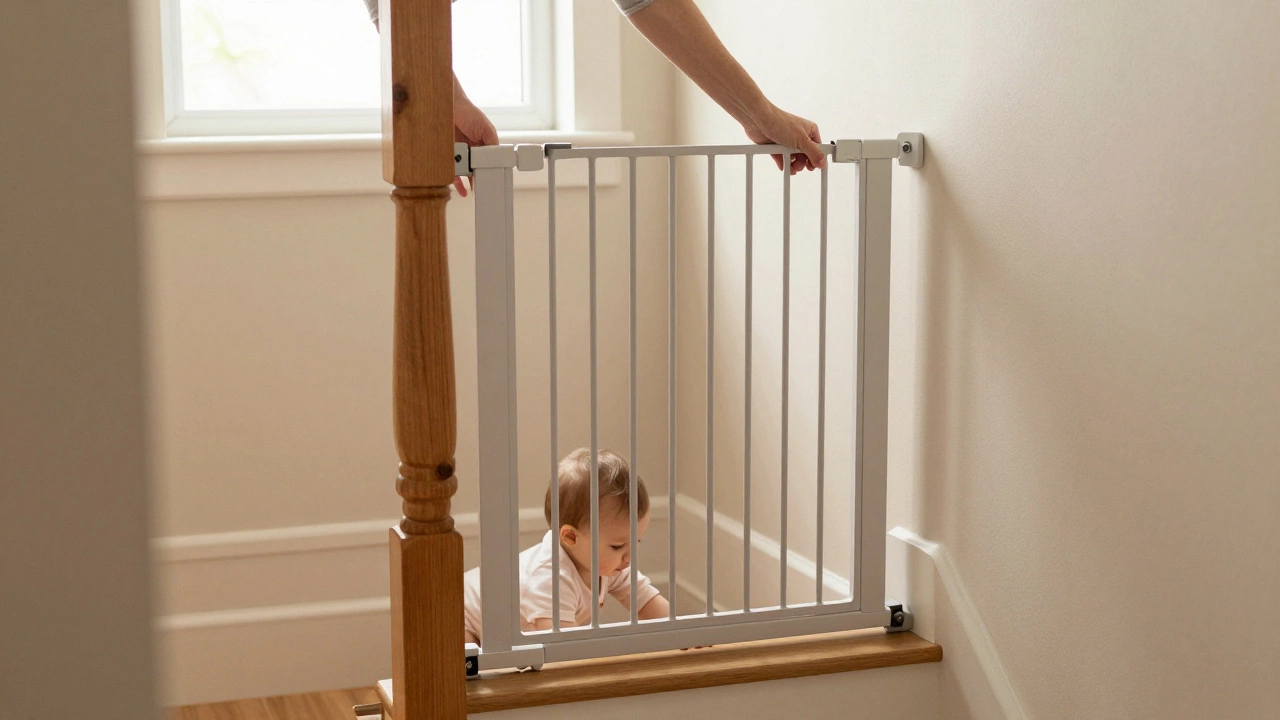
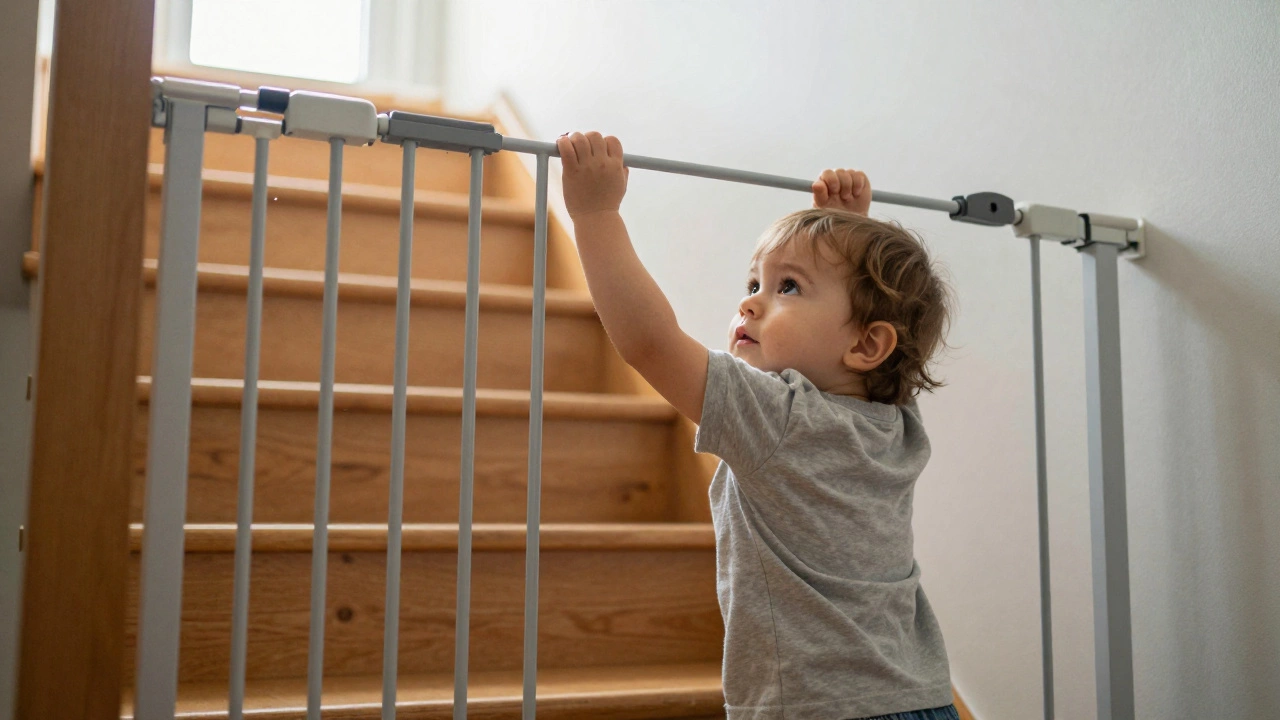
How to Prevent Accidents with Baby Gates: A Complete Safety Guide
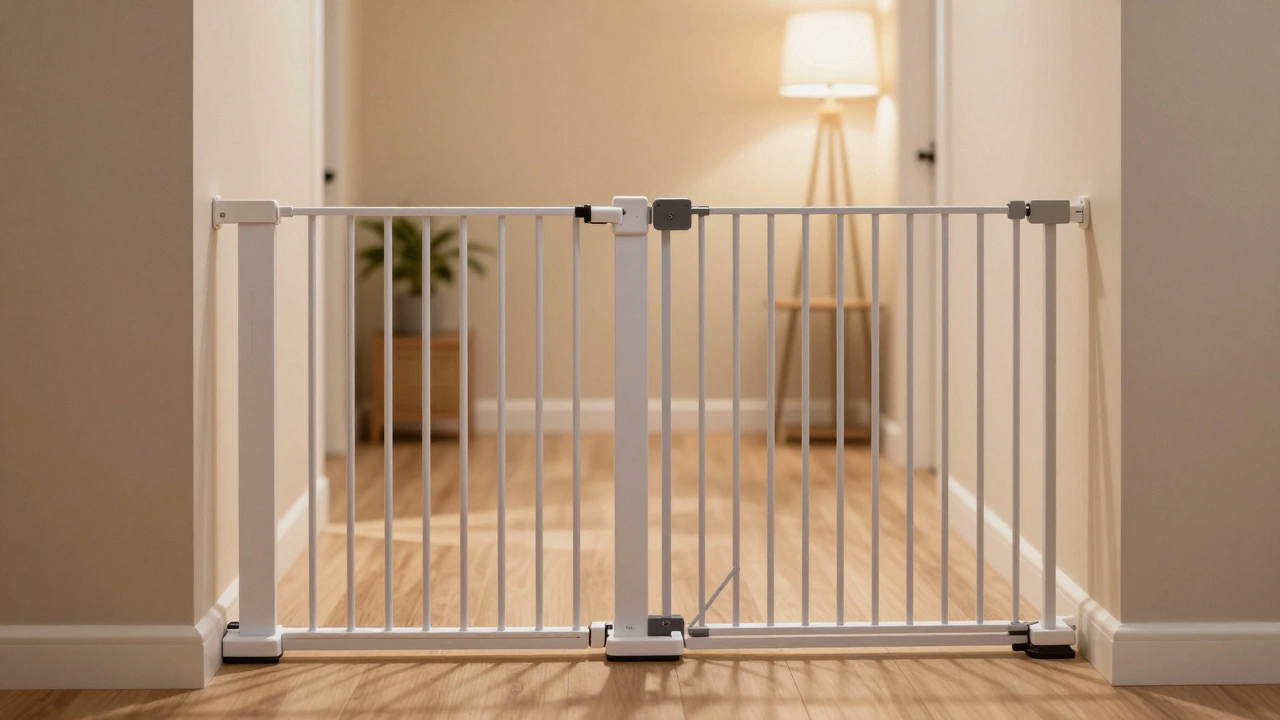
Baby Gate Safety Suitability Checker
Safety Checklist
Recall Alert
Always check the CPSC recall database before use. Even new gates can have manufacturing defects.
Visit Recalls DatabaseNo analysis performed yet
Fill out the options on the left to generate your personalized safety report.
What Makes a Gate Safe?
You might think any mesh fence with a door works, but that isn't true. In North America, every single gate sold should meet specific safety requirements set by ASTM F1004. This standard dictates everything from how wide the vertical slats can be to how much force it takes to push the latch open.
If you buy second-hand, check for a sticker indicating it meets current standards. Older gates might have X-bar designs where the space between the bars looks fine but actually allows a toddler's head to pass through while getting stuck. These older models were recalled years ago because they posed a strangulation risk. Never use a gate with those accordion-style crossbars, even if your child seems small enough to fit through safely right now.
The Consumer Product Safety Commission tracks millions of products, and baby gates appear frequently on their recall lists due to manufacturing defects. Before using any gate, especially one you found on a marketplace app, run a quick check against the latest recall database. A defective locking pin can pop out unexpectedly when a child leans against the gate, sending both the child and the gate tumbling down a flight of stairs.
Picking the Right Mounting Method
Not all gates belong in the same spot. There are two primary ways to mount these barriers, and confusing them creates immediate danger zones. Understanding the difference between tension-mounted and fixed-mounted systems is crucial for accident prevention.
| Type | Best For | Risk Factor | Installation Difficulty |
|---|---|---|---|
| Pressure-Mounted Gate | Doorways, Hallways | Can dislodge if knocked hard | Easy (No Drilling) |
| Hardware-Mounted Gate | Top of Stairs, Fireplaces | Requires drilling | Hard (Permanent Fix) |
Pressure-mounted gates rely on tension against the wall to stay in place. They work perfectly in hallways or doorways where a fall wouldn't result in serious injury. However, putting one at the top of the stairs is a recipe for disaster. If a heavy toddler pushes against a pressure gate located on stairs, the tension spring can fail. The gate pops off the wall, and gravity takes over. Always reserve these for flat surfaces.
For the top of the stairs, you absolutely need a hardware-mounted model. These screw directly into the wall studs or banister posts. The stability comes from the wood or metal behind the surface, not from friction. Some models come with extension kits to bridge wider gaps, ensuring there aren't loose spots where fingers get caught. When installing hardware, always locate the studs. Drywall anchors alone won't hold the weight of a determined climbing toddler.
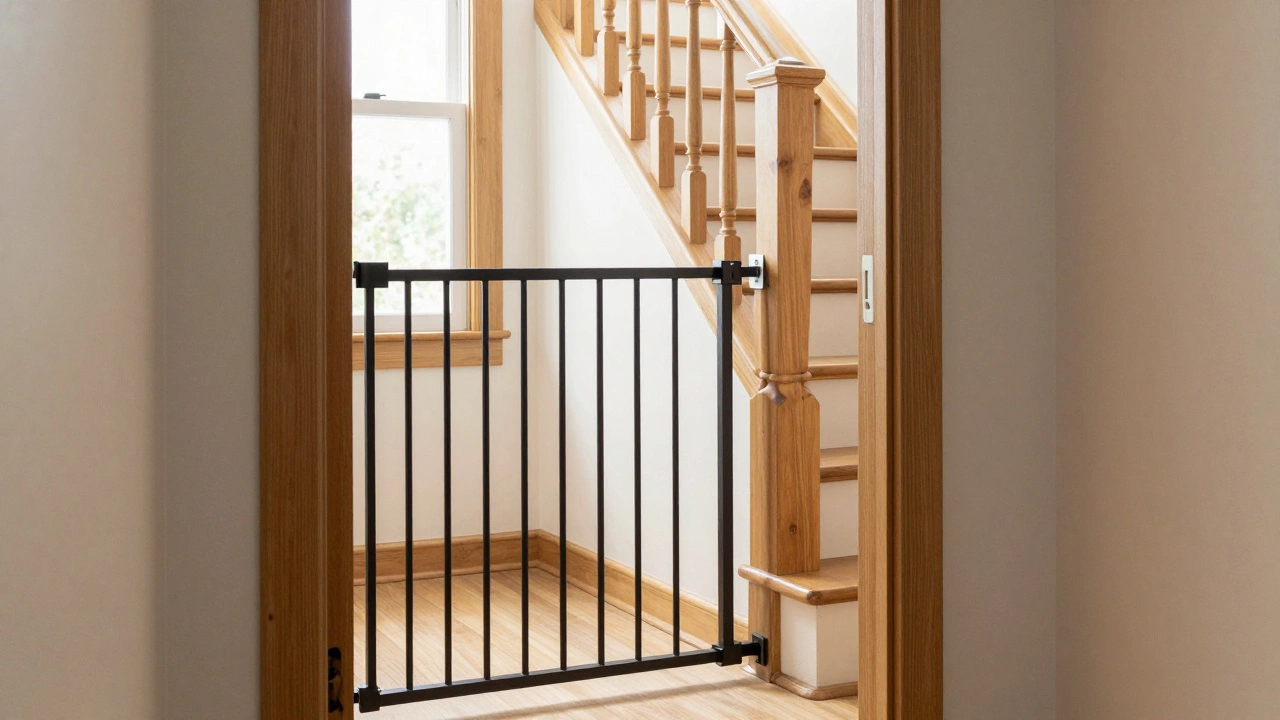
Avoiding Common Installation Traps
Even if you have the right gear, how you set it up changes the outcome. Many accidents happen during the first few weeks of use simply because the setup wasn't perfect. Here are the silent killers in proper gate placement:
- The Gap Underneath: Measure the floor-to-gate height. If there is more than three inches of clearance, a curious crawler can wiggle under it and reach the hazard zone below.
- The Loose Screw: Wall drywall moves slightly in temperature changes. Check the screws monthly. If you see stripped holes, the structural integrity is compromised immediately.
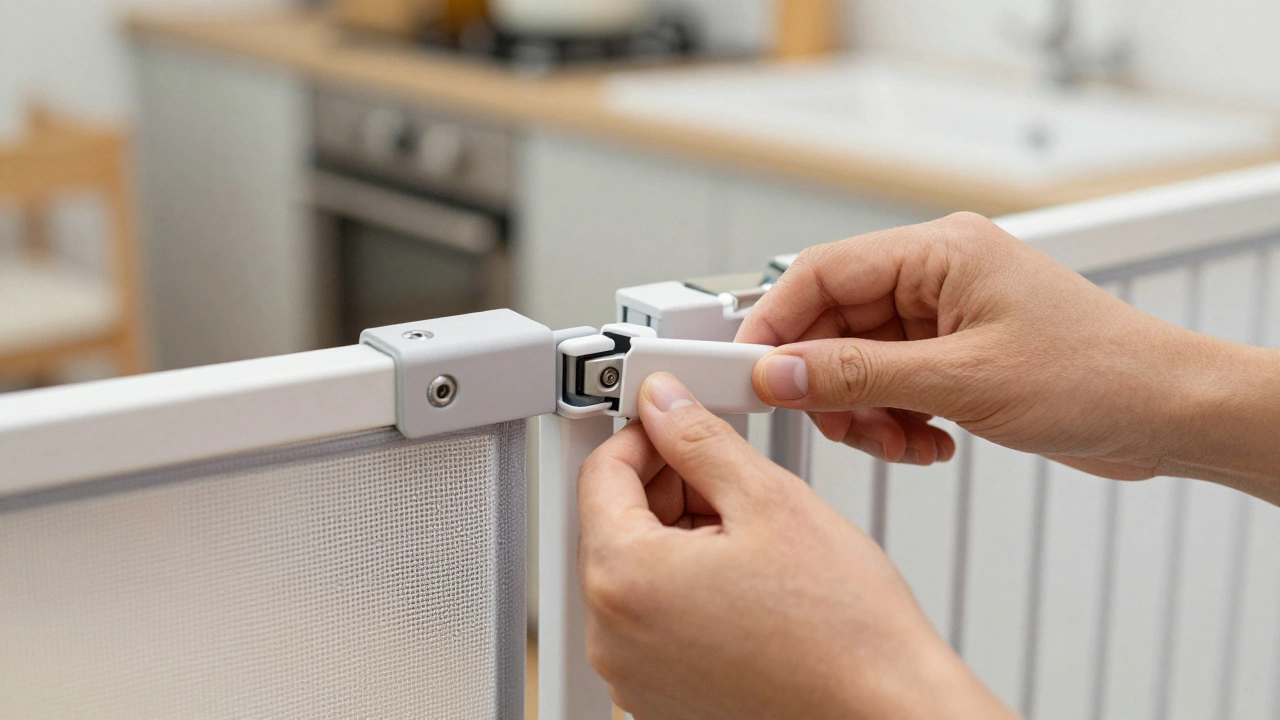
- Open Latches: The release mechanism should require two distinct actions for an adult to open, but remain simple enough to use in an emergency. If a two-year-old can pull it open, the latch needs adjustment or replacement.
- Extension Panels: Don't stretch extensions too thin. Some gates allow you to widen the opening, but stretching a mesh panel beyond its limit creates sagging gaps. Mesh tears easily, and a torn mesh is just an obstacle course waiting to be climbed.
When installing a gate around a fireplace or railing, look for special mounting brackets. These allow the gate to attach securely to a railing rather than the wall. Using nails into a wooden banister is risky because the wood can splinter or crack over time. Brackets distribute the force across the entire width of the post.
Routine Maintenance Checklist
Safety isn't a one-time event; it's a habit. Just like car brakes, you need to inspect your safety equipment regularly. Dust and humidity in a home affect how plastic and metal components perform. Over time, hinge pins corrode or become sticky, making it harder to engage the lock. Sticky locks mean the latch doesn't click firmly shut.
Check the gate every month. Push firmly against it to test the tension. If you feel give, tighten the knobs or re-drill the screws. Listen for creaking sounds; these indicate worn hinges. Lubrication shouldn't be done with WD-40, as it attracts dust. Instead, use a silicone-based spray to keep the moving parts clean.
Look for signs of "toddler testing." Children love to climb. Even if the gate is high, some will try to shimmy their legs between the rails. If you notice scuff marks on the gate above head-height, they are learning to climb over it. This is a sign you may need a taller model or perhaps it is time to teach them stair safety basics.
Recognizing When to Replace
Accidents don't always come from poor installation; sometimes they come from worn-out equipment. Most gates have a useful life span, though manufacturers rarely list an expiration date. Look for rust on the metal frames. Rust compromises the strength of the material significantly. Plastic parts that turn yellow or brittle indicate UV exposure or chemical degradation.
If you move house, take the gate with you. It might not fit the new walls due to different architecture. Trying to force an ill-fitting gate into a new space requires hacking away molding or forcing screws into odd angles. Both methods weaken the security.
Next Steps for Peace of Mind
You have the gear and the knowledge, but preparation involves more than just a purchase receipt. Have a plan for what happens when the gate fails. Does the latch have a backup manual override? Can you reach the child quickly if the alarm goes off? Testing the removal process ensures you aren't locked out during a real emergency.
Finally, educate other caregivers. Babysitters and grandparents need to know exactly how the lock works. Nothing is more frustrating than arriving to find a gate locked so tight you can't open it, or left unlocked leaving the area unprotected. Consistency is key to keeping everyone safe.
Can I use a pressure-mounted gate at the bottom of the stairs?
Generally, yes. Pressure-mounted gates are acceptable for the bottom of stairs if installed correctly, provided they cannot be pushed off easily. However, hardware-mounted is still safer. At the bottom of the stairs, the consequence of failure is usually less severe than falling down stairs, but you must ensure the baseplate is secure.
What age is it safe to remove a baby gate?
Remove the gate once your child has mastered walking up and down stairs safely, typically around age 2 to 2.5. Do not rely solely on age; watch their coordination and supervision levels.
Are walk-through gates better than pick-up gates?
Walk-through gates allow hands-free operation, which is great when carrying a child or groceries. Pick-up gates are simpler and cheaper but you must lift the entire unit to pass through. Choose based on your traffic flow needs.
How wide can a gap be in a vertical bar gate?
Gaps between vertical bars should not exceed 2-1/4 inches. Anything wider could trap a child's head or allow them to slip through.
Do I need to register my baby gate?
Yes, most reputable brands include a warranty card for registration. Registering ensures you receive notifications if a product defect or recall occurs later on.