What Is the #1 Best-Selling Book of All Time? A Look at Children's Classics
Best-Selling Book Explorer
Select a book below to see its estimated sales compared to other literary giants. Click "Compare All" to view the full leaderboard.
The Bible
~5 Billion Copies
Don Quixote
~500M - 1B Copies
Harry Potter
~600M Copies (Series)
The Little Prince
~140M+ Copies
The Hobbit
~100M+ Copies
Dr. Seuss (Cat in Hat/Green Eggs)
~800M+ Copies (Catalog)
Select a book or click "Compare Top 5" to begin.
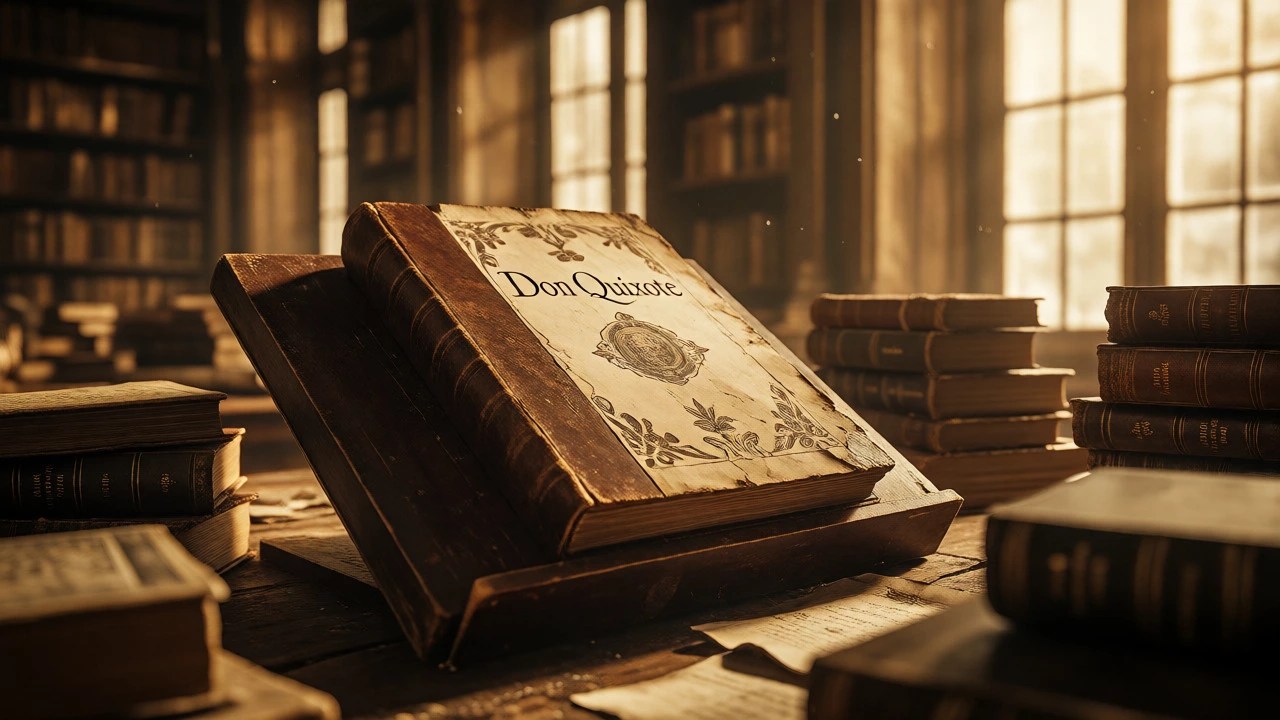
You probably have a guess. Maybe it’s Harry Potter or a modern blockbuster like The Da Vinci Code. But if you look at the raw numbers over centuries, the answer is surprisingly old and deeply rooted in literary history rather than just pop culture. The title of the best-selling book of all time usually goes to Don Quixote by Miguel de Cervantes, with estimated sales between 500 million and 1 billion copies.
Why does this matter for parents and educators? Because understanding what has sold best helps us see what resonates across generations. While Don Quixote wins the absolute count, the landscape changes when we narrow it down to books specifically written for kids. That’s where things get interesting. You’ll find that a few specific titles dominate the shelves in every home, school, and library worldwide. Let’s break down who really holds the crown, depending on how you define "book" and "children's literature."
The Undisputed Heavyweight: Don Quixote
If you ask Guinness World Records or major publishing houses about the single most-sold narrative work ever, they point to Don Quixote, published in two parts in 1605 and 1615. It’s not a children’s book in the traditional sense, but its influence on storytelling is massive. Why so many copies? Simple math. It has been in print for over 400 years. Every generation gets assigned it in high school. Translators have adapted it into more than 140 languages.
However, counting exact sales for a book from the 1600s is tricky. There were no barcodes, no Amazon dashboards, and no global distribution networks. Publishers estimate based on historical printing records. Some scholars argue the number is inflated because "sales" often included free distributions to churches and schools. Still, even conservative estimates put it far ahead of any modern novel. If you’re looking for the absolute highest number, this is it. But don’t worry-this isn’t the only contender for the top spot.
The Religious Giant: The Bible
Before we get to fiction, we have to address the elephant in the room. Technically, The Bible is the best-selling book of all time, with over 5 billion copies distributed. But most people don’t think of it as a "book" in the commercial sense when asking this question. It’s a collection of texts, often given away for free, and rarely purchased as a single retail item in the way novels are.
For the purpose of this discussion, we usually exclude religious texts and reference materials like dictionaries. This leaves us with secular literature. If you include the Bible, the conversation ends immediately. If you exclude it, we move to Don Quixote. But since your interest lies in children’s books, let’s pivot to the category that actually matters for bedtime stories and classroom reading lists.
The Top Contenders in Children’s Literature
When we restrict the search to books intended for young readers, the leaderboard shifts dramatically. Here are the three heavy hitters that consistently fight for the top spot in this niche.
| Book Title | Author | Estimated Sales | First Published |
|---|---|---|---|
| The Little Prince | Antoine de Saint-Exupéry | ~140-200 million | 1943 |
| Harry Potter series | J.K. Rowling | ~600 million (series) | 1997 |
| The Hobbit | J.R.R. Tolkien | ~100 million+ | 1937 |
Notice the distinction between single titles and series. The Little Prince is often cited as the best-selling single children’s book. It’s short, poetic, and translates effortlessly. It doesn’t rely on complex plot twists; it relies on universal themes of love and loss. This makes it durable. It doesn’t go out of style because it speaks to both the child and the adult reading aloud.
On the other hand, the Harry Potter series moved an unprecedented volume of copies in a much shorter timeframe. Seven books sold over 600 million copies combined. If you treat the series as one entity, it crushes almost everything else. But if you look at individual volumes, Harry Potter and the Sorcerer’s Stone sits comfortably around 120 million copies, putting it in direct competition with The Little Prince.
Why The Little Prince Wins the Single-Title Crown
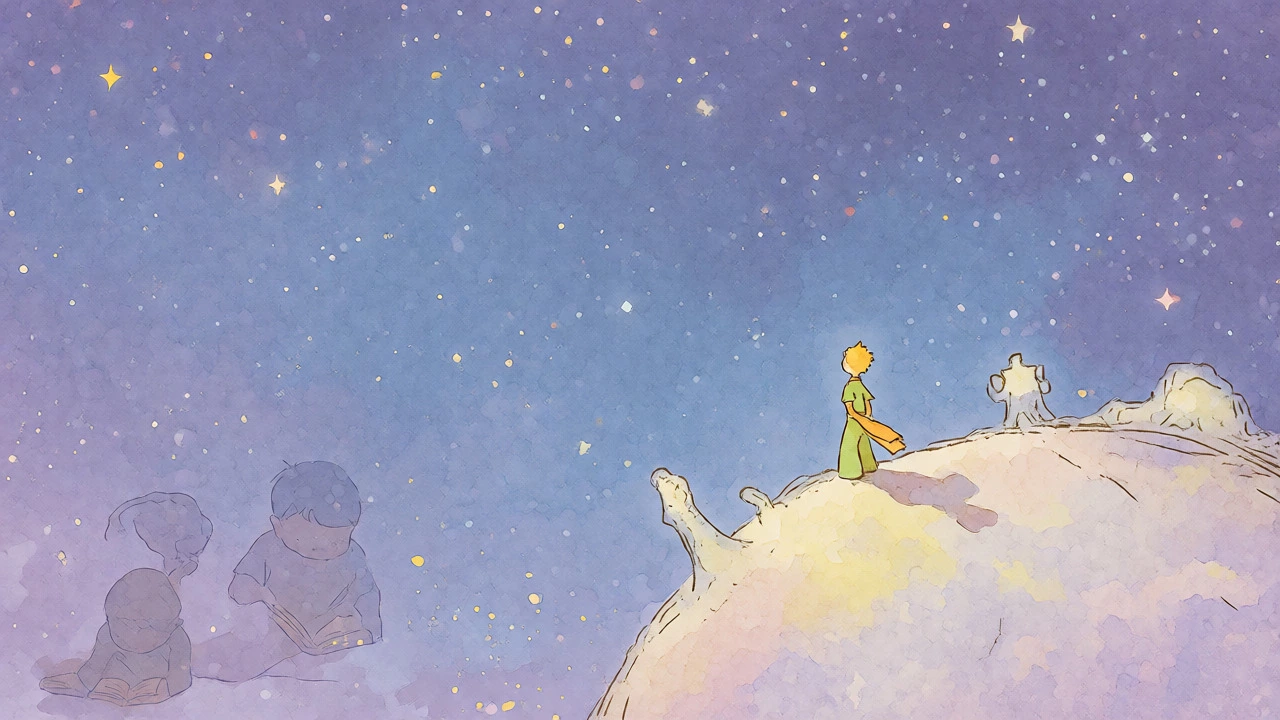
Most industry analysts give the nod to The Little Prince for the single-title category. Why? Consistency. Since its publication in 1943, it has never gone out of print. It is translated into more than 300 languages and dialects, including indigenous languages and constructed ones like Esperanto.
Consider the accessibility factor. At under 100 pages, it’s less intimidating for reluctant readers. Parents buy it as a gift because it looks beautiful on a shelf. Schools assign it because it fits into curriculum slots easily. These logistical advantages drive steady sales year after year. Unlike trendy YA novels that spike and fade, The Little Prince maintains a baseline demand that compounds over decades.
There’s also the emotional hook. The line "It is only with the heart that one can see rightly" appears on greeting cards, tattoos, and social media posts. This cultural saturation keeps the book visible. When a classic stays relevant in pop culture, sales follow naturally. You aren’t just selling a story; you’re selling a piece of shared human experience.
The Rise of Picture Books: Where’s Dr. Seuss?
You might be wondering about Dr. Seuss. His works, particularly Green Eggs and Ham and The Cat in the Hat, have sold hundreds of millions of copies collectively. In fact, some estimates suggest his total catalog exceeds 600 million units.
But here’s the catch: these are picture books, often read once or twice before being passed down or discarded. They are consumables in a way that chapter books aren’t. A child reads Green Eggs and Ham until they memorize it, then moves on. The Little Prince or Harry Potter invites re-reading at different ages. This longevity affects long-term sales figures. While Seuss dominates early childhood literacy, he doesn’t hold the single-title record for lifetime sales against narrative-driven classics.
Still, don’t underestimate the power of repetition. Goodnight Moon by Margaret Wise Brown has sold over 48 million copies. It’s a staple in nurseries worldwide. These books build the foundation. Without them, children wouldn’t develop the stamina to tackle longer texts later. So while they may not hold the "#1" title, their impact on literacy rates is arguably higher per dollar spent.
How Sales Are Counted: The Data Problem
One reason you see conflicting answers online is the lack of standardized data. Before 1970, there was no central tracking system. Publishers reported their own numbers, often inflating them for marketing purposes. Today, companies like NPD BookScan track point-of-sale data in the US and UK, but they miss international markets and used book sales.
Used books are huge in children’s literature. Kids destroy books. Parents buy replacements. Libraries lend them out. None of those transactions always show up in "new copy" sales counts. If you counted every physical copy printed since 1900, the numbers would look different. We’d likely see older public domain works climbing the ranks again.
Also, consider format changes. Audiobooks and e-books complicate things further. Does a digital download count as a sale? Most rankings stick to physical print copies because that’s the historical standard. But if you include digital, Harry Potter gains even more ground due to younger audiences preferring screens.
What This Means for Your Child’s Reading List
So, why should you care about sales charts? Because popularity signals quality and community. When millions of families read the same book, it creates a shared language. Your child talks about Hogwarts with friends. They quote The Little Prince in art class. This social capital encourages reading.
However, don’t feel pressured to buy the best-sellers first. The "best-selling" status reflects availability and marketing budget, not necessarily personal fit. A quiet child might prefer Charlotte’s Web over Diary of a Wimpy Kid. The goal is engagement, not collecting trophies.
Use these lists as starting points. Check if your local library has the top contenders. Read the first chapter together. If it clicks, great. If not, try another. The market offers thousands of excellent options beyond the top ten. The fact that Don Quixote is still selling proves that good stories endure, regardless of trends. Your child’s favorite book will become their Don Quixote-the one they return to again and again.
Frequently Asked Questions
Is Harry Potter the best-selling children's book?
The Harry Potter series is the best-selling children's book series of all time, with over 600 million copies sold. However, as a single title, it trails behind The Little Prince, which has sold approximately 140-200 million copies individually.
Why is Don Quixote considered the best-selling book?
Guinness World Records cites Don Quixote as the best-selling novel of all time due to its continuous publication since 1605. Estimated sales range from 500 million to 1 billion copies, driven by centuries of educational use and translation into over 140 languages.
Does the Bible count as a book in these rankings?
Technically, yes. The Bible is the best-selling book overall with over 5 billion copies. However, most literary rankings exclude religious texts and reference materials to focus on commercial fiction and non-fiction narratives.
Are audiobooks included in sales counts?
Traditional sales rankings primarily track physical print copies. Audiobook downloads and e-book sales are tracked separately by platforms like Audible and Amazon, but they are rarely combined with historical print data for "all-time" comparisons.
Which picture book has sold the most copies?
While hard to pinpoint exactly, Dr. Seuss's Green Eggs and Ham and Goodnight Moon by Margaret Wise Brown are among the top sellers. Green Eggs and Ham has sold over 800 million copies collectively in various editions, making it a dominant force in early childhood reading.