Are Free Standing Baby Gates Safe? A Complete Guide to Pressure vs. Hardware Mounts
Baby Gate Safety & Suitability Checker
Select Your Setup
Result
Recommendations:
Select your gate type and location above to check its safety rating.
You just installed that sleek, white free-standing gate at the top of your stairs. It looks great, it was easy to set up, and for the first week, it seemed like a perfect solution to keep your crawling explorer out of the kitchen. Then, one Tuesday morning, you hear a thud. You rush in to find your toddler pushing against the gate with surprising force, causing it to tilt dangerously. Your heart stops. This is the exact scenario that makes parents question whether free standing baby gates are actually safe or if they are just a convenient illusion of security.
The short answer is: it depends entirely on where you put them and how they are secured. Not all gates are created equal, and the term "free-standing" often causes confusion between two very different types of barriers. Understanding the difference between pressure-mounted gates (which rely on tension) and true freestanding playpen-style gates is critical for keeping your child safe. Let’s break down the mechanics, the risks, and the right places for each type.
Understanding the Two Types of "Free-Standing" Gates
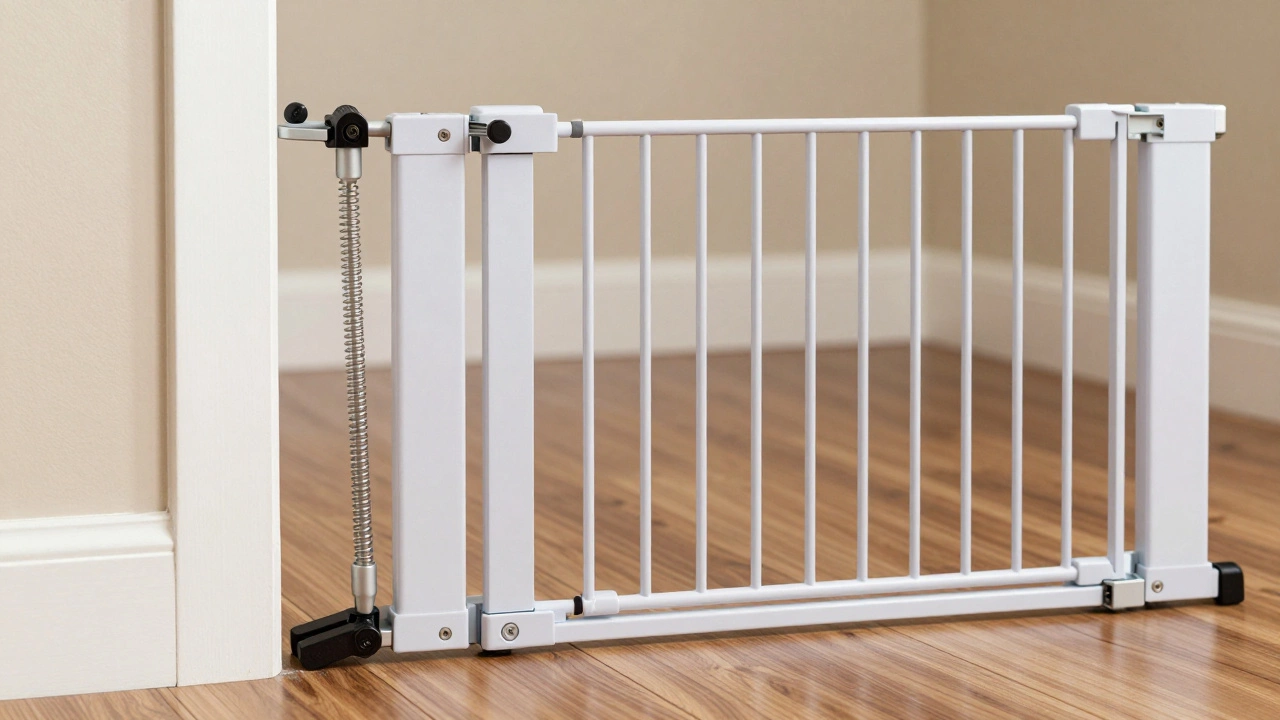
When people talk about free-standing gates, they usually mean one of two things. The first is the pressure-mounted gate. These use springs or screws to push against the walls or door frames, creating tension to hold the gate in place. They require no drilling, which is why they are so popular for renters or those who want a quick fix. The second type is a true freestanding gate, often looking like a small fence or a playpen panel. These stand on their own feet but may have adjustable width settings.
Pressure-mounted gates are convenient but have a major weakness: leverage. If a child pushes hard enough, or if an adult leans on them repeatedly, the tension can fail. True freestanding gates are generally more stable because they have a wider base, but they can still tip over if not anchored properly or if placed on uneven surfaces. Knowing which type you have is the first step in assessing safety.
| Feature | Pressure-Mounted | Hardware-Mounted | True Freestanding |
|---|---|---|---|
| Installation | No tools needed | Drilling required | No tools needed |
| Safety Level | Moderate | High | Low to Moderate |
| Best Location | Bottom of stairs, hallways | Top of stairs | Play areas, wide openings |
| Risk of Tipping | Medium | Very Low | High if unanchored |
The Critical Rule: Never Use Pressure Gates at the Top of Stairs
This is the most important rule in childproofing. You should never install a pressure-mounted or freestanding gate at the top of a staircase. Why? Because if the gate fails, your child falls down the stairs. The consequences are severe, ranging from broken bones to head trauma. Hardware-mounted gates, which are screwed directly into the wall studs, are the only safe option for stair tops. They provide a rigid barrier that cannot be pushed down by a climbing toddler.
At the bottom of stairs, pressure-mounted gates are generally acceptable. If the gate gives way here, the child falls onto the flat floor, which is much less dangerous. However, even here, you must ensure the gate is tight. A loose gate can create a gap where a child’s head could get trapped, leading to strangulation hazards. Always check the manufacturer’s instructions regarding stair placement.
Identifying Hidden Hazards in Gate Design
Even if a gate is installed correctly, its design can pose risks. One common issue is the latch mechanism. Many gates use a double-locking system to prevent toddlers from opening them. While this is good for security, it can be frustrating for adults, leading some to prop the gate open with objects-a dangerous habit that defeats the purpose. Look for gates with latches that are easy for adults to operate but high enough or complex enough for children to bypass.
Another hazard is the mesh or bar spacing. If the bars are too far apart, a child’s head could slip through. Standards typically require gaps to be less than 3.5 inches to prevent entrapment. Mesh gates avoid this issue but can tear over time. Inspect your gate regularly for wear and tear. A frayed mesh or a bent bar compromises the entire structure. Also, check for sharp edges or pinch points where fingers could get caught when closing the gate.
Stability Tests: How to Know If Your Gate Is Secure
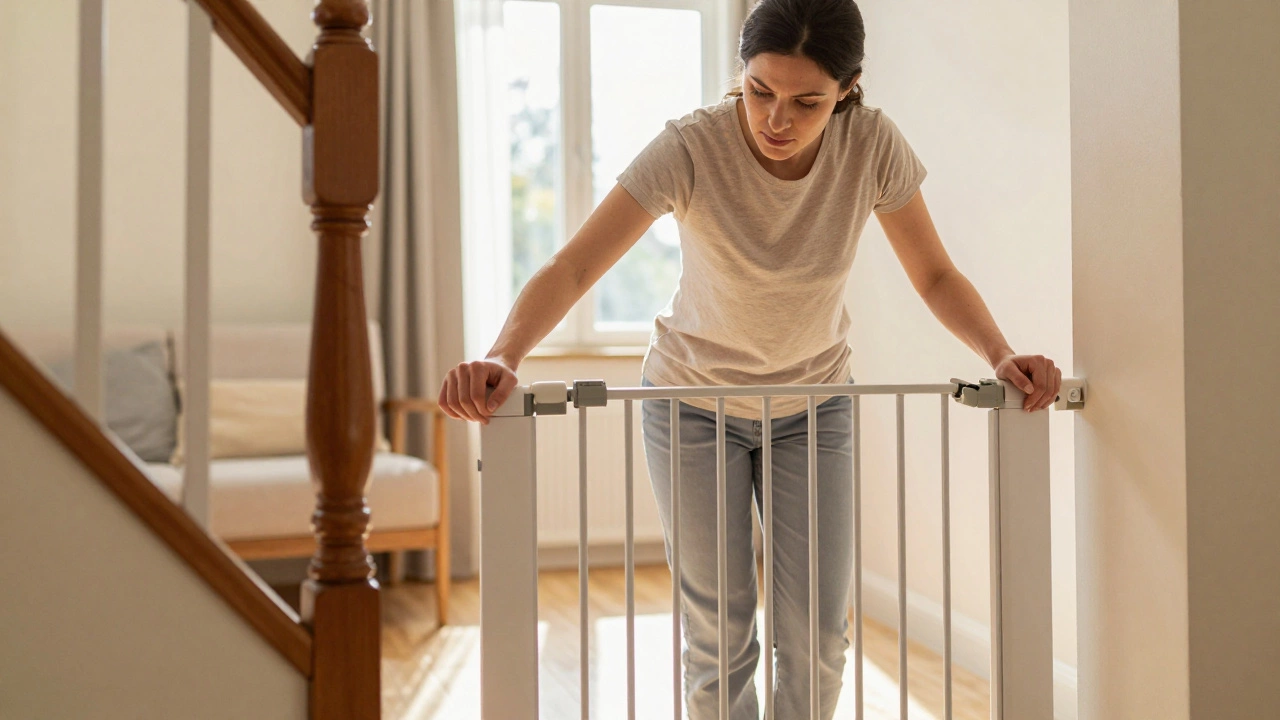
How do you know if your pressure-mounted gate is actually holding? Perform the "lean test." Stand behind the gate and lean your full body weight against it. If it shifts, creaks, or tilts, it is not secure. Tighten the adjustment knobs until it feels immovable. Remember, a toddler can generate significant force when they decide they want something on the other side. They will push, pull, and climb. Your gate needs to withstand that energy.
For freestanding gates, check the base. Are the feet rubberized to prevent slipping? Is the gate level? An uneven floor can cause a freestanding gate to rock, making it easier to tip. If possible, anchor freestanding gates to the wall using the provided mounting holes, even if they are designed to stand alone. This extra step dramatically increases stability and peace of mind.
Choosing the Right Gate for Your Home Layout
Not every opening is suitable for every gate. Wide archways may require a gate with extension panels. Doorways might need a gate that swings both ways or slides aside. Consider the traffic flow. A gate that blocks a high-traffic area might get bumped frequently, loosening its tension over time. In these cases, a hardware-mounted gate is worth the installation effort. It stays secure regardless of how many times you walk through it.
If you are renting, talk to your landlord about installing hardware-mounted gates at key locations like stair tops. Most landlords are willing to allow minor modifications for child safety, especially if you agree to patch the holes when you move out. The risk of injury far outweighs the inconvenience of filling a few screw holes.
Maintenance and Long-Term Safety
Gates are not "install and forget" items. Over time, the tension in pressure mounts can decrease due to temperature changes or wood expansion. Check your gates monthly. Listen for unusual noises when opening or closing them. Replace any worn parts immediately. If the gate no longer locks securely, discard it. Don’t try to repair it with tape or makeshift fixes. Buy a new one that meets current safety standards.
Also, consider your child’s growth. As they get taller and stronger, they may start climbing over gates. A gate that was safe for a crawler might become a climbing frame for a toddler. Monitor their behavior. If they show interest in climbing, switch to a higher gate or remove the gate altogether and supervise directly. Safety is dynamic; it changes as your child develops.
Can I use a pressure-mounted gate at the top of the stairs?
No, you should never use a pressure-mounted gate at the top of the stairs. If it fails, your child could fall down the stairs. Only hardware-mounted gates, which are screwed into the wall, are safe for stair tops.
How do I know if my pressure-mounted gate is tight enough?
Perform the "lean test." Lean your full body weight against the gate. If it moves, tilts, or makes noise, tighten the adjustment knobs until it is immovable. It should feel solid and secure.
Are freestanding playpen gates safe for blocking doorways?
Freestanding gates can be used in doorways, but they must be anchored to the wall if possible. Without anchoring, they can tip over if pushed. Ensure the base is wide and stable, and check for slip-resistant feet.
What should I do if my child starts climbing the gate?
If your child shows signs of climbing, the gate is no longer safe. Switch to a higher gate, a hardware-mounted gate that is harder to climb, or remove the gate and supervise your child directly. Climbing poses a serious fall risk.
How often should I inspect my baby gate?
Inspect your gate monthly. Check for loose tension, worn parts, or damage to the mesh or bars. Test the latch mechanism to ensure it works smoothly. Replace the gate if it no longer secures tightly.