Baby Carrier Safety: Which Types to Avoid for Your Baby's Health

Baby Carrier Safety Checker
1. Assess Your Setup
Select the option that best describes your current baby carrier setup.
2. Safety Analysis
Fill in the assessment form to see your safety score.
Critical Red Flags Checklist
You’ve probably seen those cute photos on Instagram of babies strapped into every conceivable fabric pouch. But here’s the hard truth: not all baby carriers are created equal, and some can actually cause lasting harm to a newborn’s developing hips and spine. If you’re holding your baby in a way that forces their legs straight down or their back into a rigid arch, you might be fighting against nature rather than supporting it.
The goal isn’t just convenience; it’s physiological support. A safe carrier keeps your baby in a position that mimics how they were curled up in the womb. When we ignore this, we risk issues like hip dysplasia or respiratory distress. So, before you buy that trendy sling or buckle up with a structured pack, let’s look at exactly which designs you should steer clear of, and why.
The Danger of Straight-Leg Positions
The biggest red flag in babywearing is a carrier that holds your baby’s legs in a straight, dangling position. Think about how a frog sits. Now think about how a human infant’s hips are naturally formed. They are designed to flex outward and upward. This is known as the "M-shape" or "froggy" position.
When a baby’s legs hang straight down, especially in a narrow seat, the femoral head (the ball of the hip joint) can slip out of its socket. This is particularly risky for infants under four months old whose joints are still largely cartilaginous and soft. Carriers that force the legs together or straight down put uneven pressure on these developing joints. Over time, this can lead to Developmental Dysplasia of the Hip (DDH). The International Hip Dysplasia Institute explicitly recommends avoiding positions where the legs are forced together or extended straight down.
Look out for carriers where the fabric ends abruptly above the knee, leaving the lower leg unsupported. If you can see daylight between your baby’s thigh and the carrier fabric, or if their knees are lower than their bottom, the fit is likely wrong. You want the fabric to extend from one popliteal fossa (the crease behind the knee) to the other. This ensures the thighs are supported and the knees remain higher than the buttocks.
Rigid Back Panels and Flat Spines
Newborns have a natural C-curve to their spine. It’s not yet developed into the S-curve we see in adults. Forcing a newborn into a flat-backed carrier can strain their back muscles and push them into an unnatural posture. While older toddlers can handle more upright, rigid supports, infants need flexible fabric that allows their spine to maintain that gentle curve.
Avoid carriers with stiff, padded back panels that hold the baby’s back completely straight unless the baby has full head and neck control and can sit independently. Even then, ensure the panel doesn’t push the baby’s chest too far away from yours. A rigid panel often results in the baby being held high and wide, which shifts the center of gravity awkwardly and can cause back pain for the parent. More importantly, it prevents the baby from tucking their chin to their chest, a critical reflex for airway protection.
Narrow Seat Widths and High-Knee Risks
Seat width is just as important as seat depth. Many mass-market carriers come in a "one size fits all" design that is simply too narrow for growing infants. If the seat is too narrow, the baby’s legs are squeezed together, forcing them into an adducted position (legs pulled inward). This restricts the natural abduction (spreading apart) needed for healthy hip development.
Conversely, if the seat is too wide for a tiny newborn, the baby’s legs will splay out excessively without proper support, causing them to slump. The ideal scenario is adjustable seat width. As your baby grows, you widen the seat so their knees remain slightly higher than their bum. If you have a fixed-width carrier, check if it includes a newborn insert. Without one, a standard toddler-sized seat will leave a newborn dangling in the middle, unsupported by the sides.
Poor Head and Neck Support
Newborns lack the muscle strength to hold their heads up. A carrier that fails to provide adequate head support can allow the head to fall forward, potentially obstructing the airway. This is known as positional asphyxia. It’s not just about comfort; it’s about breathing.
Avoid carriers that rely solely on the parent’s arm to hold the baby’s head. You need built-in support. Look for carriers with a high back panel that reaches up to the base of the baby’s skull. Some wraps and slings offer excellent support because the fabric molds around the head, but only if tied correctly. Structured carriers with low backs are generally unsuitable for newborns unless they have a dedicated headrest attachment. If you find yourself constantly adjusting the baby’s head with your hand, the carrier isn’t doing its job.
Short Slings and Improper Tying
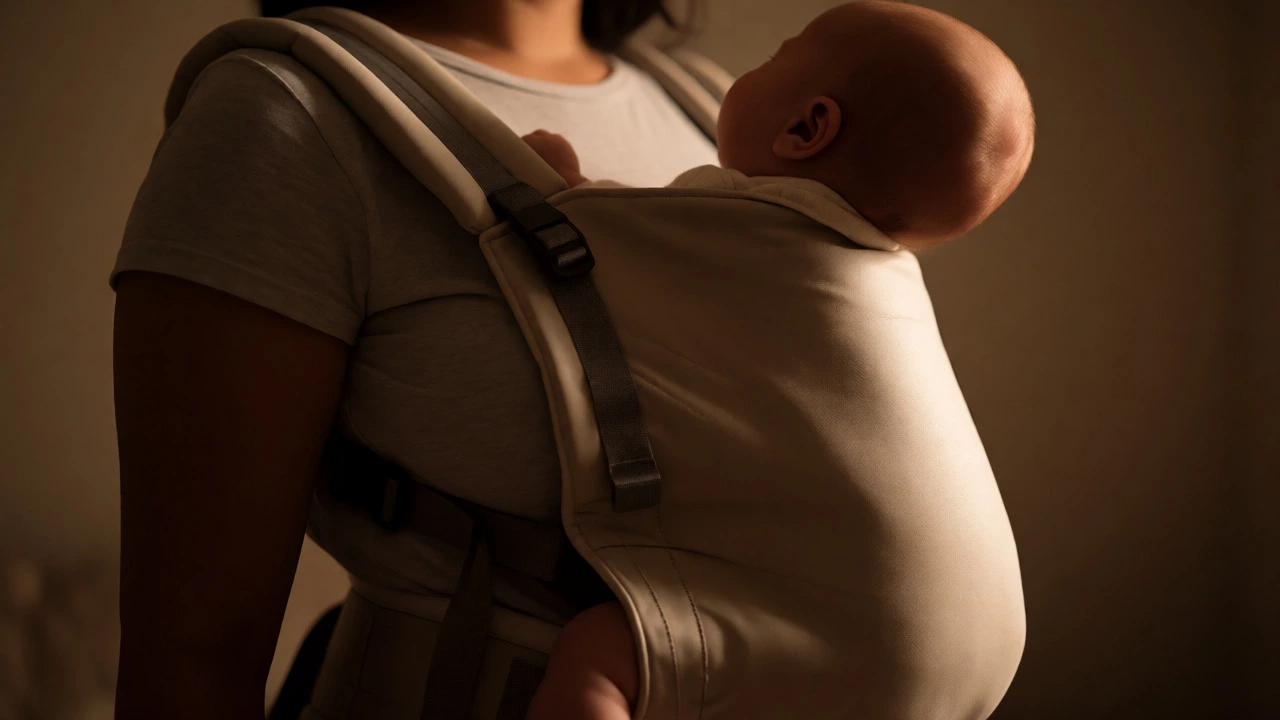
Ring slings and short woven slings are popular for quick trips, but they have a steep learning curve. A common mistake is tying them too loosely or positioning the baby too low. When a baby is carried low in a sling, their weight pulls on the fabric, causing them to sag. This sagging can bend the baby’s body into a U-shape rather than a supportive C-shape, putting stress on the neck and spine.
Furthermore, ring slings concentrate weight on one shoulder. For parents with pre-existing back or shoulder issues, this asymmetrical load can cause significant pain over time. If you choose a ring sling, ensure you learn the correct "top rail" adjustment technique to keep the baby snug and high. If you can’t pull the top rail tight enough to eliminate slack, the sling is effectively useless for safety purposes.
Face-Out Carriers: The Visibility Trap
Many parents love face-out carriers because the baby can see the world. However, pediatric experts often advise against prolonged use of face-out positions, especially for infants. Why? Because when a baby faces out, their legs are typically forced into a straight-down position, violating the M-shape rule mentioned earlier. Additionally, the baby cannot rest their head against the parent’s chest if they get tired or overwhelmed. There is no "off switch" for sensory input, leading to overstimulation.
If you must use a face-out carrier, limit the time to 10-15 minutes and ensure the baby shows signs of enjoyment rather than stress. Always return to a front-facing-in position for naps and longer carries. Note that most face-out carriers do not allow the baby to turn inward easily, making them less versatile than other options.
Comparison of Common Carrier Types
| Carrier Type | Hip Position Risk | Spine Support | Best For | Avoidance Criteria |
|---|---|---|---|---|
| Structured Soft Carrier | Medium (if seat is narrow) | Good (if adjustable) | Toddlers & Older Infants | Fixed narrow seats; rigid back panels for newborns |
| Woven Wrap | Low (highly customizable) | Excellent (custom mold) | Newborns to Toddlers | Loose ties; incorrect spread-squat position |
| Ring Sling | Medium (depends on tie) | Moderate | Quick outings; breastfeeding | One-sided shoulder strain; sagging fabric |
| Face-Out Carrier | High (legs often straight) | Poor (no resting position) | Short outings for curious babies | Prolonged use; newborns; sensitive babies |
| Mei Tai / Pouch | Variable | Variable | Experienced users | Unadjustable sizes; poor head support |

Key Red Flags Checklist
Before you strap your baby in, run through this quick mental checklist. If you answer "yes" to any of these, adjust the carrier or consider a different model:
- Are the knees lower than the bottom? If yes, the hips are not in a healthy position.
- Is the fabric ending above the knee? If yes, the thighs are unsupported.
- Is the baby’s chin touching their chest? If yes, there is a risk of airway obstruction. Ensure there is a finger’s width of space under the chin.
- Is the baby facing out for more than 15 minutes? If yes, switch to face-in to prevent overstimulation and hip strain.
- Do you feel sharp pain in your shoulders or back? If yes, the weight distribution is off. Tighten the straps or redistribute the load.
What to Look For Instead
So, what makes a good carrier? Look for adjustability. The best carriers grow with your child. Features like expandable seat widths, removable newborn inserts, and adjustable torso heights are crucial. Breathable fabrics like cotton, linen, or mesh help regulate temperature, preventing overheating, which is another safety concern.
Ergonomic design means the carrier distributes weight across both shoulders and the waist belt. This protects your body while keeping the baby secure. Remember, the "tight enough" test is simple: you should not be able to pull more than an inch of fabric away from the baby’s back. Snugness equals safety.
Frequently Asked Questions
Can I use a baby carrier for sleeping?
Yes, but with caution. Babies can sleep in carriers, but they must be positioned safely. Ensure their head is supported, their chin is off their chest, and their nose is clear. Never leave a sleeping baby unattended in a carrier. If the baby falls asleep and their head drops forward, reposition them immediately to prevent airway blockage.
How long can I wear my baby in a carrier each day?
There is no strict medical limit, but breaks are recommended. Every 1-2 hours, take the baby out to stretch their legs and change their position. This promotes blood circulation and gives your own muscles a rest. For newborns, frequent breaks also allow for diaper checks and feeding opportunities.
Is hip dysplasia permanent if caused by bad carriers?
Not necessarily. Early detection is key. If caught early, hip dysplasia can often be corrected with bracing (like a Pavlik harness) or physical therapy. Severe cases may require surgery. Using ergonomic carriers reduces the risk significantly, but regular pediatric check-ups are essential to monitor hip health.
Can I carry my baby on my back?
Back carrying is generally safe once the baby has full head and neck control and can sit independently, usually around 6 months. Before this milestone, back carrying poses risks to the spine and airway. Always ensure the baby’s legs are in the M-position and their back is supported against yours.
Are cheap carriers dangerous?
Price doesn't always equal quality, but very cheap carriers often cut corners on ergonomics. They may have fixed narrow seats, poor padding, or weak stitching. Always inspect seams and buckles for durability. If a carrier feels flimsy or lacks adjustability, it may not provide the necessary support for healthy development, regardless of cost.